For years after having been exposed to Mortimer Adler's wonderful (but perhaps a bit oppressive) How to Read a Book, I thought I had to read all of the classics before I could reasonably read anything else and was (hopefully understandably) a bit paralyzed. After having tried for a while to approach this ideal, I have realized that life is short and I now read according to my interests and needs.
English is my native language and the language in which I do most of my reading, but I also read German, Mandarin, and literary Chinese (quite rusty in the latter two). I'm currently also working on learning Pāḷi.
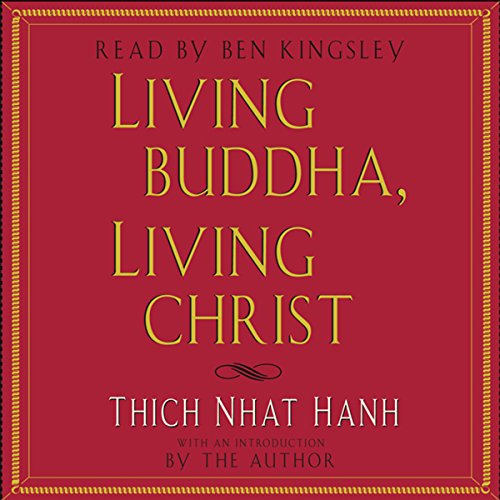
World-renowned thinker and scholar Thích Nhất Hạnh, considered by many to be a "Living Buddha", …
Beautiful and insightful. Listened to the abridged version because it was what I had easy access to. I'll reserve writing a review for if and when I read the full version, but even this short version has value for anyone wishing to look more deeply into Thích Nhất Hạnh's advice for everyone to be deeply rooted in their own tradition(s).
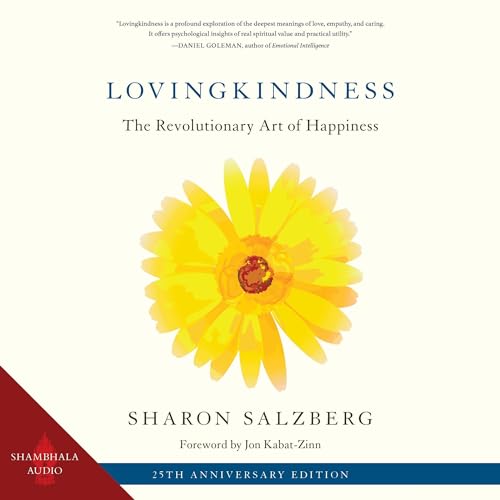
Throughout our lives we long to love ourselves more deeply and find a greater sense …
A Good Manual of IMS-Style Brahmavihārā Practice
4 stars
It's a really good manual of brahmavihārā practice as it is taught in the tradition of the Insight Meditation Society. It covers everything one would want to start a practice and it's plenty deep enough for experience practitioners looking for a refresher. The four sublime abidings are complemented well by two chapters on #generosity (#dāna) and #morality (#sīla), so in a sense it's a bit like going backwards through the ten #pāramī
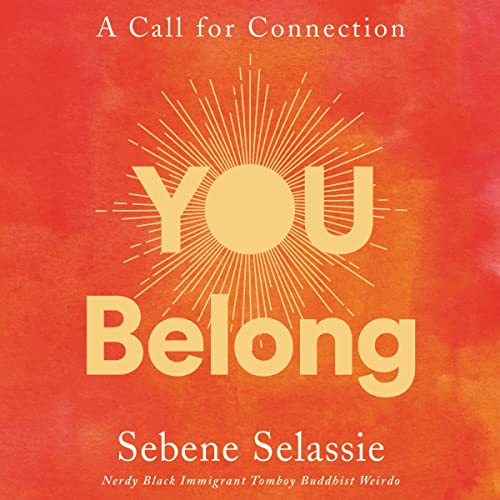
From much-admired meditation expert Sebene Selassie, You Belong is a call to action, exploring our …
Surprising & Rewarding Reflection on Interbeing
4 stars
I was quite surprised while reading this to realize that Sebene Selassie uses belonging as a translation of suññatā or interbeing. Or perhaps belonging is less of a translation and more of a lens. Either way, I found the reflections to be extremely useful. And I was impressed by the erudition of the work—it's quite rare for teachers to draw on such a breadth of sources from different disciplines. She also manages very well to convey what practices can be helpful for awareness of and engagement with belonging while also not giving the sense of yet another list of to-dos to add to the pile.
This packet includes an explanation of the thinking behind the learning packets project, an orientation …
Inspiring Introduction
No rating
This is an inspiring introduction which gives a clear idea of the magnitude of the project which Miki and others in the NGL community have been working on and leaves me with the desire to know more & dig deeper. I really appreciate that this context is being offered by default when any of the packets are accessed.
I'm going to leave this one unrated for now since it's so clear that it's still a work in progress. Looking forward to reading the next packet!
This is an inspiring introduction which gives a clear idea of the magnitude of the project which Miki and others in the NGL community have been working on and leaves me with the desire to know more & dig deeper. I really appreciate that this context is being offered by default when any of the packets are accessed.
I'm going to leave this one unrated for now since it's so clear that it's still a work in progress. Looking forward to reading the next packet!
The boundaries between gods and mortals blur in a futuristic world where ancient Hindu deities …
Intrigue at the Edge of the Mortal
4 stars
Hands down the most striking thing about Lord of Light is how well Zelazny captured the tone of the source material and translated it into a form that works well within the context of a novel of speculative fiction. This is the first and only work of Zelazny's I have read thus far, so I might just be impressed by what qualifies for his usual style, but it feels much too intentional to me for it not to have been done on purpose. Despite the excellent voice and tonal execution which permeate the book, I had the sense that there was more of an effort to bend the source material to the story Zelazny wanted to tell rather than the story which the combination of the source material and the other ideas in the book might have been naturally most suited to tell. Maybe it's not a masterpiece, but it's …
Hands down the most striking thing about Lord of Light is how well Zelazny captured the tone of the source material and translated it into a form that works well within the context of a novel of speculative fiction. This is the first and only work of Zelazny's I have read thus far, so I might just be impressed by what qualifies for his usual style, but it feels much too intentional to me for it not to have been done on purpose. Despite the excellent voice and tonal execution which permeate the book, I had the sense that there was more of an effort to bend the source material to the story Zelazny wanted to tell rather than the story which the combination of the source material and the other ideas in the book might have been naturally most suited to tell. Maybe it's not a masterpiece, but it's close enough to that that it probably influenced a lot of similar works which came after it. Dan Simmons' Ilium and Olympos come to mind as favorable candidates.
Putting whatever timeless merits the book may or may not have aside, it operates on many levels and does a lot really well. The most valuable to me was how the gods and Sam occupied and moved through the space between the mundane mortal, the legendary, and the divine. The drama and political intrigue were interesting, and so was the exploration of the ramifications of the particular kind of #reincarnation which featured in the story. There were also some interesting bits about how #legends develop over time which tied nicely into the other themes of the book.
The last thing I want to mention is that I had this recommended to me as a #Buddhist novel, which I think is a bit of an oversimplification; it contains some Buddhist ideas, but I think the underlying message is more the common science fiction refrain of scientific progress than it is about liberation. That said, I thought the presentation of the concepts of #impermanence and especially of #selflessness were really well done.
"Minimalism is the art of knowing how much is just enough. Digital minimalism applies this …
I've been thinking about this one quite a bit lately. I'm wondering:
To what extent is it a question of economic or social #privilege to be able to make this choice at all? An example from my own life: as the pressures of #inflation continue, it feels like less of a choice to have this-or-that store app with #coupons and #discounts and whatnot on my phone. Even if I minimize the disturbance as much as possible by turning off #notifications, I'm still giving up a little sliver of my available attention in exchange for a (questionable?) economic benefit.
Also, for someone who is saddled with a lot of responsibilities or #mentalload or both, especially when time is low and a lot of planning and coordination is required, how realistic is it that one could make the shift away from depending so much on the phone?
Or …
I've been thinking about this one quite a bit lately. I'm wondering:
To what extent is it a question of economic or social #privilege to be able to make this choice at all? An example from my own life: as the pressures of #inflation continue, it feels like less of a choice to have this-or-that store app with #coupons and #discounts and whatnot on my phone. Even if I minimize the disturbance as much as possible by turning off #notifications, I'm still giving up a little sliver of my available attention in exchange for a (questionable?) economic benefit.
Also, for someone who is saddled with a lot of responsibilities or #mentalload or both, especially when time is low and a lot of planning and coordination is required, how realistic is it that one could make the shift away from depending so much on the phone?
Or looking at it another way, how much is this a realistic solution and how much is it a #romantic wouldn't-that-be-nice kind of idea? And even if it is realistic, my personal experience has shown that trying to make any change on my own is difficult at best; I wonder if it's helpful to put so much responsibility on each individual person. Pandora's box is open. What are we going to do about it now?
Mysterious tech, a devious AI and a couple of scientists in over their heads collide …
Entertaining but Predictable with Some Interesting Points
3 stars
Content warning
Significant plot elements
This was a bit of a different genre compared to Dennis E. Taylor's other books. Feeling-wise, I thought it was pretty similar to Roadkill, but a bit more in the direction of a serious sci-fi thriller.
The pacing was done quite well and I thought that the juxtaposition of artificial general intelligence and #genetic#engineering was interesting. He also makes a few interesting points regarding how a real #AGI might behave. The near-future #worldbuilding also deserves a shout-out for how well it painted the context of the novel to be the next logical step from where we're at right now technologically, with bonus points for how mundane the technologies seemed in the book.
On the whole, though, the plot felt formulaic and kind of predictable for me. The main antagonist also didn't really do it for me; I would have wished for more biting satire or more absurdity of caricature rather than the bland antagonist there was, although the blandness may have been the point in order to emphasize another point about the potential of #AI.
For all that complaining, I liked it and thought it was a useful contribution to all of the current discussion and hype around AI.
From much-admired meditation expert Sebene Selassie, You Belong is a call to action, exploring our …
Within the introduction and roughly half of the first chapter, it's already among the most welcoming-feeling presentations of #interdependence / #interbeing / #emptiness (here presented as #belonging with good reason) I've ever come across. Also one of the better self-narrations I've heard in a while. Looking forward to how the rest of the book develops
Tristan Gooley, author of the internationally bestselling How To Read Water and The Walker's Guide …
I have to be honest with myself. This is fascinating, but my priorities currently lie elsewhere. I may come back to it once I have a bit less on my plate.
Content warning
Some discussion of plot structure and hints about the ending
I listened to John Scalzi's When the Moon Hits Your Eye because the combination of the premise and Scalzi's reputation for irreverence reminded me of the film Don't Look Up, which I remember as one of the best movies I've seen in recent years. Perhaps that was not the most ideal place to read from, but that's where I started anyway.
In short, I found the book amusing with a few good moments. However, having listened to the whole thing, I'm left with the sense that it was too #superficial to be satisfying. Some scenes did go a bit deeper, especially those that dealt to any significant degree with the emotional implications of the impending #apocalypse, but on the whole, I thought that the opportunities for #satire afforded by the #absurdity of a moon made of cheese were used mostly for simpler humor instead.
I think that the chapter involving #writing deserves special mention. I experienced it as the most moving part of the book by far and suspect that it might have been even stronger standing on its own as a short story, possibly with a bit added for context.
I was surprised and somewhat aggravated by the abrupt twist near the end, but what I thought was really clever about it despite my frustration was the amount of #doubt that was left open as the book ended.
From the afterword, I got the sense that this book probably would have been more satisfying if I had approached it from the perspective of a dyed-in-the-wool Scalzi fan (which I am not, even if I often enjoy his writing) who just wanted to read something amusing, be entertained, and enjoy some light satire. I can also imagine that the lightness of the satire might make it something of a "gateway" to considering things from a different perspective for anyone who would find something like Don't Look Up difficult to digest.
THIS BOOK IS FOR WRITERS who want to write more, who struggle to write, who …
Read the introduction and flipped through the rest a bit. So far promises to be more helpful than How to Take Smart Notes by Sönke Ahrens. That said, I'll remain skeptical until proven otherwise. Doto invokes David Allen of Getting Things Done early in the book, which I see as a little bit problematic, but he also acknowledges the validity of a large variety of note-taking strategies depending on personality and need, so we'll see where this goes.
Mindfulness in Plain English was first published in 1994, is one of the bestselling — …
A Classic Meditation Manual, not just for Beginners
5 stars
A common refrain I have heard from several #meditation teachers is that it is good periodically to return to basic instructions for the dual reason that it tends to correct any unskillful patterns which have emerged and that the questions that arise as a result of one's own meditation practice aid in learning and allow the practitioner to absorb more from the same or similar material. This advice has definitely held true as I read this book for the second time (this time with my ears via the recorded voice of Edoardo Ballerini).
I read Mindfulness in Plain English for the first time nearly 20 years ago, and even though the basic contents of the book were familiar to me on this second read-through, nearly the whole book struck me as remarkably fresh. The introduction alone opens with wonderful force, directly addressing the #unsatisfactoriness which is likely familiar to …
A common refrain I have heard from several #meditation teachers is that it is good periodically to return to basic instructions for the dual reason that it tends to correct any unskillful patterns which have emerged and that the questions that arise as a result of one's own meditation practice aid in learning and allow the practitioner to absorb more from the same or similar material. This advice has definitely held true as I read this book for the second time (this time with my ears via the recorded voice of Edoardo Ballerini).
I read Mindfulness in Plain English for the first time nearly 20 years ago, and even though the basic contents of the book were familiar to me on this second read-through, nearly the whole book struck me as remarkably fresh. The introduction alone opens with wonderful force, directly addressing the #unsatisfactoriness which is likely familiar to anyone who comes into contact with the the book, and has the dual ability not only to convince (or at least intrigue) those new to meditation that it might be a worthwhile endeavor, but also to imbue experienced #meditators with a renewed sense of purpose and urgency.
On my way through this book, I found myself wishing that I had returned to it before now, as it addresses many of the challenges I have faced and currently am facing in such a clear and understanding manner that I was able to apply the advice immediately. Indeed, looking back on my years of meditation experience, I realize that the guidance in this book would have been enough to address the majority of the challenges I've faced over the years.
The one possible weakness I could find in this book is the strong emphasis to place the attention on the breath at the nostrils and nowhere else, which I have indeed found to be one excellent place for the attention. However useful following the breath at the nostrils is, it is not the only place the breath can be followed at a relatively small, fixed point, and for some, this may be unhelpfully inflexible, while for others the inflexibility of the suggestion may be a helpful simplification of the abundance of options which are available when beginning a meditation practice. The good news is that this weakness is counterbalanced by Bhante Gunaratana's clarity that these are instructions based on one very specific tradition, and, in this newer addition, the new afterword giving an introduction to loving friendliness or metta, which itself is also an excellent practice and gateway for anyone wishing to start a meditation practice.
Overall, I am pleased that I took the time with this book again and now understand why it has acquired the status of a classic among meditation manuals: it is brief, yet comprehensive and contains everything one needs to start or reinvigorate a practice of insight meditation.