Review of 'Deadpool by Posehn and Duggan Vol. 3' on 'Goodreads'
2 stars
As other reviewers already have pointed out, this volume is far less coherent than the previous two volumes. And while it's still funny and irreverent, the incoherence really dampens the mood. That said I did enjoy the Hitler episode and all references to inconsistent timelines, as well as little things both here and there. But the thing that actually saved the entire volume was the utter darkness that suddenly descended during the episode with Wade visiting his parents. That episode was really sinister and gut-wrenching and extremely sad.
But overall, this was not much more than an "ok" read. Unfortunately.
As other reviewers already have pointed out, this volume is far less coherent than the previous two volumes. And while it's still funny and irreverent, the incoherence really dampens the mood. That said I did enjoy the Hitler episode and all references to inconsistent timelines, as well as little things both here and there. But the thing that actually saved the entire volume was the utter darkness that suddenly descended during the episode with Wade visiting his parents. That episode was really sinister and gut-wrenching and extremely sad.
But overall, this was not much more than an "ok" read. Unfortunately.
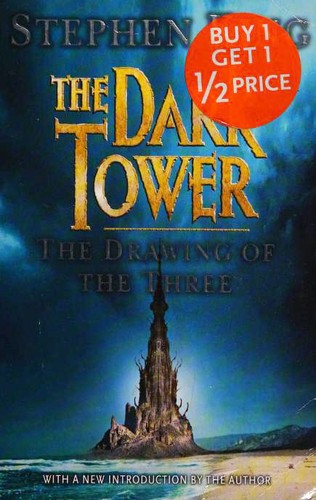
On his journey across the Mid-World to reach the Dark Tower, errant knight Roland of …
Review of 'The drawing of the three' on 'Goodreads'
3 stars
Andra boken och nu är vi - lite på både gott och ont - tillbaka i mer traditionella Kingsliga gängor. Eller kanske snarare Bachmanska, sett till att skräckelementen är i princip begränsade till de där krabbvarelserna i strandkanten och ett psykfall till kvinna. (Var det förresten en koppling till [b:Pestens tid|10357877|Pestens tid|Stephen King|https://i.gr-assets.com/images/S/compressed.photo.goodreads.com/books/1304426608i/10357877.SX50.jpg|1742269] som swishade förbi lite plötsligt och oannonserat var det nu var i boken?)
Det måste väl till något slags karaktärsbeskrivning av de nya huvudpersonerna, förstår jag väl. Men jag tycker att King beskriver ungefär samma karaktär om och om igen, och därtill på ungefär samma sätt. Lite som han Zack Snyder gör film, vid närmare eftertanke.
Jag försöker komma till poängen, men det är svårt. Som att recensionen blir en transportsträcka på samma sätt som boken känns när jag läser den. Något som jag jobbar mig igenom främst för att komma till slutet, så jag …
Andra boken och nu är vi - lite på både gott och ont - tillbaka i mer traditionella Kingsliga gängor. Eller kanske snarare Bachmanska, sett till att skräckelementen är i princip begränsade till de där krabbvarelserna i strandkanten och ett psykfall till kvinna. (Var det förresten en koppling till [b:Pestens tid|10357877|Pestens tid|Stephen King|https://i.gr-assets.com/images/S/compressed.photo.goodreads.com/books/1304426608i/10357877.SX50.jpg|1742269] som swishade förbi lite plötsligt och oannonserat var det nu var i boken?)
Det måste väl till något slags karaktärsbeskrivning av de nya huvudpersonerna, förstår jag väl. Men jag tycker att King beskriver ungefär samma karaktär om och om igen, och därtill på ungefär samma sätt. Lite som han Zack Snyder gör film, vid närmare eftertanke.
Jag försöker komma till poängen, men det är svårt. Som att recensionen blir en transportsträcka på samma sätt som boken känns när jag läser den. Något som jag jobbar mig igenom främst för att komma till slutet, så jag kan ge mig på nästa bok (men inte på det där bokslukande sättet, alltså).
I och med att jag läst klart denna har jag i alla fall kommit ikapp mig själv och nästa bok i serien blir den första jag inte redan läst. Så det där med transportsträcka kan faktiskt vara mer subjektivt än jag själv fattade. Åh, jävlar...
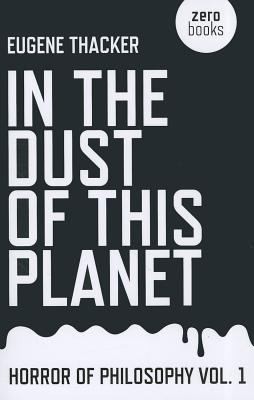
The world is increasingly unthinkable, a world of planetary disasters, emerging pandemics, and the looming …
Review of 'In The Dust Of This Planet' on 'Goodreads'
2 stars
It's not that [a:Thomas Ligotti|128466|Thomas Ligotti|https://images.gr-assets.com/authors/1371462738p2/128466.jpg] is wrong in his description of Thacker's book when describing it as "an encyclopedic grimoire instructing us in the varieties of esoteric thought and infernal diversions". Nor is it this "encyclopedic grimoire" in itself.
Instead, I feel a bit mislead. Like a gnawing feeling in the back of my head that this book is about as thin as the paper it's printed on, even though the words that actually are printed on it do their very best to provide profound - even mystical - depth.
As inspiration for aspiring writers of wierd fiction is should work like a charm; somewhere between these pages lurk formulas that could cast those who dare into the abyss of sub-sub-subgenres of horror and/or science fiction. Into those occult recesses where few readers venture willingly (and from where even fewer emerge with their sanity somewhat intact).
But I get …
It's not that [a:Thomas Ligotti|128466|Thomas Ligotti|https://images.gr-assets.com/authors/1371462738p2/128466.jpg] is wrong in his description of Thacker's book when describing it as "an encyclopedic grimoire instructing us in the varieties of esoteric thought and infernal diversions". Nor is it this "encyclopedic grimoire" in itself.
Instead, I feel a bit mislead. Like a gnawing feeling in the back of my head that this book is about as thin as the paper it's printed on, even though the words that actually are printed on it do their very best to provide profound - even mystical - depth.
As inspiration for aspiring writers of wierd fiction is should work like a charm; somewhere between these pages lurk formulas that could cast those who dare into the abyss of sub-sub-subgenres of horror and/or science fiction. Into those occult recesses where few readers venture willingly (and from where even fewer emerge with their sanity somewhat intact).
But I get the sense that Thacker wants to do more. His recurring excursions towards the unthinkable tend, however, to lose themselves in labyrinthic prose, making the unthinkable unreadable. (There might be some form of universal, poetic justice in there, somehow.) That in itself does feel insufficient, but on the other hand, "sufficient" is not something that goes hand in hand with trying to think the unthinkable, fathom the unfathomable, speak the unspeakable and - yes - read the unreadable.
Maybe this is as good as it actually can get? In that case, my meagre two stars ("it was ok") do seem a bit unjustified. Maybe so, but I did expect a little more "horror of philosophy" than I feel I got. And that has to count (or subtract, rather) for something.
Something to dwell on, maybe, as Thacker's book now rests in the dust of my bookshelf.
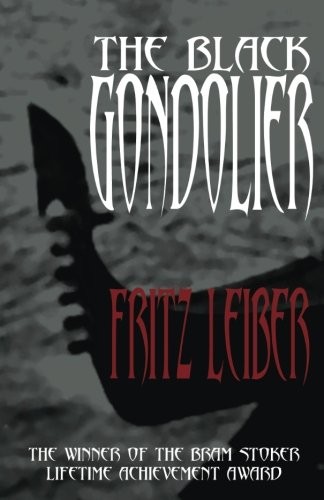
Review of 'The Black Gondolier: And Other Stories' on 'Goodreads'
3 stars
I looked this up, because the title story was referenced in another book I was reading ([b:In the Dust of This Planet|11944741|In the Dust of This Planet (Horror of Philosophy, #1)|Eugene Thacker|https://images.gr-assets.com/books/1348583638s/11944741.jpg|16906202]) and it seemed a good, or better, way into a future read of [b:Cyclonopedia: Complicity with Anonymous Materials|4617457|Cyclonopedia Complicity with Anonymous Materials|Reza Negarestani|https://images.gr-assets.com/books/1389753141s/4617457.jpg|4667368] - a book I have already tried to penetrate without succeeding. Actually, reading this Leiber collection, as well as Thacker's book and Thomas Ligotti's [b:The Conspiracy Against the Human Race|8524528|The Conspiracy Against the Human Race|Thomas Ligotti|https://images.gr-assets.com/books/1400962805s/8524528.jpg|2696709] have all in a way been instruments to shape/reshape my perceptive and cognititive skills to better correspond with Negarestani's writing. I also intend to read [b:The Spectacle of the Void|23656630|The Spectacle of the Void|David Peak|https://images.gr-assets.com/books/1417568543s/23656630.jpg|43263689] before embarking on my second attempt to read Negarestani's book.
(Wow! How's that for an unparenthesized paranthesis?)
Leiber is claimed by the editors of …
I looked this up, because the title story was referenced in another book I was reading ([b:In the Dust of This Planet|11944741|In the Dust of This Planet (Horror of Philosophy, #1)|Eugene Thacker|https://images.gr-assets.com/books/1348583638s/11944741.jpg|16906202]) and it seemed a good, or better, way into a future read of [b:Cyclonopedia: Complicity with Anonymous Materials|4617457|Cyclonopedia Complicity with Anonymous Materials|Reza Negarestani|https://images.gr-assets.com/books/1389753141s/4617457.jpg|4667368] - a book I have already tried to penetrate without succeeding. Actually, reading this Leiber collection, as well as Thacker's book and Thomas Ligotti's [b:The Conspiracy Against the Human Race|8524528|The Conspiracy Against the Human Race|Thomas Ligotti|https://images.gr-assets.com/books/1400962805s/8524528.jpg|2696709] have all in a way been instruments to shape/reshape my perceptive and cognititive skills to better correspond with Negarestani's writing. I also intend to read [b:The Spectacle of the Void|23656630|The Spectacle of the Void|David Peak|https://images.gr-assets.com/books/1417568543s/23656630.jpg|43263689] before embarking on my second attempt to read Negarestani's book.
(Wow! How's that for an unparenthesized paranthesis?)
Leiber is claimed by the editors of this collection to be a legend in science fiction, as well as fantasy (and horror). This fact is supported by him recieving lots of awards, but at the same time it's a bit surprising to me, being an avid (more or less, at least) reader of said genres and just now being made aware of this "legend".
Maybe this is why I, even though I enjoyed a lot of the stories, don't see much that elevates him from the position of, say, at his best a poor man's Lovecraft and (Philip K) Dick with stories that have lots of potential but more often than not fail to take advantage of that.
Maybe one more proofread would have helped things also. Not with the stories themselves, I mean, but with the reception. The further in the book you get, there are more and more mistakes visible in the texts. Not spelling errors as much as mis-spellings where one word has been mistakenly replace by another. Words like "trust" and "thrust", or "more" and "moor". Sloppy.
Overall, though, I am pleased to see (and read) works that follow in the steps of true legends like the aforementioned Lovecraft and Dick, even though they do not reach those soaring heights. It is done with love and inspiration, rather than plagiarism and laziness.
For that alone, he does deserve a place in my bookshelf. (Next to Harper Lee and Alan Lightman.)
Review of 'Allt som stiger måste stråla samman' on 'Goodreads'
3 stars
Det tog en eller två noveller att finna sig sin plats i O'Connors ganska bitska samling, men väl där kunde jag luta mig tillbaka och låta hennes karaktärers högmod gå före ett kanske rättmätigt fall. Gemensamt för de flesta är en obändig tro på den egna förträffligheten, överlägsenheten - moraliska, andliga, intellektuella... You name it - och det därför oftast snöpliga, tragiska, tragikomiska eller antiklimaktiska fall de alla drabbas av.
Skadeglädjen är den enda sanna glädjen, som det heter, och kanske är det även den glädjen jag finner i läsandet? Mitt i en virvlande malström av hets mot mörkhhyade pojklucior eller relativisering av människors godhet (förvisso inte helt orimligt, men ändå - i den kontext där den dyker upp - bidragande till ytterligare stormar på ett redan stormigt hav, blir O'Connors noveller ett litet andrum där tanken på dessa högmodiga rasister, sexister och relativister får en liten ventil att pysa …
Det tog en eller två noveller att finna sig sin plats i O'Connors ganska bitska samling, men väl där kunde jag luta mig tillbaka och låta hennes karaktärers högmod gå före ett kanske rättmätigt fall. Gemensamt för de flesta är en obändig tro på den egna förträffligheten, överlägsenheten - moraliska, andliga, intellektuella... You name it - och det därför oftast snöpliga, tragiska, tragikomiska eller antiklimaktiska fall de alla drabbas av.
Skadeglädjen är den enda sanna glädjen, som det heter, och kanske är det även den glädjen jag finner i läsandet? Mitt i en virvlande malström av hets mot mörkhhyade pojklucior eller relativisering av människors godhet (förvisso inte helt orimligt, men ändå - i den kontext där den dyker upp - bidragande till ytterligare stormar på ett redan stormigt hav, blir O'Connors noveller ett litet andrum där tanken på dessa högmodiga rasister, sexister och relativister får en liten ventil att pysa ut genom.
Jag har sovit ganska gott dessa senaste två veckor.
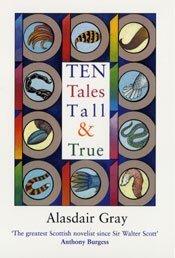
Review of 'Ten Tales Tall and True' on 'Goodreads'
3 stars
Although I regard him as one of my favorite authors, Alasdair Gray doesn't always deliver to me what I expect - or hope for. That's good, since it puts us on some sort of even ground. His job isn't to serve me whatever I feel like reading (which would in essence mean "Lanark") as well as my job isn't to always like or understand what the hell he's doing.
Some of these stories pass me by without me getting the point (or if it's him not getting his point across), while others fit perfectly within my current state of mind. None stands out as a favorite, and I'm not sure I'll return to this book anytime soon. On the other hand, it's a surprisingly and refreshingly political (overtly polictical, that is) collection of short stories that I probably could - each and every one - recommend to various friends.
"Houses …
Although I regard him as one of my favorite authors, Alasdair Gray doesn't always deliver to me what I expect - or hope for. That's good, since it puts us on some sort of even ground. His job isn't to serve me whatever I feel like reading (which would in essence mean "Lanark") as well as my job isn't to always like or understand what the hell he's doing.
Some of these stories pass me by without me getting the point (or if it's him not getting his point across), while others fit perfectly within my current state of mind. None stands out as a favorite, and I'm not sure I'll return to this book anytime soon. On the other hand, it's a surprisingly and refreshingly political (overtly polictical, that is) collection of short stories that I probably could - each and every one - recommend to various friends.
"Houses and small labour parties" instantly got me thinking of William, for example, while "Internal Memorandum" would suit Daniel just fine. And so on.
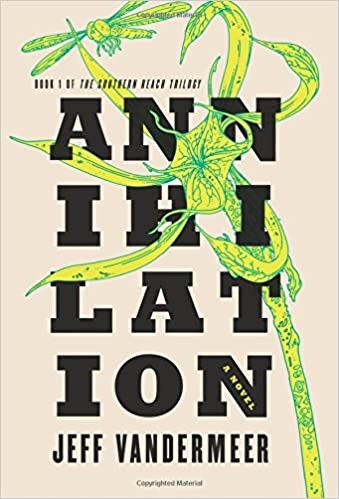
Area X has been cut off from the rest of the world for decades. Nature …
Review of 'Annihilation' on 'Goodreads'
2 stars
Well written and all, but I never quite managed to enjoy the atmosphere VanderMeer has created in this book. At times rather suggestive, but never intriguing, I kept going - hoping for some sort of payoff in the end.
Nope, I won't read the other two books. It doesn't seem worth it.
Well written and all, but I never quite managed to enjoy the atmosphere VanderMeer has created in this book. At times rather suggestive, but never intriguing, I kept going - hoping for some sort of payoff in the end.
Nope, I won't read the other two books. It doesn't seem worth it.
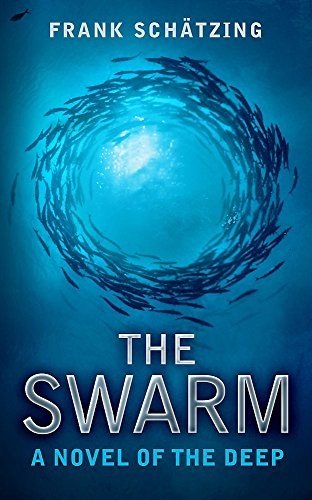
Von der Buchrückseite: "Vor Peru verschwindet ein Fischer. Spurlos. Norwegische Ölbohrexperten stossen auf merkwürdige Organismen, …
Review of 'The Swarm' on 'Goodreads'
3 stars
Lite för många sidor och lite för komplicerat (eller nördigt) innehåll för att det ska vara lättsmält, men å andra sidan är det inte det ändå. The Swarm är till det yttre en slags halvapokalyptisk katastrofroman om hur människan ställs inför (ännu) en fiende som hotar att förgöra henne, men är samtidigt till stora delar en slags misantropisk uppgörelse med människans uppblåsta självbild som skapelsens krona m.m. Och så finns där Lovecraftianska tentakler från djupet; Cthulhu (eller "Yrr", som Schätzing kallar det) vaknar efter eoner i djupet och börjar förgöra människan som vore hon ett irritationsmoment. Det får mig faktiskt att acceptera 800+ sidor med medelmåttiga karaktärsbeskrivningar och en genomarbetad, om än som redan påpekat nördig, intrig.
Schätzing får nämligen små utbrott ibland - främst efter första halvan av boken - där han gör allt för att smula sönder vår självbild som förnuftiga, andliga, medvetna varelser. Ibland blir det lite …
Lite för många sidor och lite för komplicerat (eller nördigt) innehåll för att det ska vara lättsmält, men å andra sidan är det inte det ändå. The Swarm är till det yttre en slags halvapokalyptisk katastrofroman om hur människan ställs inför (ännu) en fiende som hotar att förgöra henne, men är samtidigt till stora delar en slags misantropisk uppgörelse med människans uppblåsta självbild som skapelsens krona m.m. Och så finns där Lovecraftianska tentakler från djupet; Cthulhu (eller "Yrr", som Schätzing kallar det) vaknar efter eoner i djupet och börjar förgöra människan som vore hon ett irritationsmoment. Det får mig faktiskt att acceptera 800+ sidor med medelmåttiga karaktärsbeskrivningar och en genomarbetad, om än som redan påpekat nördig, intrig.
Schätzing får nämligen små utbrott ibland - främst efter första halvan av boken - där han gör allt för att smula sönder vår självbild som förnuftiga, andliga, medvetna varelser. Ibland blir det lite parodiskt, som i avsnittet då CIA-agenten Vanderbilt förgäves försöker försvara idén om en människa skapad i Guds avbild parat med något som tyvärr faller till marken som en karikatyr på blind patriotism, men det vägs upp av de efterhand allt mer frekventa utläggen om hur människan är dömd att aldrig kunna lära av historien, hur allt - ALLT - vi gör endast är biokemiska reaktioner, hur det inte finns något att tro på och hur obetydlig vår närvaro på jorden är för allt utom oss själva. Det är en tydlig och uppfriskande (om än samtidigt beklämmande) misantropi och nihilism jag inte ofta möter (eller har uppfattat tidigare) i genren. Även om den slutar med ett försiktigt ljus i horisonten.
Sannolikt är det kombinationen av blatant, nihilistisk misantropi med Lovecraftianska tentakler av obeskrivbarheter och färger som får det hela att bli acceptabelt. För rent litterärt är det föga mer än en dussinroman av standardsnitt med dussinkaraktärer av standardsnitt. Men i det här specifika fallet tror jag en får se de litterära aspekterna som ett utanpåverk och budskapet om människans poänglöshet som det centrala. Och tilltalande.
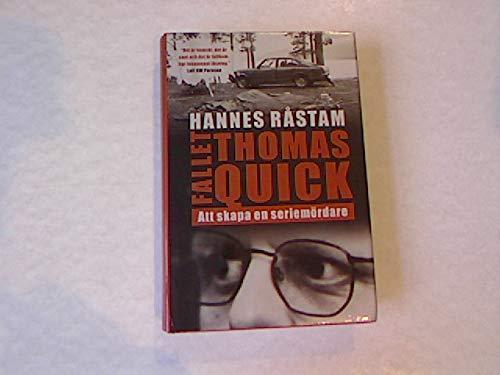
Review of 'Fallet Thomas Quick. Att skapa en seriemördare' on 'Goodreads'
4 stars
Vill skriva en recension, men vad finns att skriva? Det är som science fiction i samma ådra som [a:Philip K. Dick|4764|Philip K. Dick|https://d.gr-assets.com/authors/1264613853p2/4764.jpg], där verklighet och fiktion blandas samman och ingen förmår ställa sig utanför och se vad som verkligen är vad förrän långt efteråt och då står det klart att inget var verklighet, men att det då är försent att göra något åt. Eller?
Betydelsen av Hannes Råstams grävande i "Cirkus Quick" framgick inte helt och fullt i de dokumentärer som sändes 2008, men står klar i skarpaste kontrast i denna bok, som bygger på samma research. Det är skrämmande, men på något sätt också förståeligt, att det kunde gå så långt. Bollar i rullning, ett unikt samarbete där åklagare, advokat, åtalad och tillräckligt många åskådare alla ville att Thomas Quick skulle vara på riktigt.
Jag vet att delar av mig ville det. Att Sverige skulle finnas med på …
Vill skriva en recension, men vad finns att skriva? Det är som science fiction i samma ådra som [a:Philip K. Dick|4764|Philip K. Dick|https://d.gr-assets.com/authors/1264613853p2/4764.jpg], där verklighet och fiktion blandas samman och ingen förmår ställa sig utanför och se vad som verkligen är vad förrän långt efteråt och då står det klart att inget var verklighet, men att det då är försent att göra något åt. Eller?
Betydelsen av Hannes Råstams grävande i "Cirkus Quick" framgick inte helt och fullt i de dokumentärer som sändes 2008, men står klar i skarpaste kontrast i denna bok, som bygger på samma research. Det är skrämmande, men på något sätt också förståeligt, att det kunde gå så långt. Bollar i rullning, ett unikt samarbete där åklagare, advokat, åtalad och tillräckligt många åskådare alla ville att Thomas Quick skulle vara på riktigt.
Jag vet att delar av mig ville det. Att Sverige skulle finnas med på massmördarkartan. Att veta att Det Farliga fanns, men bevakat bakom lås och bom. Jag fick t.o.m. fatt på ett exemplar av den förment självbiografiska [b:Kvarblivelse|20554561|Kvarblivelse|Thomas Quick|https://d.gr-assets.com/books/1389810595s/20554561.jpg|38547544] som för mig blev det slutgiltiga beviset på att Thomas Quick var ett destillat av den rena galenskapen parad med den lika rena ondskan. Och månne stämmer det fortfarande, med tillägget att Thomas Quick är/var ett fantasifoster.
Jag häpnar över Seppo Pentinens uppenbara inkompetens, Gubb Jan Stigsons oförmåga att ändra uppfattning (och nå självinsikt) och Claes Borgströms skrämmande cynism. Någonstans inom mig vill jag läsa mer om dem - sannolikt är det i den trion (med flera, förstås, men främst dessa) vi hittar viktiga beståndsdelar av den ondska som så länge tillskrevs Bergwall som Quick. Hos dessa och hos ärelystna psykoanalytiker på Säters sjukhus tillsammans med lika ärelystna åklagare i form av en van der Kwast. Men ärelystnad är en sak och den kan - åtminstone i mina odrabbade ögon - mildra domen något. Här kan jag till och med se hur Quick utnyttjade dem för egen (o)vinning. Men det är inte möjligt att göra i den förstnämnda trions fall. De hade både möjlighet och skyldighet att genomskåda lögnaren Quick.
Att de inte gjorde det är den verkliga skandalen i Fallet Thomas Quick.
Translation from the 1974 Swedish King Kong blues: en berättelse från år 2018
Review of '2018 A. D., or the King Kong blues.' on 'Goodreads'
2 stars
Av någon anledning blandar jag alltid ihop Sam J. Lundwall med Åke Ohlmarks. Redan där börjar vår relation att skeva. Sedan gör jag någon association till någon mailinglista som inte (heller) har något att göra med Lundwall, annat än möjligtvis genremässigt - och (tyvärr) kvalitetsmässigt. Jag har svårt för språket och jag har svårt för storyn, som inte riktigt finns där. Det är ju ett problem. Och den hinner nätt och jämnt lyfta förrän boken är slut. Hoppsan, liksom. Men konceptet är bra: Bygg en framtidsvision på hur nutiden redan ser ut genom att ta inspiration från tidningsklipp. Den idén är värd att låna. Om inte för att skapa något eget, så i alla fall som skrivövningar. Det räcker så. Och den medföljande skivan fick jag aldrig höra eftersom den inte följde med. Kanske den finns på Spotify? Nej.
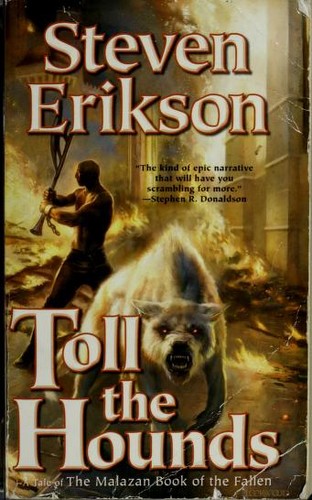
Toll the Hounds is the eighth novel in Canadian author Steven Erikson's epic fantasy series, …
Review of 'Toll the Hounds' on 'Goodreads'
3 stars
One of the first thoughts that surfaced after finishing this one was "only two more to go". I have, for a couple of books now, grown increasingly tired of this ever expanding fantasy universe of malazans, gods, ascendants, warriors, priests, soldiers, dragons, undead dragons and whatever else can be imagined.
Not that I'm not enjoying it. In theory, this is what appeals to me the most in reading (or watching) said genre. There is a delighted smirk on my face each time there's an undead jaghut telling a poor joke, or when an elder god can no longer hide it's human smallmindedness. As well as my heart fills with warmth when the mighty warrior in the midst of battling whatever horrific apparitions that may have come in his way suddenly sees his long lost pet appear. These are the things that have kept me going for eight books now (I …
One of the first thoughts that surfaced after finishing this one was "only two more to go". I have, for a couple of books now, grown increasingly tired of this ever expanding fantasy universe of malazans, gods, ascendants, warriors, priests, soldiers, dragons, undead dragons and whatever else can be imagined.
Not that I'm not enjoying it. In theory, this is what appeals to me the most in reading (or watching) said genre. There is a delighted smirk on my face each time there's an undead jaghut telling a poor joke, or when an elder god can no longer hide it's human smallmindedness. As well as my heart fills with warmth when the mighty warrior in the midst of battling whatever horrific apparitions that may have come in his way suddenly sees his long lost pet appear. These are the things that have kept me going for eight books now (I shudder at the thought of how many pages that amounts to!) d will probably be what makes me read the last two books sometime in the future.
That, and the fact that Erikson is a mighty fine writer. Sometimes profoundly poetic and beautiful, while at other times as gritty and ugly as is has to be in the midst of battle. He's also a philosopher with deep thoughts concerning faith, religion, life and death. The big questions, still never ignorant of how the small ones affect and are affected by these. He paints wonderful portraits of his characters, even those who pass by for just a couple of pages. And if they're not always 100% believable, they make up for that by being extraordinarily extaordinary instead.
That said, there are issues at hand that need addressing. While I found this book to be much more introvert and philosophical than the previous ones (not that they lack that, of course), and while this really appealed to me, I feel it came at the cost of the storyline. There is a convergence of powers happening in this book - a beginning to an end - that I feel kind of unprepared for. Like that the build-up doesn't really take place until a good thousand pages in, and by then everything has already been set in motion without the reader (well, me, at least) being in on it, since all attention has been on what everyone is thinking, rather than doing. And that's a shame, because even though there's (for the eighth time now) a truly epic finale, the lack in build-up takes away some of the epicness from it.
Overall, though, this was a step up from the previous three-ish books in the series, which left a lot more to be desired. There is hope still, that mr. Erikson will prove himself worthy the task of concluding this epic tale.
I just hope he needn't keep using the f-word. It's profoundly f-ing misplaced in this - or any - work of fantasy. Really. It just sounds too "real world".
Review of 'Deadpool by Posehn and Duggan Volume 2' on 'Goodreads'
3 stars
Maybe it's been too much Deadpool in my life recently, whith the movie coming out and all. And maybe, too, it was the fact that I felt kinda obligated to read the second volume, since the first ended rather abruptly in the middle of things unsolved for agent Preston. And maybe, but just maybe, the joke can get old?
But I think that my main issue with this Deadpool is his sudden seriousness. Not that Deadpool has ever been totally void of emotion or of being a "real" character, or that this would even be a bad thing. Deadpool, to me, is a very bleak and dark and sad character that is hidden somewhere inside of that red suit and blistered skin. Like an alter ego to Wolverine. A bad dream. So seriousness in itself is not the issue I'm pointing at here. Nope. It's more of the kind that …
Maybe it's been too much Deadpool in my life recently, whith the movie coming out and all. And maybe, too, it was the fact that I felt kinda obligated to read the second volume, since the first ended rather abruptly in the middle of things unsolved for agent Preston. And maybe, but just maybe, the joke can get old?
But I think that my main issue with this Deadpool is his sudden seriousness. Not that Deadpool has ever been totally void of emotion or of being a "real" character, or that this would even be a bad thing. Deadpool, to me, is a very bleak and dark and sad character that is hidden somewhere inside of that red suit and blistered skin. Like an alter ego to Wolverine. A bad dream. So seriousness in itself is not the issue I'm pointing at here. Nope. It's more of the kind that he has sentiments and that these can be turned against him. I didn't really see that coming, and I don't really like it, either.
So, while the action and humor is still top notch, and the sejour in North Korea was entertaining as a whole, Volume 2 did not quite reach up to my expectations, mostly because - as it turns out - my vision or idea about Deadpool doesn't entirely match that of Posehn & Duggan.
Så har jag äntligen läst Anderson's uppmärksammade bok om den föreställda gemenskapen som benämns "nationalism". Det har varit på gång sedan december 2004, då jag avråddes att läsa den som underlag för en 5/7,5 poängs uppsats på den socialantropologikurs jag var inskriven på. Då var argumentet från min handledare att det vore lite overkill, eftersom ämnet för uppsatsen inte i huvudsak var nationalism. Det må vara riktigt; sannolikt hade jag dock läst den ganska omgående efteråt om jag fortsatt läsa socialantropologi, men så blev det inte. Därför dröjde det till nu innan jag satte tänderna i den. Andersons redogörelse för nationalismens uppkomst är intressant, liksom hans ganska envetna hållning att nationalism är närmast neutralt till sin natur. Han ifrågasätter de som kopplar samman nationalism och rasism med hänvisning till att rasism mer handlar om klass (och etnicitet) än nationstillhörighet, men samtidigt har han svårt att bortse från att många av …
Så har jag äntligen läst Anderson's uppmärksammade bok om den föreställda gemenskapen som benämns "nationalism". Det har varit på gång sedan december 2004, då jag avråddes att läsa den som underlag för en 5/7,5 poängs uppsats på den socialantropologikurs jag var inskriven på. Då var argumentet från min handledare att det vore lite overkill, eftersom ämnet för uppsatsen inte i huvudsak var nationalism. Det må vara riktigt; sannolikt hade jag dock läst den ganska omgående efteråt om jag fortsatt läsa socialantropologi, men så blev det inte. Därför dröjde det till nu innan jag satte tänderna i den. Andersons redogörelse för nationalismens uppkomst är intressant, liksom hans ganska envetna hållning att nationalism är närmast neutralt till sin natur. Han ifrågasätter de som kopplar samman nationalism och rasism med hänvisning till att rasism mer handlar om klass (och etnicitet) än nationstillhörighet, men samtidigt har han svårt att bortse från att många av de frågor som rasism bottnar i handlar om effekter av en nationaliserad värld. Jag ser också hur han, liksom Gayatri Chakravorty Spivak senare kommer att göra, ser en skillnad mellan - för att använda Spivaks i mitt tycke tydligare terminologi - "tinget nationen" och nationalism. (Anderson talar om nationalism och "official nationalism"), men även här verkar han inte ha dragit mer än en streckad skiljelinje. Det här är ett tidigt och banbrytande verk, så kanske är det orättvist att kritisera Anderson på de här punkterna. För det är också intressant att läsa en redogörelse om nationalism ur en nationalism-positiv persons perspektiv. Kanske blir det bara därför svårt att bemöta eller se ett släktskap mellan nationalism och rasism? För även om han menar att ingen koppling finns, tycker jag mig ändå se en koppling i texten. Nåväl, det om det. Det är frågor som bjuder in till reflektion och det tackar jag Anderson för. Hellre det än att bara få sin bild bekräftad. En fyra blir det, mer för att boken är viktig, än för att jag "really liked it".