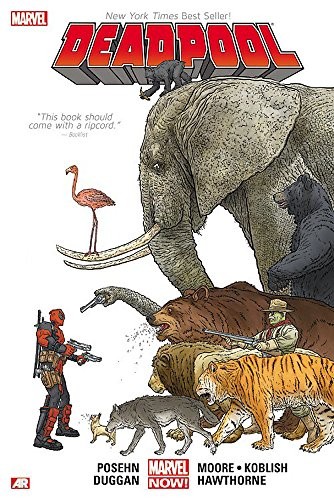
Det stör mig dock en del att den här samlingen slutar i ett väldigt öppet "to be continued", inte minst eftersom det i andra hälften handlade en del om helvetet och demoner på ett sätt som gav vibbar till en respektlös hyllning till en annan respektlös antihjälte i form av John Constantine.
Nu måste jag kanske ändå läsa vol. 2 innan jag byter miljö och lägger till lite svärta...
Deadpool är Deadpool.
Det stör mig dock en del att den här samlingen slutar i ett väldigt öppet "to be continued", inte minst eftersom det i andra hälften handlade en del om helvetet och demoner på ett sätt som gav vibbar till en respektlös hyllning till en annan respektlös antihjälte i form av John Constantine.
Nu måste jag kanske ändå läsa vol. 2 innan jag byter miljö och lägger till lite svärta...
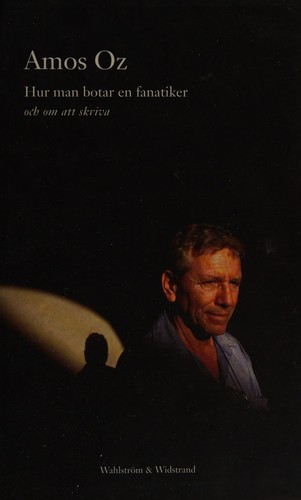
Review of 'Hur man botar en fanatiker och om att skriva' on 'Goodreads'
3 stars
Tre essäer som vävs samman lite löst (eftersom vissa stycken verkar upprepa sig i de olika essäerna), men på det stora hela inte har sådär jättemycket gemensam, annat än Amos Oz himself.
Moralkakorna är välsmakande med en bitter underton. Jag konfronteras med min egen fanatism som antirasist (eller antinationalist för den delen) i kampen mot de andras fanatism som rasister (eller nationalister för den delen) och hur jag bidrar till nyansernas utplånande. Nyttig läxa.
Kompromissen framhävs även den som den minst dåliga lösningen i alla konflikter. Minst dåliga, eftersom det i stort sett alltid innebär att alla Sidor förlorar på den, samtidigt som förstås Alla vinner på den i längden.
Och så skrivandet som utlopp för fanatism. Oz berättar hur han - om han vet vad han vill säga och han har 100% rätt, där det inte finns utrymme eller behov av nyanser, kompromisser, gråskalor, rätt och fel, ont och …
Tre essäer som vävs samman lite löst (eftersom vissa stycken verkar upprepa sig i de olika essäerna), men på det stora hela inte har sådär jättemycket gemensam, annat än Amos Oz himself.
Moralkakorna är välsmakande med en bitter underton. Jag konfronteras med min egen fanatism som antirasist (eller antinationalist för den delen) i kampen mot de andras fanatism som rasister (eller nationalister för den delen) och hur jag bidrar till nyansernas utplånande. Nyttig läxa.
Kompromissen framhävs även den som den minst dåliga lösningen i alla konflikter. Minst dåliga, eftersom det i stort sett alltid innebär att alla Sidor förlorar på den, samtidigt som förstås Alla vinner på den i längden.
Och så skrivandet som utlopp för fanatism. Oz berättar hur han - om han vet vad han vill säga och han har 100% rätt, där det inte finns utrymme eller behov av nyanser, kompromisser, gråskalor, rätt och fel, ont och gott - väljer att skriva debattartiklar, medan hans andra skrivande präglas av just nyanser, kompromisser, gråskalor och ett minimum av oss och dem, ont och gott, rätt och fel.
Som skrivande människa med anlag för fanatism (det är en ytterligt smittsam sjukdom, hävdar Oz) är det sistnämnda intressant och värt att reflektera ytterligare över. Twitter, till exempel, blir en tveklös arena för fanatism, medan en blogg kan - om man vill och är medveten om det - ge utrymme för sans och diskussion. Om villkorslöst utforskande av tankar, idéer och åsikter.
Tammefan om jag faktiskt fick ut något av boken, trots allt. Det trodde jag inte när jag började skriva recensionen!
Brought up in the homestead of the dark magician Untamo, who killed his father, kidnapped …
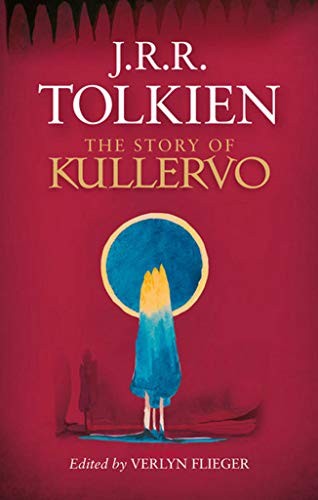
Review of 'The Story of Kullervo' on 'Goodreads'
1 star
Nej. Jag är ledsen, men det här är banne mej oläsbart. Nåt slags första, trevande försök att ens skriva prosa, influerat av Kalevala (tydligen, men vad vet jag?).
Lockelsen låg i det faktum att det här dels skulle vara något slags urversion - ett första utkast till pre-alphan - av det som så småningom skulle finslipas om och om igen och till slut så fröet som i sin tur skulle växa upp och bli Sagan om Ringen, och dels i att det skulle vara det mörkaste (jo, jag är så lättköpt) Tolkien någonsin skrivit.
Allt detta må vara sant. Men det går inte att läsa. Kilometerlånga meningar i svindlande prosadiktformat med bisarr meningsbyggnad och generellt osammanhängande svammel skall alltså leda till något slags berättelse.
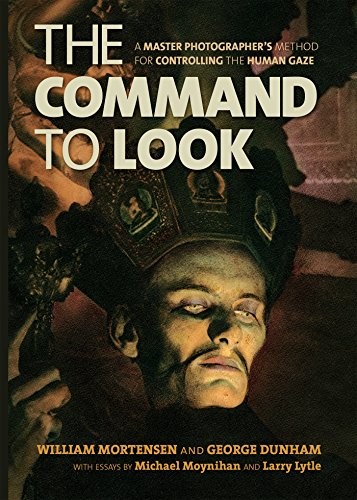
Even though I've shelved this as a book on photography (both virtually on Goodreads and physically in my bookshelf), it seems I might need a special section for this one. Quite possibly, I might need to place this with my two books on La Vey's satanism, [b:The Satanic Bible|82333|The Satanic Bible|Anton Szandor LaVey|https://d.gr-assets.com/books/1435430607s/82333.jpg|1039648] and [b:The Satanic Rituals|123947|The Satanic Rituals|Anton Szandor LaVey|https://d.gr-assets.com/books/1348076510s/123947.jpg|119352]. Overall, classification of books isn't always as obvious as one usually thinks, and a book like this one isn't so much a book on photography as it is a book on the psychological forces behind or inside photographies. Just like Anton La Vey (who was heavily influenced by "The Command To Look") didn't create the Church of Satan as a church, but rather as a means to apply those same forces in real, everyday life.
Rant aside, wehat I meant to say was that this was very inspiring on …
Even though I've shelved this as a book on photography (both virtually on Goodreads and physically in my bookshelf), it seems I might need a special section for this one. Quite possibly, I might need to place this with my two books on La Vey's satanism, [b:The Satanic Bible|82333|The Satanic Bible|Anton Szandor LaVey|https://d.gr-assets.com/books/1435430607s/82333.jpg|1039648] and [b:The Satanic Rituals|123947|The Satanic Rituals|Anton Szandor LaVey|https://d.gr-assets.com/books/1348076510s/123947.jpg|119352]. Overall, classification of books isn't always as obvious as one usually thinks, and a book like this one isn't so much a book on photography as it is a book on the psychological forces behind or inside photographies. Just like Anton La Vey (who was heavily influenced by "The Command To Look") didn't create the Church of Satan as a church, but rather as a means to apply those same forces in real, everyday life.
Rant aside, wehat I meant to say was that this was very inspiring on so many levels - not just to me as a photographer.
And maybe that's what makes me like this book so much. That it provides rules or laws or maybe just simply a way to do things, whatever they might be. For now, though, I'll try to apply it to the activity it was meant to be a guide to: Photography.
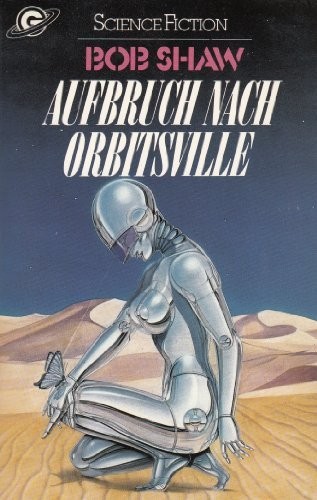
First off, I never meant to read an abridged version of the novel. It's obvious that 88 pages cannot make an epic story like this justice.
However, it was quite enough to give me the general idea of the story. Other reviewers have compared it to "Ringworld" (that I haven't read), and I myself see some similarities to Philip José Farmer's Riverworld series.
Unfortunately, both Farmer and Shaw disappoint me in the end. Or maybe I'm disappointing myself in thinking these kinds of stories have a certain something that they apparently don't have (and that I have no idea what it is). Perhaps a longing for something else - some new, unspoilt part of the world where one can start anew and not make the same old mistakes. Or where one can stay away from the rest of humanity for whatever time one has left.
Maybe I'm just too much …
First off, I never meant to read an abridged version of the novel. It's obvious that 88 pages cannot make an epic story like this justice.
However, it was quite enough to give me the general idea of the story. Other reviewers have compared it to "Ringworld" (that I haven't read), and I myself see some similarities to Philip José Farmer's Riverworld series.
Unfortunately, both Farmer and Shaw disappoint me in the end. Or maybe I'm disappointing myself in thinking these kinds of stories have a certain something that they apparently don't have (and that I have no idea what it is). Perhaps a longing for something else - some new, unspoilt part of the world where one can start anew and not make the same old mistakes. Or where one can stay away from the rest of humanity for whatever time one has left.
Maybe I'm just too much of a pessimistic misanthrope to be able to appreciate the underlying belief in (some parts of) humanity that both Farmer and Shaw display. Maybe I just feel that they aren't using the potential of thier Riverworlds and Orbitsvilles. Maybe they're just nostalgics, escaping back to earth under the guise of going in the opposite direction.
The sixth and final book in the Adversary Cycle was the first and only to reach the height of the first one.
It's been a long journey since I first happened to read [b:The Keep|62571|The Keep (Adversary Cycle, #1)|F. Paul Wilson|https://d.gr-assets.com/books/1386925088s/62571.jpg|3354329] on a whim while staying at my parents-in-law for a couple of days, and had I known the cost, I probably wouldn't have done it. But I did, and here I am.
Over the course fo the books, I've gotten to know a host of characters, of which I care for none. Not even Jack. F. Paul Wilson might know the formula for writing this kind of story, but he's awful at drawing characters and creating an emotional bond between them and the (or at least this) reader. The overall storyline, though, is still pretty good. And when it comes to this book, the race against the clock towards …
The sixth and final book in the Adversary Cycle was the first and only to reach the height of the first one.
It's been a long journey since I first happened to read [b:The Keep|62571|The Keep (Adversary Cycle, #1)|F. Paul Wilson|https://d.gr-assets.com/books/1386925088s/62571.jpg|3354329] on a whim while staying at my parents-in-law for a couple of days, and had I known the cost, I probably wouldn't have done it. But I did, and here I am.
Over the course fo the books, I've gotten to know a host of characters, of which I care for none. Not even Jack. F. Paul Wilson might know the formula for writing this kind of story, but he's awful at drawing characters and creating an emotional bond between them and the (or at least this) reader. The overall storyline, though, is still pretty good. And when it comes to this book, the race against the clock towards the apocalypse makes for an entertaining read.
And that is why I give this book four stars. It had more of the good stuff and less of the bad. It isn't quality, but it isn't awful either.
And mean as it might sound, I think the main reason for that extra star has a helluva lot to do with the fact that this was the last F. Paul Wilson book I'll ever read in my life.
Nyanserat. Det är nog det främsta omdömet jag vill ge David Qviströms reportagebok. Det är också nyanseringen som tippar över betyget till en fyra.
Migrationspolitiken i Sverige och i EU har misslyckats. Men inte på grund av unken människosyn eller inkompetens. Inte heller på grund av bristande initiativ eller intresse. Den har misslyckats för att det inte är en fråga som enbart Sverige eller EU kan driva och lyckas genomföra. Och frågan jag läser mellan raderna är: Kan den överhuvudtaget lyckas?
Fast jag drar också slutsatsen att kanske är den följdfrågan fel ställd...
Qviström tar oss med på en resa in i skuggsamhället. Till de gömda familjerna, de apatiska barnen. Till Europa och världen, där människor som fått sitt asylärende avslaget återvänder till den djupaste misär, där människor lever en livstid på flykt i ständigt hopp om att kanske någon, någon gång sa se dem och hjälpa dem. Och där …
Nyanserat. Det är nog det främsta omdömet jag vill ge David Qviströms reportagebok. Det är också nyanseringen som tippar över betyget till en fyra.
Migrationspolitiken i Sverige och i EU har misslyckats. Men inte på grund av unken människosyn eller inkompetens. Inte heller på grund av bristande initiativ eller intresse. Den har misslyckats för att det inte är en fråga som enbart Sverige eller EU kan driva och lyckas genomföra. Och frågan jag läser mellan raderna är: Kan den överhuvudtaget lyckas?
Fast jag drar också slutsatsen att kanske är den följdfrågan fel ställd...
Qviström tar oss med på en resa in i skuggsamhället. Till de gömda familjerna, de apatiska barnen. Till Europa och världen, där människor som fått sitt asylärende avslaget återvänder till den djupaste misär, där människor lever en livstid på flykt i ständigt hopp om att kanske någon, någon gång sa se dem och hjälpa dem. Och där ingen riktigt vet vilken hjälp de kan vänta sig, eller vilken hjälp de mest av allt behöver - förutom hjälpen att överleva till nästa dag.
Han tar oss med till maktens korridorer i Sverige och EU. Till Tobias Billström, Cecilia Malmström, Richard Jomshof och deras europeiska kollegor. Till organisationer som Frontex - EU's myndighet för gränskontroll - och en mängd andra som alla delar samma vilja att hjälpa, och samma maktlöshet inför det faktum att ingen insats kommer att kunna lösa problemet.
Följdfrågan var det. Kanske handlar migrationspolitiken inte så mycket om att nå ett uppsatt mål som att förmedla en människosyn. Och kanske djupare än så; handlar det kanske om att vi alla måste ta ansvar för just vår lilla del?
Qviström skriver ärligt och utlämnande om sina kluvna känslor inför konfrontationer med fattigdom via möten med tiggare och utvisade, liksom sina insikter om den etnocentrism han sitter fast i när han t.ex. nästan automatiskt uppmärksammar de syriska barn som ser "svenskare" ut än andra på ett lite mer positivt och medkännande sätt. Det väcker mina sympatier och får mig att också våga se min egen kluvenhet inför att t.ex. behöva passera tiggaren utanför min lokala ICA-affär. Vad väcker det för känslor hos mig? Och varför?
Det här är ingen debattbok, även om den innehåller en mängd tänkvärdheter och stoff att använda sig av i just debatten. Det är en skildring av den värld vi lever i, och den värld som existerar parallellt med vår. Och som vi sällan får se på det här sättet. Skildrad genom vittnesmål från de som faktiskt lever i den.
Den gör mig ödmjuk. Och än mer besluten att vilja hjälpa.
Människor blir inte nyttiga om man inte ger dem möjlighet att bli det.
I sort of stopped reading superhero comics around when Sam Raimi started making Spiderman movies. Technology was on the verge of giving movies the possibilities so far exclusive to superhero comics and the following years gave us the X-men, the Watchmen, the Avengers and a host of related or other superhero-movies better suited to enjoy with beer and greasy fingers, than your average comicbook.
Thus, I had completely missed the rise of Deadpool to Marvel fame. I had heard of him, and seen the Gangnam Style video on youtube. But I hadn't quite got the point. He seemed to me to be a comic relief to a Marvel universe that had - since the mid 90's something - started to become a darker, social realist (anyone remember Tony Starks alcoholism?) narrative. A universe more and more like our own, with heroes more and more complex - or nuanced. More grown …
I sort of stopped reading superhero comics around when Sam Raimi started making Spiderman movies. Technology was on the verge of giving movies the possibilities so far exclusive to superhero comics and the following years gave us the X-men, the Watchmen, the Avengers and a host of related or other superhero-movies better suited to enjoy with beer and greasy fingers, than your average comicbook.
Thus, I had completely missed the rise of Deadpool to Marvel fame. I had heard of him, and seen the Gangnam Style video on youtube. But I hadn't quite got the point. He seemed to me to be a comic relief to a Marvel universe that had - since the mid 90's something - started to become a darker, social realist (anyone remember Tony Starks alcoholism?) narrative. A universe more and more like our own, with heroes more and more complex - or nuanced. More grown up and adapted to an audeience that might also have grown up. But also not as fun anymore. "Why so seriousss", as a famous DC villain once said, while at the same time being made exactly that by Cristopher Nolan and Heath Ledger.
And do need to state that I'm still enjoying the realism that has crept into the world of superheroes. After all, that's what made me love Spidey from the start. His constant struggle to be able to be both Peter Parker and Spiderman at the same time. And there is lots of kudos to the host of writers struggling to form this mass of decontextualized comics into something coherent. To write (or rewrite) the complete history of the superhero universe.
Enter Deadpool.
Not knowing where to start, I first tried to find the birth of Deadpool or some similar starting point. But I ended up with this collection of four stories with a flavour that immediately appealed to me: "Deadpool Kills the Marvel Universe", "Deadpool Killustrated", "Deadpool Kills Deadpool" and "Night of the living Deadpool" - with "Deadpool vs. Carnage" as a nice bonus.
This was madness. Not my choice, but the content. With a total disregard for everything I've mentioned above regarding the evolve of the Marvel Universe, Deadpool balances on the edge of heresy when not only killing everyone and everything (including himselves) in an over-the-top all-out gorefest, but also breaking the (in?)famous fourth wall when acknowledging the fact that he´s a fictional character. And I love it!
Without getting so much into the stories themselves, the appeal of them (and Deadpool himself) lies in the aforementioned relief. Not necessarily comic relief, though, but rather a relief from the increasing rigidity following the ordering and contextualization of the Marvel universe. Suddenly, everything is possible again. Suddenly, there is hope of being surprised for real again.
I realize I have longed for my superheroes to be able to act without having their actions reverberate over to some other heroes' domain. To let them have their own place in the spotlight. Of course, there is a valid as well as creative point in creating a Marvel or DC universe, but it has come with the cost of a more limited space to act within. And I feel that Deadpool manages to counteract this effect. At least somewhat.
Because while reading the Deadpool Minibus, I get the sense that this is Wade "Deadpool" Wilson imagining the whole thing from a most likely padded cell somewhere. Living in his own schizophrenic dreamworld, totally unable to exist in the real world (or the real Marvel universe, that is).
And, while that thought might be just as depressingly social realist as Tony Stark's alcoholism, it also gives Deadpool a well deserved place in that same universe.
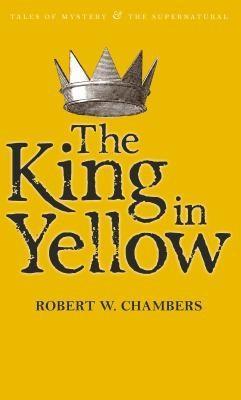
The King in Yellow is a book of short stories by the American writer Robert …
Review of 'The King in Yellow' on 'Goodreads'
3 stars
People descending into madness. The otherworldly King in Yellow. The pallid mask. Carcosa, where the black stars hang in the sky.
Anyone with the slightest interest in Lovecraftian literature will feel at home when reading the first three or so short stories in this book. They do indeed contain that same essence of "cosmic terror" that Lovecraft since refined and perfected - and who knows; maybe the name of R.W. Chambers would be the blackest star shining, had he but decided to continue on that horrfic path towards Carcosa. But history (and probably he himself) chose otherwise.
The majority of stories in this collection are romantic and witty. Had they been movies, they would have bene classified as romantic comedies. Don't get me wrong, though. They are nice reads too. Just not what one expects after having been subjected to the threat that is "The King in Yellow".
Chambers descriptions …
People descending into madness. The otherworldly King in Yellow. The pallid mask. Carcosa, where the black stars hang in the sky.
Anyone with the slightest interest in Lovecraftian literature will feel at home when reading the first three or so short stories in this book. They do indeed contain that same essence of "cosmic terror" that Lovecraft since refined and perfected - and who knows; maybe the name of R.W. Chambers would be the blackest star shining, had he but decided to continue on that horrfic path towards Carcosa. But history (and probably he himself) chose otherwise.
The majority of stories in this collection are romantic and witty. Had they been movies, they would have bene classified as romantic comedies. Don't get me wrong, though. They are nice reads too. Just not what one expects after having been subjected to the threat that is "The King in Yellow".
Chambers descriptions of being a drunken, young, aspiring artist in Paris are wonderful, as are his commentaries on/observations of people's behavior in general. These qualities are better diplayed in the romcoms, so even though they might not be your preferred genre of literature, I still urge anyone picking this book up to read those stories as well.
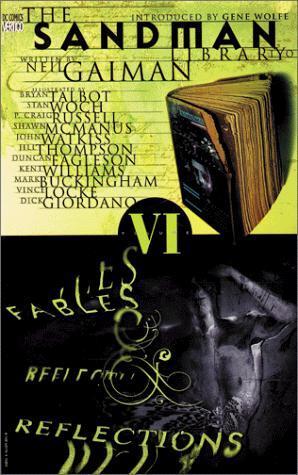
Jag blir lite kluven inför Neil Gaimans författarskap när jag läser om Sandman-böckerna en sisådär 20 år senare. Hade det inte varit för dessa och den magiska portal de öppnade in i en värld av "serier för vuxna och förment intellektuella" skulle jag antagligen ha följt en långt krokigare väg till där jag befinner mig idag - med hänseende till vad jag läser eller ser på film. I alla fall i vissa avseenden.
Men av hittills sex (om)lästa volymer är det bara två som når upp till ett högre betyg än tre och det både förvånar mig och gör mig lite beklämd. Var det verkligen inte mer än det här han hade att komma med?
Som jag skrev angående [b:The Sandman, Vol. 4: Season of Mists|25101|The Sandman, Vol. 4 Season of Mists (The Sandman #4)|Neil Gaiman|https://d202m5krfqbpi5.cloudfront.net/books/1327937313s/25101.jpg|25854], så besitter Gaiman onekligen stora kunskaper på områdena mytologi, religion, folktro m.m. Och ibland …
Jag blir lite kluven inför Neil Gaimans författarskap när jag läser om Sandman-böckerna en sisådär 20 år senare. Hade det inte varit för dessa och den magiska portal de öppnade in i en värld av "serier för vuxna och förment intellektuella" skulle jag antagligen ha följt en långt krokigare väg till där jag befinner mig idag - med hänseende till vad jag läser eller ser på film. I alla fall i vissa avseenden.
Men av hittills sex (om)lästa volymer är det bara två som når upp till ett högre betyg än tre och det både förvånar mig och gör mig lite beklämd. Var det verkligen inte mer än det här han hade att komma med?
Som jag skrev angående [b:The Sandman, Vol. 4: Season of Mists|25101|The Sandman, Vol. 4 Season of Mists (The Sandman #4)|Neil Gaiman|https://d202m5krfqbpi5.cloudfront.net/books/1327937313s/25101.jpg|25854], så besitter Gaiman onekligen stora kunskaper på områdena mytologi, religion, folktro m.m. Och ibland får han till det. Men för det mesta blir det tyvärr inte mer än glorifierad namedropping och kvasifilosofi där berättelsernas upplevda substans egentligen inte är annat än illusioner. De är tunna, helt enkelt.
Vid det här läget känns faktiskt Gaimans höga anseende lite lätt överskattat.
Nog med kritik nu. Det här ska ju trots allt vara en recension av en av hans bättre Sandman-volymer. "Fables & Reflections" är en samling historier som förstås alla kretsar kring Morpheus, men där han för det mesta rör sig i periferin (som sedan på slutet visar sig vara centrum). Element från historien, folksagor, myter, legender, religioner utgör som så ofta persongalleriet, liksom karaktärer vi mött i tidigare historier. Och det är överlag bra och engagerande läsning med en förtjusande blandning av verklighet (då Gaiman väljer att bjuda in historiska personer i handlingen - ibland t.o.m. som huvudpersoner. Jag anar en influens från [a:Philip José Farmer|10089|Philip José Farmer|https://d202m5krfqbpi5.cloudfront.net/authors/1234714074p2/10089.jpg] i detta, vilket tilltalar mig mycket) och fantasi. Kort sagt: Det finns något i varje historia som gör den värd att läsa.
För mig var det behållningen, tror jag. De korta historierna i sig gör att pretentionerna om att läsa (liksom att skriva) något riktigt djupt aldrig får tillräckligt med luft och Sandmans aspekt av lättsam underhållning för den lite vuxnare kommer fram i ett ärligare sken. Och man slipper känna behovet att skriva en lång och pretentiös recension om hur pretentiöst Gaimans författarskap kan te sig.
Fem stjärnor kanske är på gränsen. Jag menar, Henrik Arnstad är trots allt lite otydlig när det gäller definitionen av fascism. Å andra sidan visar han samtidigt, genom att ta 399 sidor i anspråk, hur svårgripbart fascismen är. Så kanske är det orättvist att kalla honom otydlig?
Boken i sig är en gedigen, populärvetenskaplig genomgång av fascismens tillblivelse, uppgång, fall och uppgång. Den placerar ämnet i en historisk och samhällelig kontext som både skapar förståelse för "hur kunde det ske?" och gör det hela ännu mer skrämmande. "Att det kunde ske!"
Jag har gjort ett femtiotal små anteckningar i marginalen (fast egentligen har jag gjort dem på ett separat papper - jag är lite för pedantisk för att kluddra i böcker. Dessutom blir det lättare att hitta rätt anteckning på så vis.) De rör sig från små utropstecken till kortare essäer och avsikten är att så småningom använda dem i …
Fem stjärnor kanske är på gränsen. Jag menar, Henrik Arnstad är trots allt lite otydlig när det gäller definitionen av fascism. Å andra sidan visar han samtidigt, genom att ta 399 sidor i anspråk, hur svårgripbart fascismen är. Så kanske är det orättvist att kalla honom otydlig?
Boken i sig är en gedigen, populärvetenskaplig genomgång av fascismens tillblivelse, uppgång, fall och uppgång. Den placerar ämnet i en historisk och samhällelig kontext som både skapar förståelse för "hur kunde det ske?" och gör det hela ännu mer skrämmande. "Att det kunde ske!"
Jag har gjort ett femtiotal små anteckningar i marginalen (fast egentligen har jag gjort dem på ett separat papper - jag är lite för pedantisk för att kluddra i böcker. Dessutom blir det lättare att hitta rätt anteckning på så vis.) De rör sig från små utropstecken till kortare essäer och avsikten är att så småningom använda dem i egna blogginlägg på ämnet.
Ämnet, ja. För mig blir boken ytterligare ett bevis (eller i alla fall tecken) på att företeelser som fascism och rasism är resultat av en övergripande ideologisk skapelse; Nationalismen.
En av konstanterna (den enda?) inom fascistiska rörelser är nationalismen - eller ultranationalismen, som Arnstad föredrar att beskriva den. Den ligger som våt matjord kring gräsrötterna och får dem att växa med oerhörd kraft och snabbhet. Plötsligt står fascismen inte bara för dörren, utan i tamburen.
Samtidigt rymmer boken mycket mer än så. Den visar på det problematiska förhållandet mellan fasicsm och konservatism, men också den nödvändiga dynamiken mellan konservatism och progressivism. Nästan så att Arnstad pekar ut en slags politisk medelväg (som botemedel mot fascism).
Nej, nu går jag mina anteckningar i förväg. Dags att flytta över mina funderingar till bloggen (www.lancefestivalen.se) istället.
""Who am I? Why, I'm you. Or parts of you. The best parts. I'm the …
Review of 'Reprisal' on 'Goodreads'
2 stars
Fifth book of the series. In 'Reprisal', [a:F Paul Wilson|7120822|F Paul Wilson|http://www.goodreads.com/assets/nophoto/nophoto-U-50x66-251a730d696018971ef4a443cdeaae05.jpg] tries to tie together most of the preceeding stories of the so called 'Adversary Cycle' and succeeds, even though the result leaves me wishing he hadn't.
The story of 'Reprisal' is a good one. The gradual destruction of Lisl is pretty heartbreaking. And Wilson succeeds in creating - in Rafe Losmara - a character that balances between eccentric and evil. A moral anarchist.
But the important character of the story - Will Ryerson - is a failure. As is any revelation about the Adversary. Perhaps it's because Wilson doesn't reveal enough, perhaps it's simply because the mythology behind this Adversary is simplific and stereotypical.
I have set as a goal in life to finish the Adversary Cycle. Failure in doing so would be in Rasalom's favor and it would also prevent me from passing ultimate judgement on the …
Fifth book of the series. In 'Reprisal', [a:F Paul Wilson|7120822|F Paul Wilson|http://www.goodreads.com/assets/nophoto/nophoto-U-50x66-251a730d696018971ef4a443cdeaae05.jpg] tries to tie together most of the preceeding stories of the so called 'Adversary Cycle' and succeeds, even though the result leaves me wishing he hadn't.
The story of 'Reprisal' is a good one. The gradual destruction of Lisl is pretty heartbreaking. And Wilson succeeds in creating - in Rafe Losmara - a character that balances between eccentric and evil. A moral anarchist.
But the important character of the story - Will Ryerson - is a failure. As is any revelation about the Adversary. Perhaps it's because Wilson doesn't reveal enough, perhaps it's simply because the mythology behind this Adversary is simplific and stereotypical.
I have set as a goal in life to finish the Adversary Cycle. Failure in doing so would be in Rasalom's favor and it would also prevent me from passing ultimate judgement on the series as a whole as well as on Wilson as a writer.
I'll just take a short break before entering the Nightworld...