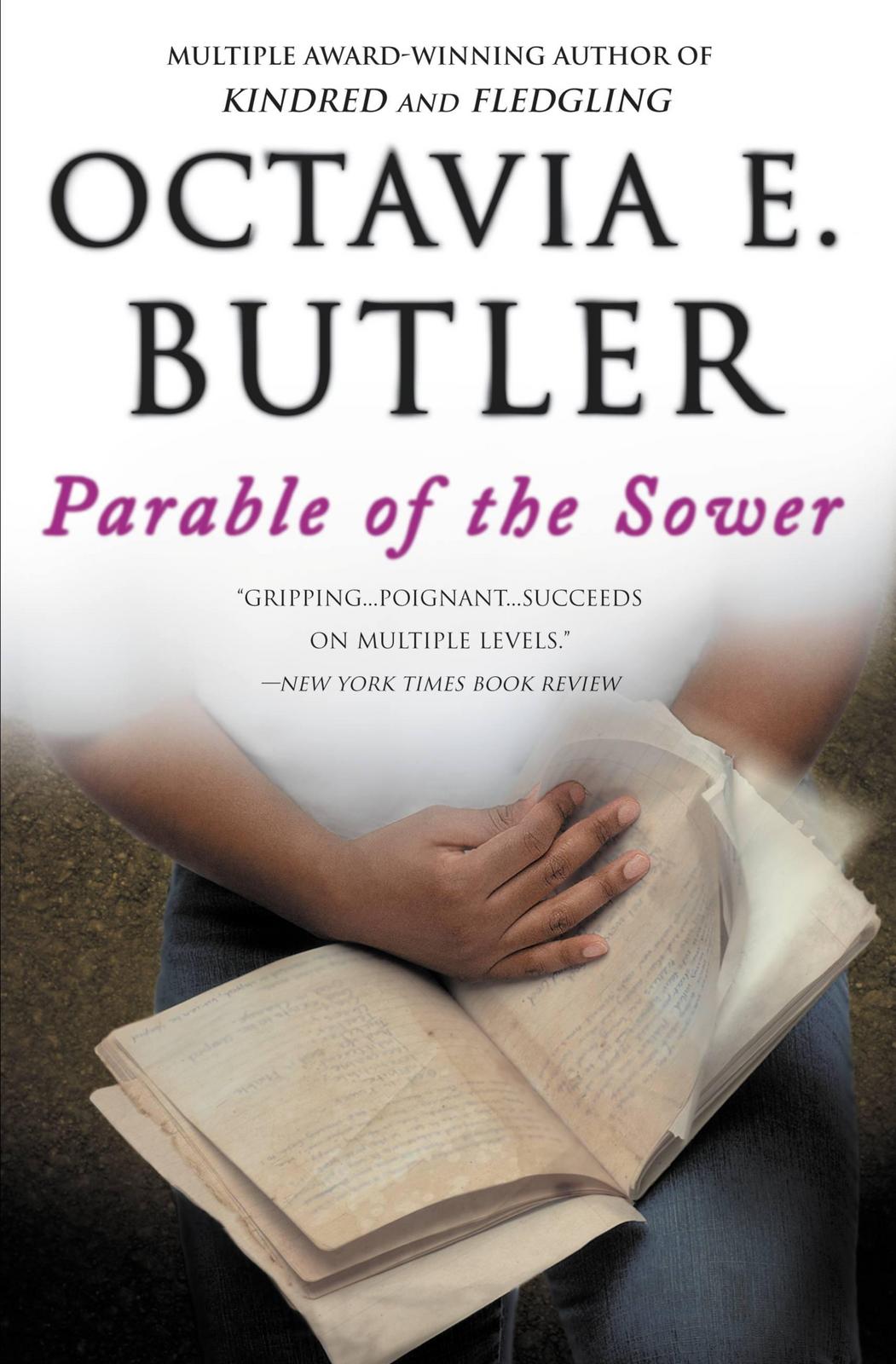
Bodhipaksa reviewed Parable Of The Sower by Octavia E. Butler
A brilliant book
5 stars
I'm fascinated by shows such as "The Walking Dead" and the BBC's 2008 "Survivors," which is about the small fraction of the population who remain after a man-made virus wipes out 99.9 percent of humanity. These shows create circumstances favorable to psychopaths (he who kills without hesitation has an advantage over anyone with a conscience), and put good people in the position of having to decide how best to use force in order to stay alive without killing their own humanity.
The Parable of the Sower is in a similar vein, but it's more realistic than the two shows I mentioned. There's no pandemic and no zombies. The "big bad" is a societal collapse in the US caused by climate change and corrupt and inept government. Society has become stratified into the super-rich, who we never see in the novel, except for a mention of them flying around in …
I'm fascinated by shows such as "The Walking Dead" and the BBC's 2008 "Survivors," which is about the small fraction of the population who remain after a man-made virus wipes out 99.9 percent of humanity. These shows create circumstances favorable to psychopaths (he who kills without hesitation has an advantage over anyone with a conscience), and put good people in the position of having to decide how best to use force in order to stay alive without killing their own humanity.
The Parable of the Sower is in a similar vein, but it's more realistic than the two shows I mentioned. There's no pandemic and no zombies. The "big bad" is a societal collapse in the US caused by climate change and corrupt and inept government. Society has become stratified into the super-rich, who we never see in the novel, except for a mention of them flying around in helicopters; "middle class" people who have jobs but who are barely scraping by, who are forced to grow much of their own much food, and who live in improvised walled communities comprising a few houses or part of a neighborhood; people who are essentially enslaved by corporations; and the mass of humanity who are starving or killing themselves with drugs.
A sheriff's badge is a license to steal. At best the police will show up late and charge you a fortune. (Everything is privatized; water costs more than gasoline, and no one can afford gasoline as well as water.) The police are just another gang. States have hardened their borders against influxes of refugees from other parts of the country. In effect there only nominally a United States. (Still, the US government has a Mars program!)
The book is the journal of Lauren Olamina, a teenage girl whose father is a preacher and a college professor with a PhD. Her stepmother also holds a PhD. This means they are middle class, which means they are poor. The Olaminas live with a number of other families who are barely getting by, in a walled community trying to defend themselves against raids by the hordes of the desperate poor that live around them.
At age 16, Lauren, seeing that everything is getting worse, knows that her community is doomed, and secretly plans to hit the road as soon as she turns 18. As it happens, her community is wiped out before she can make her planned departure. She and two other survivors hit the road with the hope of finding somewhere better up north. Unfortunately, so are many thousands of other people, many of them with evil intentions, and many of them taking drugs that drive them to violent acts.
This is a story about good people gathering together for safety, trying to defend themselves against the desperate and the evil. How to decide who to trust? Lauren's group grows slowly but steadily.
This story is about people who hold onto a shred of hope in a society that seems hopeless. This resonates today.
The Parable of the Sower opens in 2024. Butler even has a president whose slogan is "Make America Great Again." It was written in 1993. It's all too believable as a portrait of societal collapse.
The extract from Lauren's writings (a compilation of poems and reflections she calls "The Book of the Living") is the nucleus of her religion: Earthseed. She says she hasn't invented this religion, but discovered it through observation.
Change is everything. But we can choose how we interact with this constantly changing world. And what we change changes us. This is a teaching on karma.
Lauren has the long-term aim of getting humanity to the stars. On one level that's a ridiculous notion. Even the US's remaining space program is likely to be scrapped by the next president. Lauren's first step toward that goal is simply to establish a Earthseed community, growing its own food and protecting itself from the world. Even that is monumentally ambitious in the time she inhabits. As I said, this is a book about hope.
Does Lauren ever make it to the stars? I don't know. There are two Earthseed books, and I plan to start on the second, "The Parable of the Talents," as soon as possible. There was to be a third book, but alas Butler never got the chance to write it.
The title is a reference to the new testament parable of someone sowing seeds, with some of them falling on stony ground, or being outgrown by thorns, yet others landing in fertile soil. Hope is a kind of soil in which many things can live. We need to have hope, but we also need to plant seeds in it, and to tend them as they grow.