User Profile

ilk

ilk@bookrastinating.com

Joined 1 year, 2 months ago

This link opens in a pop-up window

ilk's books

Currently Reading

2026 Reading Goal

25% complete! ilk has read 10 of 40 books.

reviewed Too Like the Lightning by Ada Palmer (Terra Ignota -- Book 1)
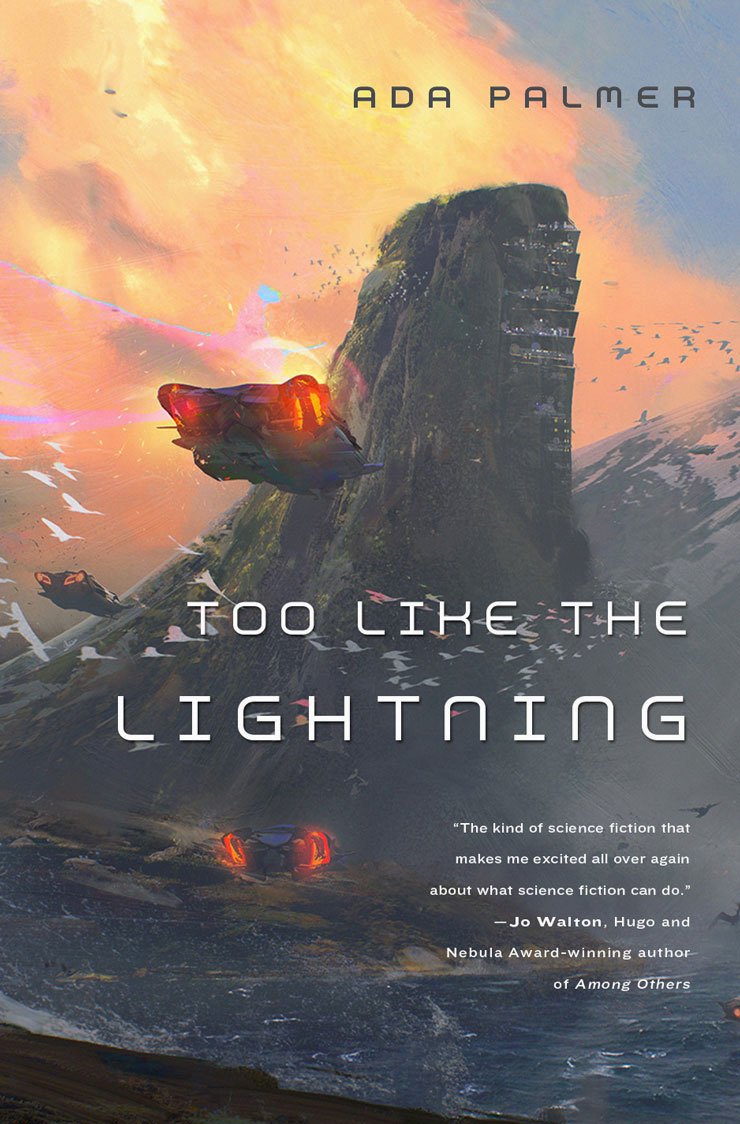
Ada Palmer: Too Like the Lightning (Hardcover, 2016, Tor Books)

"The world into which Mycroft and Carlyle have been born is as strange to our …

Too Like the Lightning

This is a temporary DNF, and one of my big disappointments of the year. I read to approx. p220, giving up during an extended (and frankly inane) overstuffed dialog sequence.

I like the author. Palmer is intelligent, and passionate about her chosen subjects. I share a stack of the same interests, particularly censorship (she has a couple of great lectures on YouTube about the subject, explaining what censorship regimes really do, how they work, how universally slipshod they are, etc.)

I also like the book's key ideas. My social milieu DOES matter more to me than the country on my birth certificate, and that SHOULD count for something. But I couldn't grok her writing style. It's baroque. Too wordy, too 'mannered'. The framing device she employs is original (a history of events, about which extraneous details are included, like editorial decisions and commentary on people) but I can't …

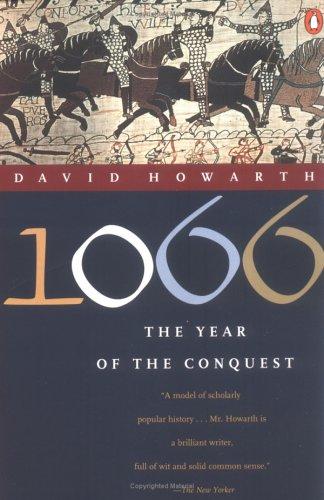
David Howarth: 1066 (Paperback, 1981, Penguin (Non-Classics))

1066 The Year of the Conquest

Excellent overview of the subject. A highly readable, down to earth, unpretentious prose style. It avoids the trend in a lot of popular history writing of gradiose puffery of the topic (10 page forewords, hysterical framing, etc). I read it in about four sittings. Available from your shadow library of choice.

It covers the whole year of 1066 and starts from the perspective of the peasantry, describing key social institutions such as the villlage, the thanes, the forums for dispute resolution called 'hundreds' and so on. I didn't know that English monarchs were elected by a sort of proto-parliament, and that heredity was a secondary factor in determing kingship.

It illustrates the key figures involved. You get a keen sense of their psychological states and the political hands they were dealt: Edward the Confessor's frustration with his duties and never feeling truly at home with his own people, …

Ottessa Moshfegh: Lapvona (2022, Penguin Publishing Group)

A fateful year in the life of a thirteen-year-old shepherd's son living in Lapvona, a …

It wasn’t until midday that Villiam got dressed, bored of snoozing. He ate some more and perused Clod’s drawings from the night before. Now they seemed trite to him. Clod had failed to capture the drama of the scene—Villiam choking on the meat had been much more powerful than Clod had drawn it. But maybe if he painted the entire scene, the table laden with food, the priest and Dibra lurching up from their chairs to try to save their beloved lord, that could be worthy of a frame. Yes, Villiam thought dreamily, an action scene. And the nun punching him in the gut. He described his vision to Clod as they walked through the hall along the red carpet, down the stairs, and out into the daylight. Villiam squinted and yawned at the sun as they sauntered down the slope toward the stables, stopping to pluck a sprig of tansy and rub it between his hands and sniff. The sky seemed to darken just for him as they approached the stable where the mutilated horse was being watered and brushed.

Villiam rarely passed by the stable. He avoided Luka and anything to do with him. As he approached and saw Dibra’s eyeless horse stepping back and forth on the well-trodden hay, he remembered that Luka was gone forever.

‘Does Dibra know?’ Villiam asked the air. The stablehands muttered unintelligibly. ‘Where is Dibra?’

‘She hasn’t come back yet,’ one stablehand said. He was a stupid boy and hadn’t understood everyone’s pledge to keep quiet about Dibra. The other stablehands stepped back to distance themselves from his stupidity.

‘Come back from where?’ Villiam asked.

‘She left on this horse late last night, but it came back without her.’

‘Huh.’ He didn’t care.

Villiam wondered at the bleeding eye sockets. The horse blinked its long lashes, neighed, then seemed to stare deeply at Villiam, who kissed it on its dry black nose. The feeling of the chapped skin against his lips elicited a thought—a revelation. ‘This horse is a revelation!’ he exclaimed. Then he snapped his fingers and demanded the stableboys do a little dance for him. He clapped along to the rhythm of their feet.

Villiam felt very happy. Of all those at the manor, he was the only one to appreciate that the horse had found its way home without sight. That was loyalty. Forget Dibra. She, like Luka, would get what she deserved. Villiam would not lament his wife’s disappearance. No, he would celebrate. Something good was coming. Villiam believed this in his heart as much as he believed himself to be at the heart of all things.

‘Hallelujah!’

Lapvona by 

reviewed Lapvona by Ottessa Moshfegh

Ottessa Moshfegh: Lapvona (2022, Penguin Publishing Group)

A fateful year in the life of a thirteen-year-old shepherd's son living in Lapvona, a …

Lapvona

Marek a god-fearing shepherd's boy does his pious best to make sense of grim life circumstances until one day he makes an impulsive decision during an excursion with the landlord's son. The book reads like The Life of Brian crossed with Caligula or something directed by Branden Cronenburg.

It's a pithy study of resentment in all its flavors. Ludicrous and depraved yet readable. The characters are often preoccupied with wrongs, slights, past mistakes and post facto justifications of behaviour. Most of them are either idiots or scoundrels. Ina, a longlived wet-nurse, and Grigor, an elderly man turned Cynic (the original Diogenean sense of cynic) were my favorites.

The setting is never stated but my guess is circa 5th century Anatolia or Armenia. The early book refers 'fair northeners' who are 'amoral' and 'well suited to servile tasks', which I read as slavs of some description. A key scene …

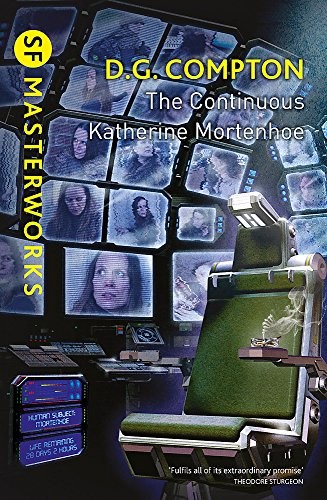
D. G. Compton: The Continuous Katherine Mortenhoe (SF Masterworks) (2012, Gollancz)

The Continuous Katherine Mortenhoe

A novel from the 1970s (unwittingly) about the 2010s. Our titular character attempts an escape from the camera of the TV show chronicling her life. Low plot and high concept. Took me several sittings go get through, not due to length or writing style, but rather how sparse the plot is. I love the way Compton doles out information to the reader; it never feels rushed or overbearing.

Compton alternates the perspective between Katherine and the show producer, Roddie. We get separate takes on a lot of the same events, in immediate succession, and it becomes a great device for Compton to explore the impact of events on the producer. It's no accident that Roddie has to undergo an irreversible, shocking change in order to properly 'see' his subject.

Impostorhood is a huge motif - being one, the realization of such, and its rationalization. The leads adopt disguises …

reviewed Denial by Jon Raymond

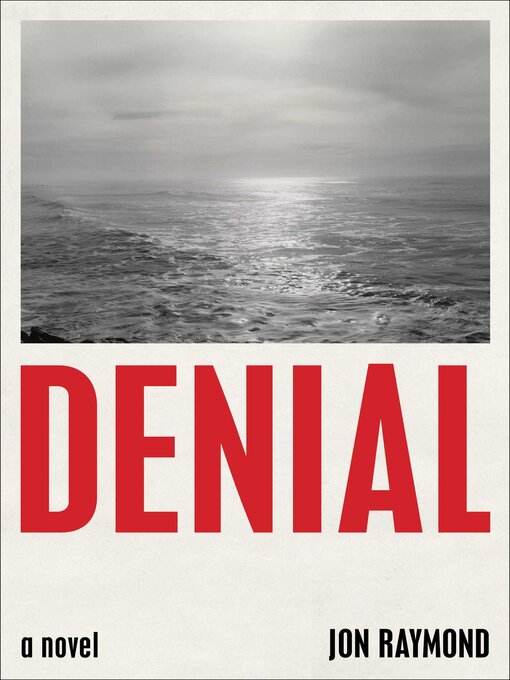
Jon Raymond: Denial (2022, Simon & Schuster)

Denial by Jon Raymond

This can be read in a weekend. I found it compelling: Raymond's style is economic and unassuming. Set around the 2050s after globe-wide political ructions (referred to as the 'Upheavals') have lead to executives involved in fossil fuel production being held criminally liable for environmental damage.

We follow Jack an investigative journalist on a reconnaisance mission whose target is Cave, one such ex-executive, now a fugitive in Mexico. The ultimate aim is to capture a confrontation and send 'justice' raining down on his head. And that's what his novel is really about - what kind of justice is being served, and whether any is being served at all in the fullness of time. The book's title takes a double meaning.

I'd definitely read more by the author.

Jon Raymond: Denial (2022, Simon & Schuster)

The conversation was remarkably unremarkable. If you didn’t know better, it was just two old men talking on an alpine street. You could almost believe Priebke’s claims of innocence in that moment, or at least the inapplicability of the judgment of history. His life had sent him through multiple, incompatible realities. During the reality of his youth, a sickness had been rampant in the land, but thankfully the sickness had broken and the world had moved on. Ever after, he’d discharged his duties to family and community like any other decent citizen. How could he be judged for the actions of another lifetime now? They were the crimes of a different man. But Donaldson, to his credit, refused to forget.

Through the whole interview, I wondered what was happening inside Priebke’s head. What moral flaw had brought him to this place? And that moral flaw: Was it a flaw of fate or a flaw of his mind? Was it his own flaw or simply the circumstances of his time and place? What was the difference, ultimately, between him and me?

The answers were inaccessible, but in the small details you could catch a glimpse. In the little details, the soundlessness of truth came through, so limited but so real. Priebke’s hat. The car keys in his hand. The way he rolled his head to turn away and then turned back again in the same motion to face the camera. Those were the kinds of details I wanted from Cave. We might never know what went on in his soul, but we could know the coffee he drank, the style of ring he wore. From those facts we could build some kind of understanding.

Denial by  (37%)

quoted Against Nature by Joris-Karl Huysmans (PENGUIN CLASSICS)

Joris-Karl Huysmans: Against Nature (2004, PENGUIN BOOKS)

Buried deep in his armchair, he was now brooding over this unambiguous prescription which upset all his plans, broke all the ties binding him to his present life and buried all his future projects in oblivion. So his beatific happiness was over! So he must leave the shelter of this haven of his and put out to sea again in the teeth of that gale of human folly that had battered and buffeted him of old!

The doctors spoke of amusement and relaxation, but with whom, with what, did they expect him to have fun and enjoy himself? [...] Did he know a single individual who was capable of appreciating the delicacy of a phrase, the subtlety of a painting, the quintessence of an idea, or whose soul was sensitive enough to understand Mallarmé and love Verlaine?

Where and when should he look, into what social waters should he heave the lead, to discover a twin soul, a mind free of commonplace ideas, welcoming silence as a boon, ingratitude as a relief, suspicion as a haven and a harbour?

Against Nature by  (PENGUIN CLASSICS) (Page 82)

reviewed Against Nature by Joris-Karl Huysmans (PENGUIN CLASSICS)

Joris-Karl Huysmans: Against Nature (2004, PENGUIN BOOKS)

A hymn to listlessness

This novel has no plot, virtually no dialogue and centers on a single character, Des Esseintes, an ailing French aristocrat who has exiled himself to a villa outside Paris in pursuit of a life of decadent fixation on his favourite possessions.

Whether it's the classics of antiquity, the merits of French Catholic authors or the supremacy of plainsong in sacred music, Esseintes' musings go on page after page. You needn't be familiar with the subject matter to get something out of the novel, but you must be curious by nature, otherwise it will quickly infuriate you. The labor of his musings is the point - the book revels in a kind of excruciating indulgence, portraying a listless mind which has made for itself a labyrinth from objets d'art. Three pages might be spent on the changes in Latin vernacular across a range of writers from classical antiquity (much of …