Reviews and Comments

ilk

ilk@bookrastinating.com

Joined 1 year, 1 month ago

This link opens in a pop-up window

reviewed Europe in Autumn by Dave Hutchinson
Dave Hutchinson: Europe in Autumn (Paperback, 2014, Solaris, imusti)

Europe In Autumn

No rating

For fans of China Mieville and Mr Robot

Rudi is the most nondescript European ever. Accentless English, no easily discernable ethnic background. He works in kitchens, cooking and cleaning, and knows a lot about commercial dishwashers. The continent is in long-term phase of balkanization following the collapse of the EU, with political borders now looking like Holy Roman Empire's. Micronations spring up - 'polities'. Borders harden. Rudi also delivers packages for an organization called the Coerreurs. Europe's black market still believes in the spirit of Schengen. The Correurs fabricate backstories and get their staff to inhabit them. Missions are 'situations' and situations involve deliveries - at the lower rungs anyway. An anarchist DHL. Hated by Europe's authorities but not deemed a mortal threat thanks to its neutrality policy, the Correurs get left alone. But we're reading fiction so inevitably Rudi Gets In Way Over His Head[TM], finding himself on …

Tom Rob Smith: Cold People (2023, Scribner)

Cold People

No rating

2023, Lisbon, Portugal. Our heroine is on family vacation when she meets Dark Handsome Local. Then an alien invasion commences. An instruction is delivered: humanity has 30 days to reach Antarctica. All hell breaks loose. Heroine and love interest make it in time, but many don't. Two million souls must start civilization on the most inhospitable continent, with a stack of airliners, aircraft carriers, tankers and submarines at their disposal. The book chronicles the establishment of McMurdo Station and three satellite towns on the peninsula as urban centers, and the longterm efforts the science contingent is making to adapt the species to Antarctica.

Smith knows he's no prose stylist, but the pacing is really good and he has an eye for the cinematic. No scenes get old. I read it in two sittings. The author brings to life a strange environment and society in quite creative detail. I was …

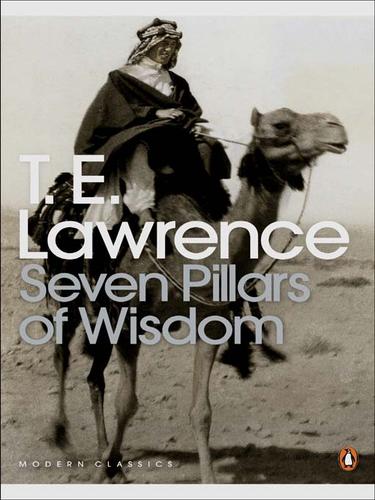
reviewed Seven Pillars of Wisdom by T. E. Lawrence

T. E. Lawrence: Seven Pillars of Wisdom (EBook, 2010, Penguin Group UK) No rating

In his classic book, T.E. Lawrence - forever known as Lawrence of Arabia - recounts …

Seven Pillars of Wisdom

No rating

It's 1915. World War I rages in France. The war's eastern theatre, Asia Minor, includes the Arabian peninsula and the Levant (modern Syria, Jordan, et al). These lands are provinces of Ottoman Turkey. The local subjects, arabs, have only tribal affiliations, and lack nations of their own. What better way to cause headaches for our imperial foe than to facilitate the arab independence struggle, thought the British. The agent of chaos sent was T. E. Lawrence, AKA Lawrence of Arabia. Seven Pillars of Wisdom is his recount of their efforts breaking things, winning civilian hearts and minds, navigating tribal diplomacy and life, and keeping the British command satisfied.

The independence movement, essentially a fluid volunteer army on camelback, supported by the occasional sapper contingent and artillery strike from the British, required its members to subordinate their tribal politics to the greater goal of independence. This required charisma and farsightedness …

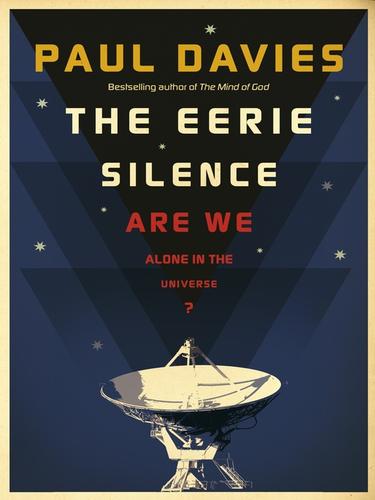
reviewed The Eerie Silence by Davies Paul

Davies Paul: The Eerie Silence (EBook, 2010, Penguin Publishing) No rating

On April 8, 1960, a young American astronomer, Frank Drake, turned a radio telescope toward …

The Eerie Silence

No rating

Mainly a primer on the science informing SETI's search for life, rather than about SETI itself. Covers a lot of territory familiar to any science-oriented Youtube viewer, such as the Fermi paradox, the Drake equation, the Kardashev scale. SETI as an organization/movement itself is barely touched on, which is disappointing, especially when you consider that the author is an insider. I did learn that the rate of species extinction on Earth is heavily determined by the solar system's oscillation above and below the galactic plane over a 62 million-year cycle. It has to do with the galactic 'halo' of protons being skewed to the underside of the galactic plane, whereas the 'north' top side faces the direction of Andromeda, the galaxy the Milky Way is hurtling towards. The closer the solar system is to the edge of the halo, the higher the extinction rates. Supposedly has to do with electromagnetic …

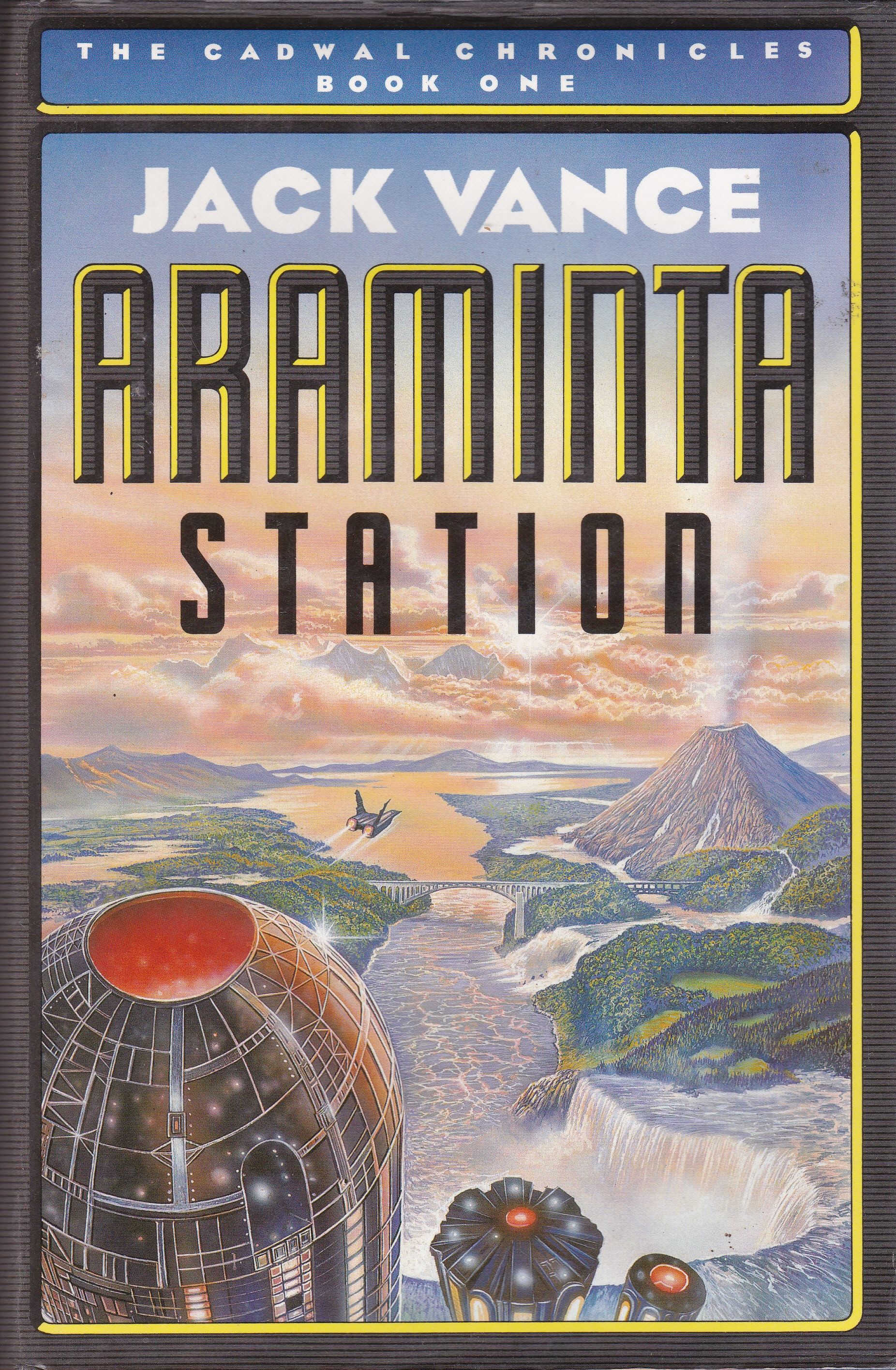
reviewed Araminta Station by Jack Vance

Jack Vance: Araminta Station (1990) No rating

Araminta Station is a 1987 science fiction novel by the American writer Jack Vance. It …

Araminta Station

No rating

Starting my third Vance series (after Durdane and Tschai). I'm commenting on this novel as a standalone read - the remaining two entries are to be read.

Cadwal is a planet with three continents orbiting a binary star. Designated a nature conservancy a millennia ago, the novel's titular station was set up on the planet as a base for conservation efforts. Over the centuries a permanent population took root, whose culture stems from the initial bureaucracy. This de facto nation, known as the Conservancy, has resorted to shipping in the far-future equivalent of coolie labour to perform menial jobs and do hard labour. Rigid social stratafication is the norm: Conservancy citizens are assigned a number upon adulthood which determines all their future prospects. The imported labourers are called Collaterals - essentially low-caste members of society. There's a breakaway settlement too, Yipton, a city-state of thatch and bamboo built partially …

Emeric Pressburger: Glass Pearls (2015, Faber & Faber, Limited) No rating

The Glass Pearls

No rating

Read it in three sittings. Tells the story of Kaul Braun a piano tuner in 1960s London, going about his day-to-day. During his chats with flatmates Kolm and Strohmayer, their World War II experiences often come up, as do the Nazi war crimes tribunals currently underway on the continent. Braun's is a tale of escalating paranoia and the power of disbelief. It's a very focused thriller, simply but effectively told. I enjoyed it more than I thought I would.

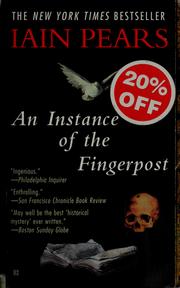
Iain Pears: An instance of the fingerpost (1999, Berkley Books)

This book is set in the 1660's, and tells the story of Sarah Blundy who …

An Instance of the Fingerpost

No rating

The English Civil wars are living memory. A king is back on the throne, and a nation remains wary of Rome while adjusting to its newfound peace.

Pears begins with a simple plot detail, the death of a university academic. Readers have this story recounted by a Venetian fop called Marco da Cola, who introduces characters and remarks on the strange land and customs he finds himself amidst. The author gradually 'pulls the camera back' to reveal a web of intrigue and inhumanity involving a wide cast, years in the making, and he does it by retelling the same series of events from three additional perspectives. After the Venetian's version comes that of a proud hothead, bent on restoring his father's honor. Next comes the entry from a high-placed civil servant, convinced of the superiority of his own assessment. The last part is told by a priest in love.

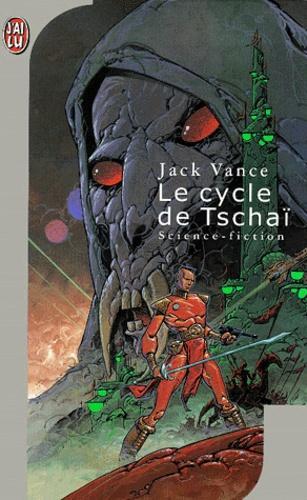
Jack Vance: Le cycle de Tschai (l'intégrale) (French language)

Tschai, Planet of Adventure

No rating

Adam Reith and company are on a response mission to the planet Tschai, 212 light years away, after receiving a signal. Their reconnaissance craft soon gets hit by a missile from the planet's surface, stranding Reith with little hope of return.

Tschai hosts four distinct races who are at odds with each other to varying degrees. The Chasch, industrious urbanites, the Dirdir, highly stratified sport hunters; the Wankh, inscrutable in their cities of black glass, and hovering above (below) it all, the Pnume, aloof insectoid chroniclers of the surface's changing fortunes, a morbid subterranean priesthood. All four races employ a sub-race - mankind - or Chaschmen, Dirdirmen, Wankhmen and Pnumekin - brought to Tschai millennia ago in mysterious circumstances. Planet of Adventure is an escape story at first glance, and a good one, but it's also portrait of an alternate humanity that is profoundly dysfunctional, robbed of its inclinations …

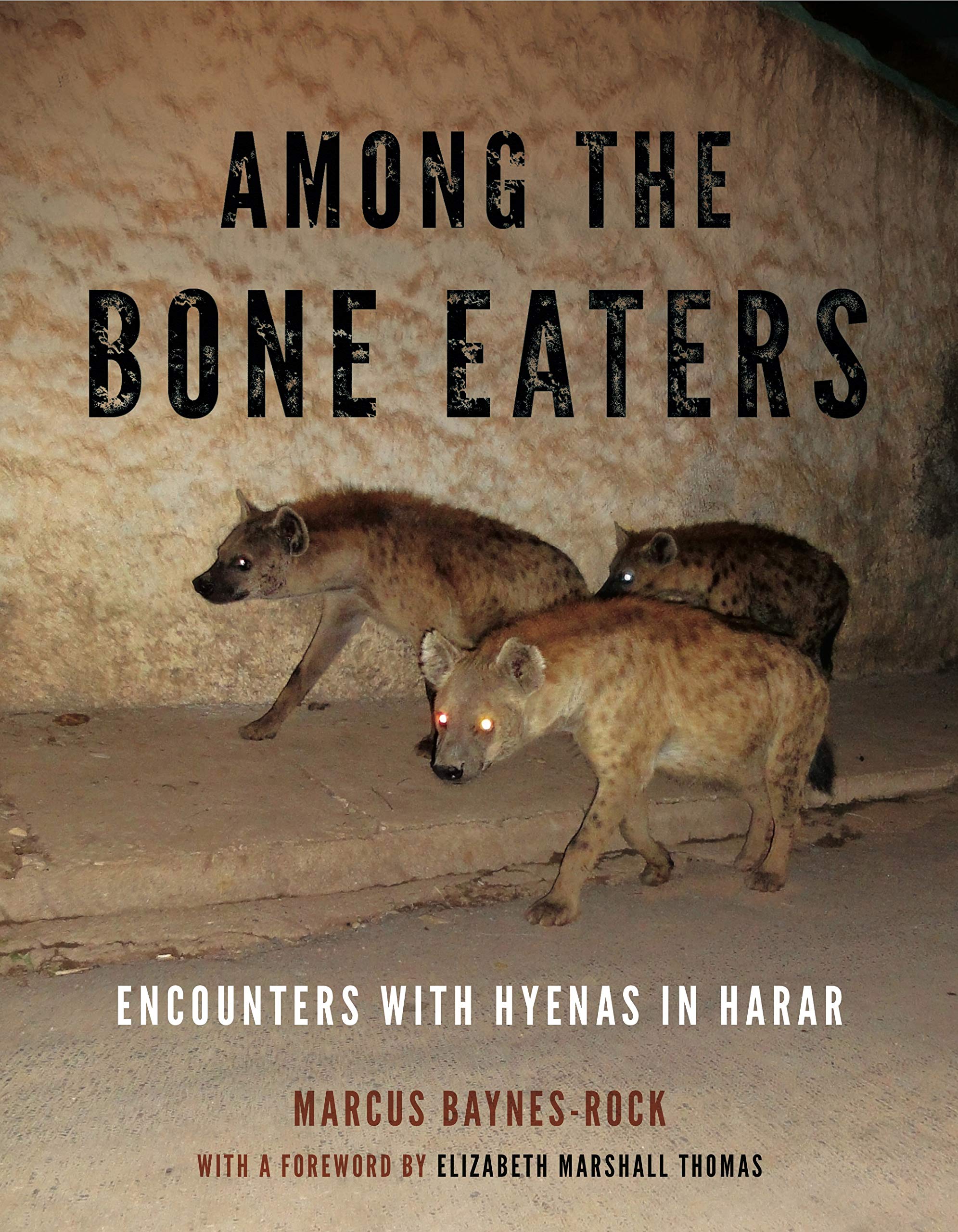
Elizabeth Marshall Thomas, Marcus Baynes-Rock: Among the Bone Eaters (2015, Pennsylvania State University Press) No rating

Among the Bone Eaters

No rating

Part social survey, part natural history, part travelogue.

The book is a study of Harar's people, human and spotted hyena alike, focusing on inter-species relations as well as how the hyena clans organize and behave inside and outside city walls.

The first chapters set the scene. Harar is a city of 100 thousand whose old quarters, known as Jugol, form a mostly walled complex about one square km in area. While it has many attractions for hyenas thanks to our ability to waste food, the city also has a cottage tourist industry in hyena feeding. Baynes-Rock examines two such operations, uncovering not only interesting logistical differences but very different underlying attitudes toward the animals they court. The author comes to recognize hyenas like so many other animals have distinct personalities.

The next chapters introduce us to the local Sofi and Aboker hyena clans, named after the two …

reviewed Island by Aldous Huxley

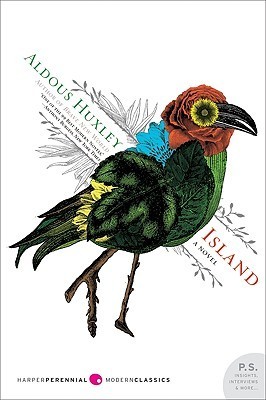
Aldous Huxley: Island (Paperback, 2009, Harper Perennial Modern Classics) No rating

In Island, his last novel, Huxley transports us to a Pacific island where, for 120 …

Island

No rating

Pala is an island nation in South East Asia. It has engineered the ego out of human institutions, and over the course of 150 years the result is a state and society whose primary goal is generating fully realized, spiritually fulfilled human beings, as opposed to economic growth or military power - human beings as a genuine end instead of a means. Carefully managing a combination of Western scientific advances in medicine and sanitation with Buddhist ethics, it's largely avoided the repressions of capitalism and communism. What would a nation's social, cultural and economic architecture have to be like for this to happen? What kind of institutions would it possess? What foreign influences would it welcome or discard or completely invert to suit its aims?

We follow Will, a jaded English reporter who finds himself recovering in a Palanese hospital. Mobile again, he accepts a tour of the island, …

reviewed The Way We Live Now by Anthony Trollope

Anthony Trollope: The Way We Live Now (Paperback, 1995, Penguin Classics) No rating

From a review of the Anthony Trollope canon in The Economist (2020/04/08 edition): “The Way …

The Way We Live now

No rating

Augustus Melmotte is coming to town! Financier of the new world, host of Emperors, scourge of prudential regulators! He's incorporating the Mexican American Railway Co. in London, and looking for the right sorts to direct the enterprise. Thankfully he's found several young lords who happen to be inveterate gamblers.

London doesn't ask too many questions of Mr Melmotte, like how he obtained his fortune or trivial affairs like capital structure. Why bother when it's self-evident he's a man of action who knows how to get things done.

Let's meet the board. Felix Carbury, a feckless waste of space who mooches off his mother; Lord Nidderdale, a dopey aristocratic wallflower; Miles Grendall, a man to make an amoeba in cryogenic stasis seem inquisitive; and Paul Montague, a comparitively ordinary chap boasting a head least unscrewed.

Felix wants to marry Melmotte's heir, Marie, to fund his lifestyle, but prefers …

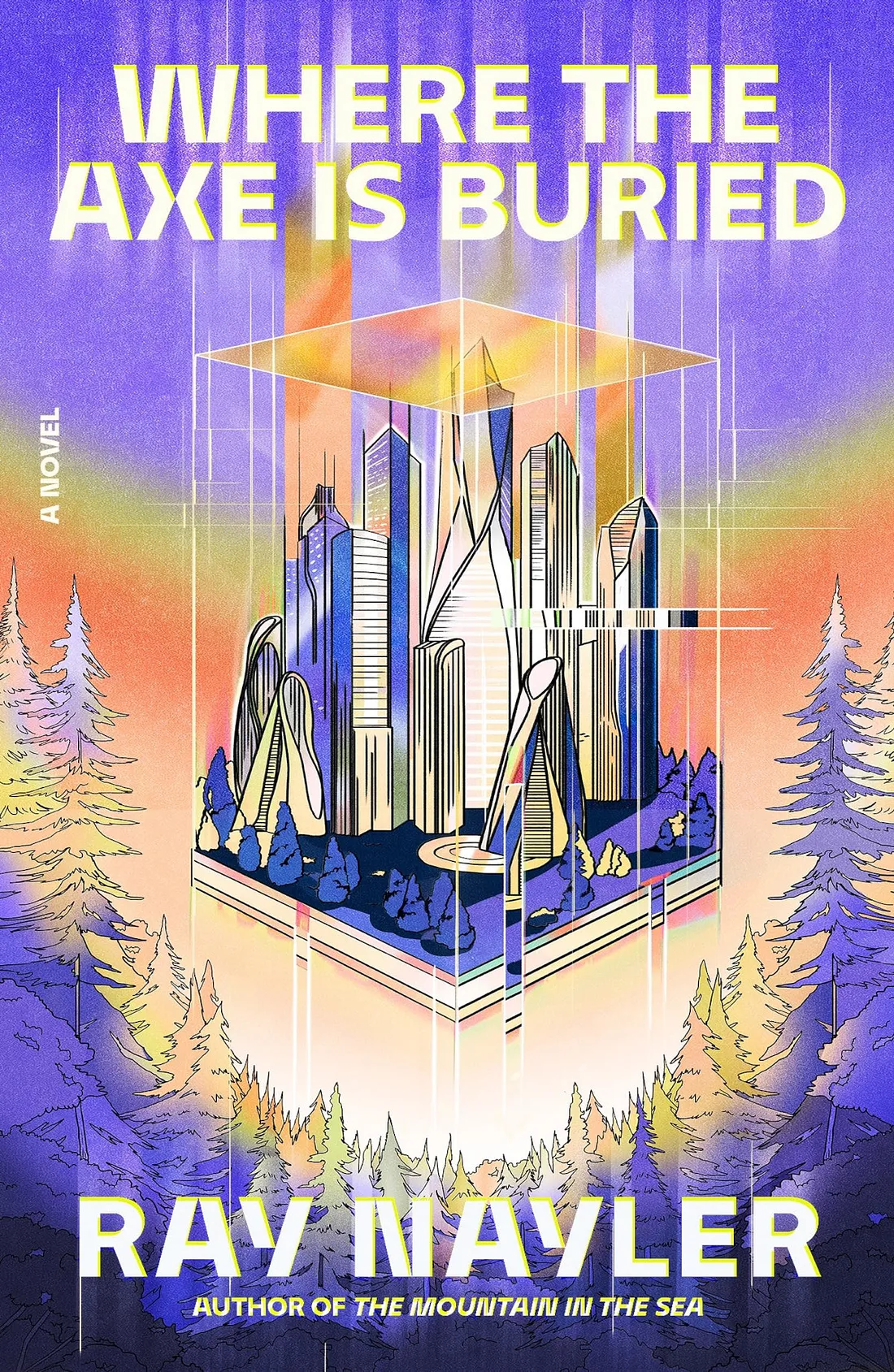
reviewed Where the Axe Is Buried by Ray Nayler

Ray Nayler: Where the Axe Is Buried (2025, Farrar, Straus & Giroux)

In the authoritarian Federation, there is a plot to assassinate and replace the President, a …

Where the Axe is Buried

No rating

This is an apocalpyse novel at its heart - one triggered by social and technological disaster instead of a natural event. We follow several characters who live in several different nation-states, known simply as The Federation, the Union and the Republic (the real-world countries they represent become obvious). The one unifying aspect of all their plots is the need to maintain contact with another human being somewhere in the world, and the ways in which government seeks to prevent/distort/interfere with communication. It's also about the relationship between state and citizen, and whether systems are truly able to change from within or require exogenous factors/black swan events to undergo real transformation.

The author spends a lot of time talking about the Federation's dreadful control architecture and the effects it has on the books characters and Federation society at large. However it struck me that much of it has analogs in …

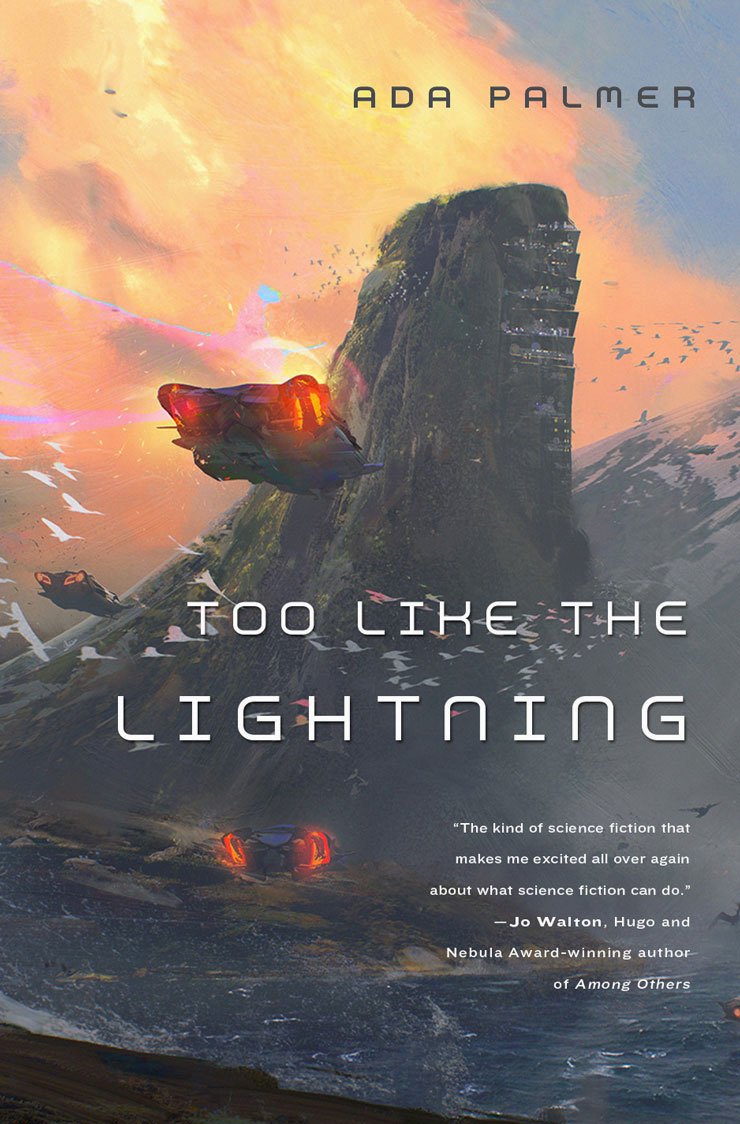
reviewed Too Like the Lightning by Ada Palmer (Terra Ignota -- Book 1)

Ada Palmer: Too Like the Lightning (Hardcover, 2016, Tor Books)

"The world into which Mycroft and Carlyle have been born is as strange to our …

Too Like the Lightning

This is a temporary DNF, and one of my big disappointments of the year. I read to approx. p220, giving up during an extended (and frankly inane) overstuffed dialog sequence.

I like the author. Palmer is intelligent, and passionate about her chosen subjects. I share a stack of the same interests, particularly censorship (she has a couple of great lectures on YouTube about the subject, explaining what censorship regimes really do, how they work, how universally slipshod they are, etc.)

I also like the book's key ideas. My social milieu DOES matter more to me than the country on my birth certificate, and that SHOULD count for something. But I couldn't grok her writing style. It's baroque. Too wordy, too 'mannered'. The framing device she employs is original (a history of events, about which extraneous details are included, like editorial decisions and commentary on people) but I can't …

David Howarth: 1066 (Paperback, 1981, Penguin (Non-Classics))

1066 The Year of the Conquest

Excellent overview of the subject. A highly readable, down to earth, unpretentious prose style. It avoids the trend in a lot of popular history writing of gradiose puffery of the topic (10 page forewords, hysterical framing, etc). I read it in about four sittings. Available from your shadow library of choice.

It covers the whole year of 1066 and starts from the perspective of the peasantry, describing key social institutions such as the villlage, the thanes, the forums for dispute resolution called 'hundreds' and so on. I didn't know that English monarchs were elected by a sort of proto-parliament, and that heredity was a secondary factor in determing kingship.

It illustrates the key figures involved. You get a keen sense of their psychological states and the political hands they were dealt: Edward the Confessor's frustration with his duties and never feeling truly at home with his own people, …

reviewed Lapvona by Ottessa Moshfegh

Ottessa Moshfegh: Lapvona (2022, Penguin Publishing Group)

A fateful year in the life of a thirteen-year-old shepherd's son living in Lapvona, a …

Lapvona

Marek a god-fearing shepherd's boy does his pious best to make sense of grim life circumstances until one day he makes an impulsive decision during an excursion with the landlord's son. The book reads like The Life of Brian crossed with Caligula or something directed by Branden Cronenburg.

It's a pithy study of resentment in all its flavors. Ludicrous and depraved yet readable. The characters are often preoccupied with wrongs, slights, past mistakes and post facto justifications of behaviour. Most of them are either idiots or scoundrels. Ina, a longlived wet-nurse, and Grigor, an elderly man turned Cynic (the original Diogenean sense of cynic) were my favorites.

The setting is never stated but my guess is circa 5th century Anatolia or Armenia. The early book refers 'fair northeners' who are 'amoral' and 'well suited to servile tasks', which I read as slavs of some description. A key scene …