


User Profile

ilk

ilk@bookrastinating.com

Joined 1 year, 1 month ago

This link opens in a pop-up window

ilk's books

Currently Reading

2026 Reading Goal

15% complete! ilk has read 6 of 40 books.

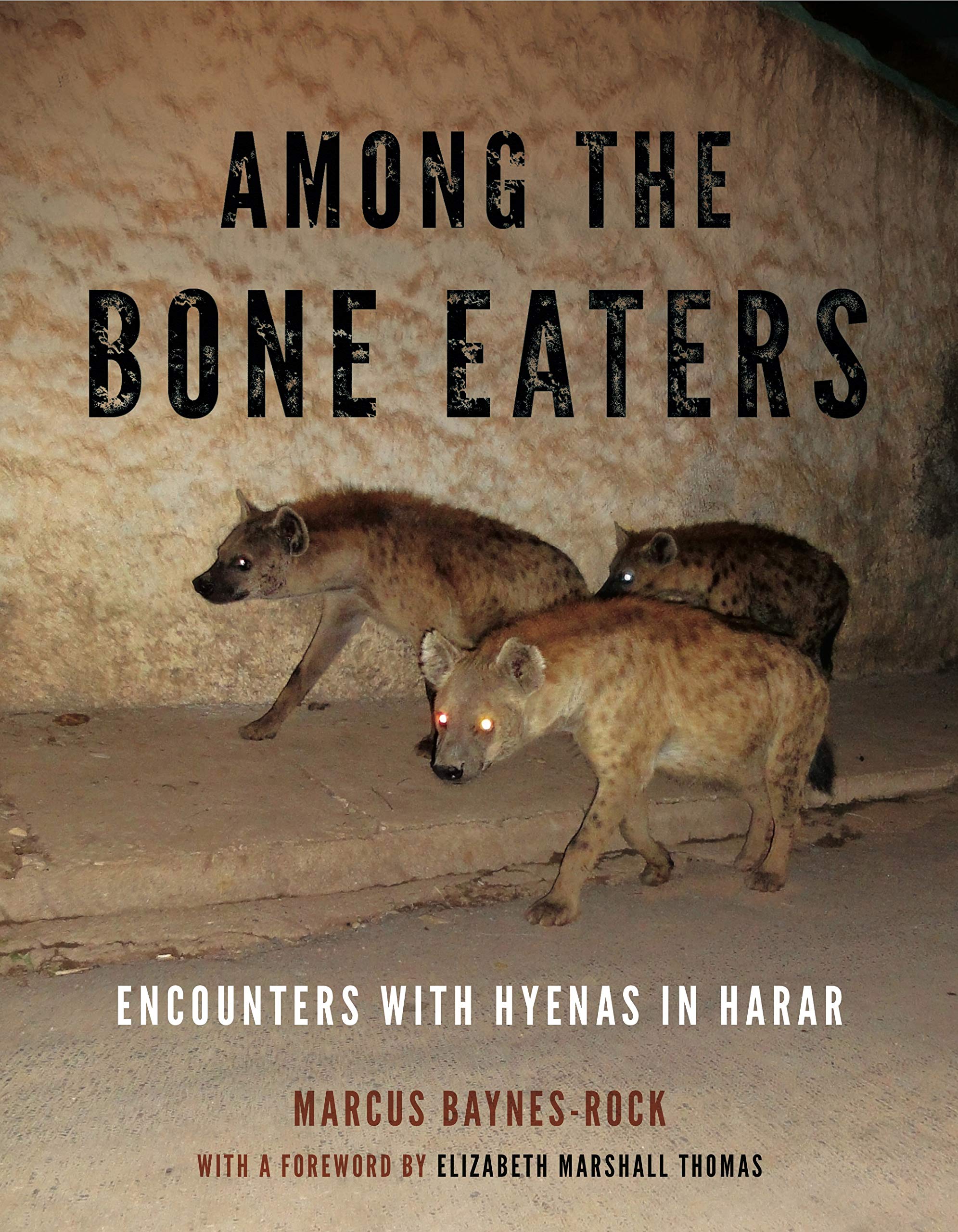
Elizabeth Marshall Thomas, Marcus Baynes-Rock: Among the Bone Eaters (2015, Pennsylvania State University Press) No rating

Among the Bone Eaters

No rating

Part social survey, part natural history, part travelogue.

The book is a study of Harar's people, human and spotted hyena alike, focusing on inter-species relations as well as how the hyena clans organize and behave inside and outside city walls.

The first chapters set the scene. Harar is a city of 100 thousand whose old quarters, known as Jugol, form a mostly walled complex about one square km in area. While it has many attractions for hyenas thanks to our ability to waste food, the city also has a cottage tourist industry in hyena feeding. Baynes-Rock examines two such operations, uncovering not only interesting logistical differences but very different underlying attitudes toward the animals they court. The author comes to recognize hyenas like so many other animals have distinct personalities.

The next chapters introduce us to the local Sofi and Aboker hyena clans, named after the two …

quoted Island by Aldous Huxley

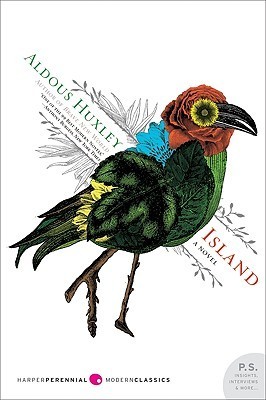
Aldous Huxley: Island (Paperback, 2009, Harper Perennial Modern Classics) No rating

In Island, his last novel, Huxley transports us to a Pacific island where, for 120 …

"There!" said Vijaya when the last brimming bowl had been sent on its way. He wiped his hands, walked over to the table and took his seat. "Better tell our guest about grace," he said to Shanta.

Turning to Will, "In Pala," she explained, "we don't say grace before meals. We say it with meals. Or rather we don't say grace; we chew it."

"Chew it?"

"Grace is the first mouthful of each course - chewed and chewed until there's nothing left of it. And all the time you're chewing you pay attention to the flavor of the food, to its consistency and temperature, to the pressures on your teeth and the feel of the muscles in your jaws."

"And meanwhile, I suppose, you give thanks to the Enlightened One, or Shiva, or whoever it may be?"

Shanta shook her head emphatically. "That would distract your attention, and attention is the whole point. Attention to the experience of something given, something you haven't invented, not the memory of a form of words addressed to somebody in your imagination." She looked round the table. "Shall we begin?"

"Hurrah!" the twins shouted in unison, and picked up their spoons.

For a long minute there was a silence, broken only by the twins who had not yet learned to eat without smacking their lips.

"May we swallow now?" asked one of the little boys at last.

Shanta nodded. Everyone swallowed. There was a clinking of spoons and a burst of talk from full mouths.

"Well," Shanta enquired, "what did your grace taste like?"

"It tasted," said Will, "like a long succession of different things. Or rather a succession of variations on the fundamental theme of rice and turmeric and red peppers and zucchini and something leafy that I don't recognize. It's interesting how it doesn't remain the same. I'd never really noticed that before."

"And while you were paying attention to these things, you were momentarily delivered from daydreams, from memories, from anticipations, from silly notions-from all the symptoms of you."

"Isn't tasting me?"

Shanta looked down the length of the table to her husband. "What would you say, Vijaya?"

"I'd say it was halfway between me and not-me. Tasting is not-me doing something for the whole organism. And at the same time tasting is me being conscious of what's happening. And that's the point of our chewing-grace - to make the me more conscious of what the not-me is up to."

"Very nice," was Will's comment. "But what's the point of the point?"

It was Shanta who answered. "The point of the point," she said, "is that when you've learned to pay closer attention to more of the not-you in the environment (that's the food) and more of the not-you in your own organism (that's your taste sensations), you may suddenly find yourself paying attention to the not-you on the further side of consciousness, or perhaps it would be better," Shanta went on, "to put it the other way round. The not-you on the further side of consciousness will find it easier to make itself known to a you that has learned to be more aware of its not-you on the side of physiology."

Island by  (67%)

quoted Island by Aldous Huxley

Aldous Huxley: Island (Paperback, 2009, Harper Perennial Modern Classics) No rating

In Island, his last novel, Huxley transports us to a Pacific island where, for 120 …

"Do you know what cancer is?" he asked.

Mary Sarojini knew perfectly well. "It's what happens when part of you forgets all about the rest of you and carries on the way people do when they're crazy - just goes on blowing itself up and blowing itself up as if there was nobody else in the whole world. Sometimes you can do something about it. But generally it just goes on blowing itself up until the person dies."

"And that's what has happened, I gather, to your Granny Lakshmi."

"And now she needs someone to help her die."

"Does your mother often help people die?"

The child nodded. "She's awfully good at it."

"Have you ever seen anyone die?"

"Of course," Mary Sarojini answered, evidently surprised that such a question should be asked. "Let me see." She made a mental calculation. "I've seen five people die. Six, if you count babies."

"I hadn't seen anyone die when I was your age," Will said.

"You hadn't?"

"Only a dog."

"Dogs die easier than people. They don't talk about it beforehand."

"How do you feel about. . . about people dying?"

"Well, it isn't nearly so bad as having babies. That's awful. Or at least it looks awful. But then you remind yourself that it doesn't hurt at all. They've turned off the pain."

"Believe it or not," said Will, "I've never seen a baby being born."

"Never?" Mary Sarojini was astonished. "Not even when you were at school?"

Will had a vision of his headmaster in full canonicals conducting three hundred black-coated boys on a tour of the Lying-in Hospital. "Not even at school," he said aloud.

"You never saw anybody dying, and you never saw anybody having a baby. How did you get to know things?"

"In the school I went to," Will said, "we never got to know things, we only got to know words."

The child looked up at him, shook her head and, lifting a small brown hand, significantly tapped her forehead. "Crazy," she said. "Or were your teachers just stupid?"

Will laughed. "They were high-minded educators dedicated to mens sana in corpore sano and the maintenance of our sublime Western Tradition. But meanwhile tell me something. Weren't you ever frightened?"

"By people having babies?"

"No, by people dying. Didn't that scare you?"

"Well, yes - it did," she said after a moment of silence.

"So what did you do about it?"

"I did what they teach you to do-tried to find out which of me was frightened and why she was frightened."

"And which of you was it?"

"This one." Mary Sarojini pointed a forefinger into her open mouth. "The one that does all the talking. Little Miss Gibber - that's what Vijaya calls her. She's always talking about all the nasty things I remember, all the huge, wonderful, impossible things I imagine I can do. She's the one that gets frightened."

"Why is she so frightened?"

"I suppose it's because she gets talking about all the awful things that might happen to her. Talking out loud or talking to herself. But there's another one who doesn't get frightened."

"Which one is that?"

"The one that doesn't talk - just looks and listens and feels what's going on inside. And sometimes," Mary Sarojini added, "sometimes she suddenly sees how beautiful everything is. No, that's wrong. She sees it all the time, but I don't - not unless she makes me notice it. That's when it suddenly happens. Beautiful, beautiful, beautiful! Even dog's messes." She pointed at a formidable specimen almost at their feet.

Island by 

reviewed Island by Aldous Huxley

Aldous Huxley: Island (Paperback, 2009, Harper Perennial Modern Classics) No rating

In Island, his last novel, Huxley transports us to a Pacific island where, for 120 …

Island

No rating

Pala is an island nation in South East Asia. It has engineered the ego out of human institutions, and over the course of 150 years the result is a state and society whose primary goal is generating fully realized, spiritually fulfilled human beings, as opposed to economic growth or military power - human beings as a genuine end instead of a means. Carefully managing a combination of Western scientific advances in medicine and sanitation with Buddhist ethics, it's largely avoided the repressions of capitalism and communism. What would a nation's social, cultural and economic architecture have to be like for this to happen? What kind of institutions would it possess? What foreign influences would it welcome or discard or completely invert to suit its aims?

We follow Will, a jaded English reporter who finds himself recovering in a Palanese hospital. Mobile again, he accepts a tour of the island, …

reviewed The Way We Live Now by Anthony Trollope

Anthony Trollope: The Way We Live Now (Paperback, 1995, Penguin Classics) No rating

From a review of the Anthony Trollope canon in The Economist (2020/04/08 edition): “The Way …

The Way We Live now

No rating

Augustus Melmotte is coming to town! Financier of the new world, host of Emperors, scourge of prudential regulators! He's incorporating the Mexican American Railway Co. in London, and looking for the right sorts to direct the enterprise. Thankfully he's found several young lords who happen to be inveterate gamblers.

London doesn't ask too many questions of Mr Melmotte, like how he obtained his fortune or trivial affairs like capital structure. Why bother when it's self-evident he's a man of action who knows how to get things done.

Let's meet the board. Felix Carbury, a feckless waste of space who mooches off his mother; Lord Nidderdale, a dopey aristocratic wallflower; Miles Grendall, a man to make an amoeba in cryogenic stasis seem inquisitive; and Paul Montague, a comparitively ordinary chap boasting a head least unscrewed.

Felix wants to marry Melmotte's heir, Marie, to fund his lifestyle, but prefers …

reviewed Where the Axe Is Buried by Ray Nayler

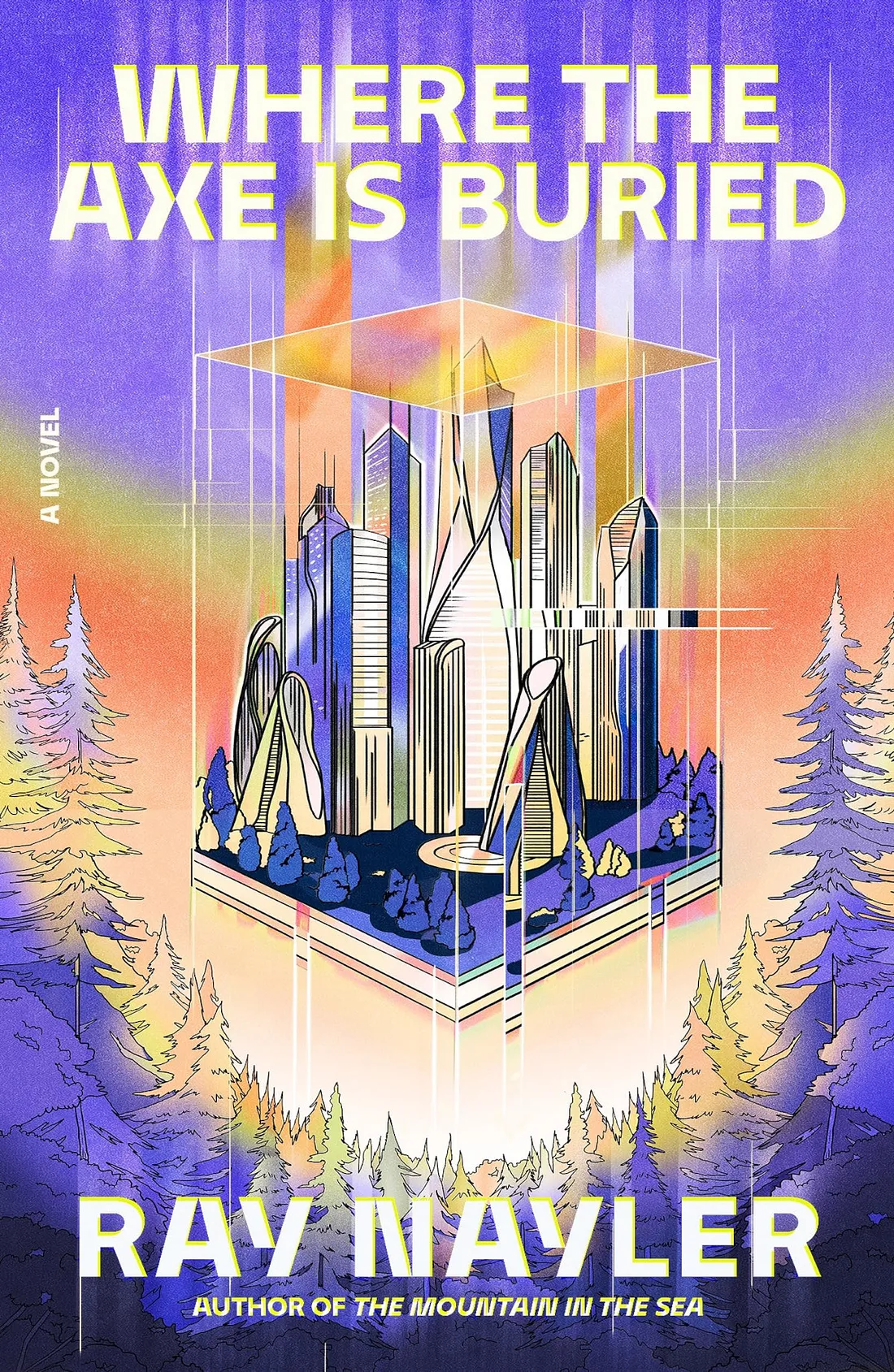
Ray Nayler: Where the Axe Is Buried (2025, Farrar, Straus & Giroux)

In the authoritarian Federation, there is a plot to assassinate and replace the President, a …

Where the Axe is Buried

No rating

This is an apocalpyse novel at its heart - one triggered by social and technological disaster instead of a natural event. We follow several characters who live in several different nation-states, known simply as The Federation, the Union and the Republic (the real-world countries they represent become obvious). The one unifying aspect of all their plots is the need to maintain contact with another human being somewhere in the world, and the ways in which government seeks to prevent/distort/interfere with communication. It's also about the relationship between state and citizen, and whether systems are truly able to change from within or require exogenous factors/black swan events to undergo real transformation.

The author spends a lot of time talking about the Federation's dreadful control architecture and the effects it has on the books characters and Federation society at large. However it struck me that much of it has analogs in …

reviewed Too Like the Lightning by Ada Palmer (Terra Ignota -- Book 1)

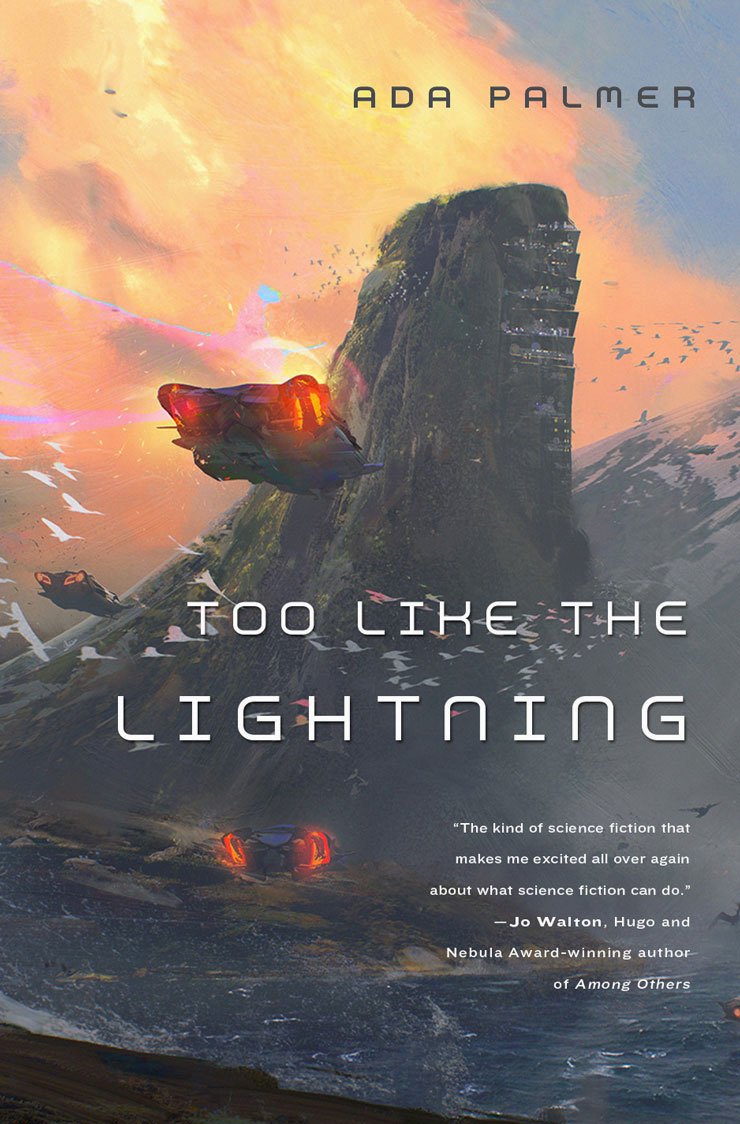
Ada Palmer: Too Like the Lightning (Hardcover, 2016, Tor Books)

"The world into which Mycroft and Carlyle have been born is as strange to our …

Too Like the Lightning

This is a temporary DNF, and one of my big disappointments of the year. I read to approx. p220, giving up during an extended (and frankly inane) overstuffed dialog sequence.

I like the author. Palmer is intelligent, and passionate about her chosen subjects. I share a stack of the same interests, particularly censorship (she has a couple of great lectures on YouTube about the subject, explaining what censorship regimes really do, how they work, how universally slipshod they are, etc.)

I also like the book's key ideas. My social milieu DOES matter more to me than the country on my birth certificate, and that SHOULD count for something. But I couldn't grok her writing style. It's baroque. Too wordy, too 'mannered'. The framing device she employs is original (a history of events, about which extraneous details are included, like editorial decisions and commentary on people) but I can't …

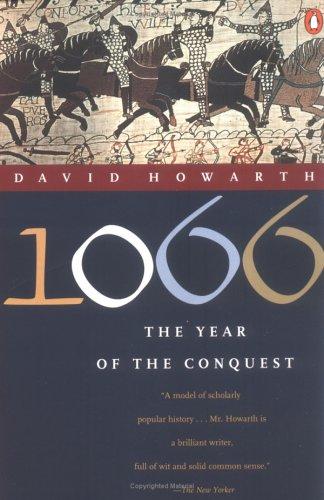
David Howarth: 1066 (Paperback, 1981, Penguin (Non-Classics))

1066 The Year of the Conquest

Excellent overview of the subject. A highly readable, down to earth, unpretentious prose style. It avoids the trend in a lot of popular history writing of gradiose puffery of the topic (10 page forewords, hysterical framing, etc). I read it in about four sittings. Available from your shadow library of choice.

It covers the whole year of 1066 and starts from the perspective of the peasantry, describing key social institutions such as the villlage, the thanes, the forums for dispute resolution called 'hundreds' and so on. I didn't know that English monarchs were elected by a sort of proto-parliament, and that heredity was a secondary factor in determing kingship.

It illustrates the key figures involved. You get a keen sense of their psychological states and the political hands they were dealt: Edward the Confessor's frustration with his duties and never feeling truly at home with his own people, …

Ottessa Moshfegh: Lapvona (2022, Penguin Publishing Group)

A fateful year in the life of a thirteen-year-old shepherd's son living in Lapvona, a …

It wasn’t until midday that Villiam got dressed, bored of snoozing. He ate some more and perused Clod’s drawings from the night before. Now they seemed trite to him. Clod had failed to capture the drama of the scene—Villiam choking on the meat had been much more powerful than Clod had drawn it. But maybe if he painted the entire scene, the table laden with food, the priest and Dibra lurching up from their chairs to try to save their beloved lord, that could be worthy of a frame. Yes, Villiam thought dreamily, an action scene. And the nun punching him in the gut. He described his vision to Clod as they walked through the hall along the red carpet, down the stairs, and out into the daylight. Villiam squinted and yawned at the sun as they sauntered down the slope toward the stables, stopping to pluck a sprig of tansy and rub it between his hands and sniff. The sky seemed to darken just for him as they approached the stable where the mutilated horse was being watered and brushed.

Villiam rarely passed by the stable. He avoided Luka and anything to do with him. As he approached and saw Dibra’s eyeless horse stepping back and forth on the well-trodden hay, he remembered that Luka was gone forever.

‘Does Dibra know?’ Villiam asked the air. The stablehands muttered unintelligibly. ‘Where is Dibra?’

‘She hasn’t come back yet,’ one stablehand said. He was a stupid boy and hadn’t understood everyone’s pledge to keep quiet about Dibra. The other stablehands stepped back to distance themselves from his stupidity.

‘Come back from where?’ Villiam asked.

‘She left on this horse late last night, but it came back without her.’

‘Huh.’ He didn’t care.

Villiam wondered at the bleeding eye sockets. The horse blinked its long lashes, neighed, then seemed to stare deeply at Villiam, who kissed it on its dry black nose. The feeling of the chapped skin against his lips elicited a thought—a revelation. ‘This horse is a revelation!’ he exclaimed. Then he snapped his fingers and demanded the stableboys do a little dance for him. He clapped along to the rhythm of their feet.

Villiam felt very happy. Of all those at the manor, he was the only one to appreciate that the horse had found its way home without sight. That was loyalty. Forget Dibra. She, like Luka, would get what she deserved. Villiam would not lament his wife’s disappearance. No, he would celebrate. Something good was coming. Villiam believed this in his heart as much as he believed himself to be at the heart of all things.

‘Hallelujah!’

Lapvona by 

reviewed Lapvona by Ottessa Moshfegh

Ottessa Moshfegh: Lapvona (2022, Penguin Publishing Group)

A fateful year in the life of a thirteen-year-old shepherd's son living in Lapvona, a …

Lapvona

Marek a god-fearing shepherd's boy does his pious best to make sense of grim life circumstances until one day he makes an impulsive decision during an excursion with the landlord's son. The book reads like The Life of Brian crossed with Caligula or something directed by Branden Cronenburg.

It's a pithy study of resentment in all its flavors. Ludicrous and depraved yet readable. The characters are often preoccupied with wrongs, slights, past mistakes and post facto justifications of behaviour. Most of them are either idiots or scoundrels. Ina, a longlived wet-nurse, and Grigor, an elderly man turned Cynic (the original Diogenean sense of cynic) were my favorites.

The setting is never stated but my guess is circa 5th century Anatolia or Armenia. The early book refers 'fair northeners' who are 'amoral' and 'well suited to servile tasks', which I read as slavs of some description. A key scene …

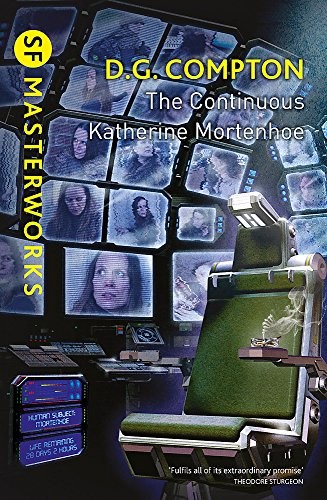
D. G. Compton: The Continuous Katherine Mortenhoe (SF Masterworks) (2012, Gollancz)

The Continuous Katherine Mortenhoe

A novel from the 1970s (unwittingly) about the 2010s. Our titular character attempts an escape from the camera of the TV show chronicling her life. Low plot and high concept. Took me several sittings go get through, not due to length or writing style, but rather how sparse the plot is. I love the way Compton doles out information to the reader; it never feels rushed or overbearing.

Compton alternates the perspective between Katherine and the show producer, Roddie. We get separate takes on a lot of the same events, in immediate succession, and it becomes a great device for Compton to explore the impact of events on the producer. It's no accident that Roddie has to undergo an irreversible, shocking change in order to properly 'see' his subject.

Impostorhood is a huge motif - being one, the realization of such, and its rationalization. The leads adopt disguises …