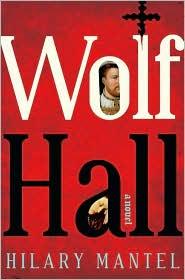
Wolf Hall (2009) is a historical novel by English author Hilary Mantel, published by Fourth Estate, named after the Seymour family's seat of Wolfhall, or Wulfhall, in Wiltshire. Set in the period from 1500 to 1535, Wolf Hall is a sympathetic fictionalised biography documenting the rapid rise to power of Thomas Cromwell in the court of Henry VIII through to the death of Sir Thomas More. The novel won both the Man Booker Prize and the National Book Critics Circle Award. In 2012, The Observer named it as one of "The 10 best historical novels".
The book is the first in a trilogy; the sequel Bring Up the Bodies was published in 2012. The last book in the trilogy is The Mirror and the Light (2020), which covers the last four years of Cromwell's life.
Wolf Hall (2009) is a historical novel by English author Hilary Mantel, published by Fourth Estate, named after the Seymour family's seat of Wolfhall, or Wulfhall, in Wiltshire. Set in the period from 1500 to 1535, Wolf Hall is a sympathetic fictionalised biography documenting the rapid rise to power of Thomas Cromwell in the court of Henry VIII through to the death of Sir Thomas More. The novel won both the Man Booker Prize and the National Book Critics Circle Award. In 2012, The Observer named it as one of "The 10 best historical novels".
The book is the first in a trilogy; the sequel Bring Up the Bodies was published in 2012. The last book in the trilogy is The Mirror and the Light (2020), which covers the last four years of Cromwell's life.
Eins vorweg: ich mag eigentlich keine Historienromane. Dafür hat es mir allerdings recht gut gefallen. Es ist auf jeden Fall von Vorteil fürs Dabeibleiben, dass es sich um tatsächliche historische Geschehnisse handelt. Man kann sich dann die Gemälde von Hans Hohlbein ansehen oder weitere Quellen zu den Vorkommnissen lesen. Anfangs war mir öfter nicht klar, wer im Text jetzt gerade "er" ist. Irgendwann habe ich verstanden, dass im Zweifelsfall eigentlich immer Thomas Cromwell gemeint ist. Ab da lief es besser mit dem Verständnis. Ich kann mir sogar vorstellen, irgendwann den zweiten Band zu lesen. Nicht jetzt gleich, aber später vielleicht mal...
Eins vorweg: ich mag eigentlich keine Historienromane. Dafür hat es mir allerdings recht gut gefallen. Es ist auf jeden Fall von Vorteil fürs Dabeibleiben, dass es sich um tatsächliche historische Geschehnisse handelt. Man kann sich dann die Gemälde von Hans Hohlbein ansehen oder weitere Quellen zu den Vorkommnissen lesen. Anfangs war mir öfter nicht klar, wer im Text jetzt gerade "er" ist. Irgendwann habe ich verstanden, dass im Zweifelsfall eigentlich immer Thomas Cromwell gemeint ist. Ab da lief es besser mit dem Verständnis. Ich kann mir sogar vorstellen, irgendwann den zweiten Band zu lesen. Nicht jetzt gleich, aber später vielleicht mal...
The Thousand Autumns of Jacob de Zoet by David Mitchell
4 stars
It is so funny when you find the same character in two different books yet in two different registers. It is good to meet them again, it is like re-encountering an old acquaintance. This historical novel has this and that – merchants, scribes, nuns, samurais, captains, the rich, the dispossessed, all so full of life, some even bigger than life. All bring to our attention issues like loyalty, honesty, corruption, fear, bravery, lust, religion. How unthinkably big power can get to be, yet how it can be defeated when enough people are determined to fight for justice and space for love no matter what.
I found especially touching how, when the main character seemingly looses everything because he refuses to be corrupted, he gains the sympathy and respect of all around him (except his bosses) all who again seemed ruthless and selfish at the beginning. May be that is …
It is so funny when you find the same character in two different books yet in two different registers. It is good to meet them again, it is like re-encountering an old acquaintance. This historical novel has this and that – merchants, scribes, nuns, samurais, captains, the rich, the dispossessed, all so full of life, some even bigger than life. All bring to our attention issues like loyalty, honesty, corruption, fear, bravery, lust, religion. How unthinkably big power can get to be, yet how it can be defeated when enough people are determined to fight for justice and space for love no matter what.
I found especially touching how, when the main character seemingly looses everything because he refuses to be corrupted, he gains the sympathy and respect of all around him (except his bosses) all who again seemed ruthless and selfish at the beginning. May be that is why I loved it, because it gives us the triumph of good over evil that we all long for, in such a logical terms, like it is the natural thing to happen because alongside this triumph we have witnessed human and natural miseries too.
And I thought the epilogue touching and emotional, not unnecessary at all.
I don't know what Mantel thought was wrong with Cromwell's name that she had to substitute it with a 'he' every time she refers to him. It would have made sense if there had been no other men in the narration, but there were and too many times it was necessary to re-read whole paragraphs to find out which 'he' she was talking about.
In a few occasions there were entire pages of irrelevant non-action and seemingly intentionally confusing writing, like when 'Liz Cromwell' seems to be flying (years after she's dead) and you're left wondering if you're reading some one's dream until a page or two later of the flight's description when it is finally explained that names of dead ladies have been given to birds.
A great novel and good historical fiction as the rest of the reviews show, but these unnecessary gimmicks that distract from …
I don't know what Mantel thought was wrong with Cromwell's name that she had to substitute it with a 'he' every time she refers to him. It would have made sense if there had been no other men in the narration, but there were and too many times it was necessary to re-read whole paragraphs to find out which 'he' she was talking about.
In a few occasions there were entire pages of irrelevant non-action and seemingly intentionally confusing writing, like when 'Liz Cromwell' seems to be flying (years after she's dead) and you're left wondering if you're reading some one's dream until a page or two later of the flight's description when it is finally explained that names of dead ladies have been given to birds.
A great novel and good historical fiction as the rest of the reviews show, but these unnecessary gimmicks that distract from the content of the novel make it a bit difficult to understand that it got so many awards.
In a few places it is a page-turner, but mostly it is not.
Good writing is that which is easy to read. This was not always.
I don't know what Mantel thought was wrong with Cromwell's name that she had to substitute it with a 'he' every time she refers to him. It would have made sense if there had been no other men in the narration, but there were and too many times it was necessary to re-read whole paragraphs to find out which 'he' she was talking about.
In a few occasions there were entire pages of irrelevant non-action and seemingly intentionally confusing writing, like when 'Liz Cromwell' seems to be flying (years after she's dead) and you're left wondering if you're reading some one's dream until a page or two later of the flight's description when it is finally explained that names of dead ladies have been given to birds.
A great novel and good historical fiction as the rest of the reviews show, but these unnecessary gimmicks that distract from …
I don't know what Mantel thought was wrong with Cromwell's name that she had to substitute it with a 'he' every time she refers to him. It would have made sense if there had been no other men in the narration, but there were and too many times it was necessary to re-read whole paragraphs to find out which 'he' she was talking about.
In a few occasions there were entire pages of irrelevant non-action and seemingly intentionally confusing writing, like when 'Liz Cromwell' seems to be flying (years after she's dead) and you're left wondering if you're reading some one's dream until a page or two later of the flight's description when it is finally explained that names of dead ladies have been given to birds.
A great novel and good historical fiction as the rest of the reviews show, but these unnecessary gimmicks that distract from the content of the novel make it a bit difficult to understand that it got so many awards.
In a few places it is a page-turner, but mostly it is not.
Good writing is that which is easy to read. This was not always
I wonder what Mantel thought was wrong with Cromwell's name that she had to substitute it with a 'he' every time she refers to him. It would have made sense if there had been no other men in the narration, but there were and too many times it was necessary to re-read whole paragraphs to find out which 'he' she was talking about.
In a few occasions there were entire pages of irrelevant non-action and seemingly intentionally confusing writing, like when 'Liz Cromwell' seems to be flying (years after she's dead) and you're left wondering if you're reading some one's dream until a page or two later of the flight's description when it is finally explained that names of dead ladies have been given to birds.
A great novel and good historical fiction as the rest of the reviews show, but these unnecessary gimmicks that distract from the …
I wonder what Mantel thought was wrong with Cromwell's name that she had to substitute it with a 'he' every time she refers to him. It would have made sense if there had been no other men in the narration, but there were and too many times it was necessary to re-read whole paragraphs to find out which 'he' she was talking about.
In a few occasions there were entire pages of irrelevant non-action and seemingly intentionally confusing writing, like when 'Liz Cromwell' seems to be flying (years after she's dead) and you're left wondering if you're reading some one's dream until a page or two later of the flight's description when it is finally explained that names of dead ladies have been given to birds.
A great novel and good historical fiction as the rest of the reviews show, but these unnecessary gimmicks that distract from the content of the novel make it a bit difficult to understand that it got so many awards.
In a few places it is a page-turner, but mostly it is not.
Good writing is that which is easy to read. This was not always
History is ever so fascinating, as long as the right person gets the job of telling it. Hilary Mantel's version of how King Henry VIII manages to declare himself the head of the English church is a captivating culmination of five years worth of research that will inspire any reader to learn more about English history.
The star of Wolf Hall is Thomas Cromwell, who Mantel depicts as a brillant thinker and a good person who tiptoes around his monarch to do both good for his country's government, while staying in the good graces of his king. He is the captain of compromise. Cromwell is the son of a commoner, son of a blacksmith who gathers a wealth of experience working in different industries in various European countries. By the time we meet Cromwell as a man, he is a multilingual lawyer who fully understands the law, banking, and the …
History is ever so fascinating, as long as the right person gets the job of telling it. Hilary Mantel's version of how King Henry VIII manages to declare himself the head of the English church is a captivating culmination of five years worth of research that will inspire any reader to learn more about English history.
The star of Wolf Hall is Thomas Cromwell, who Mantel depicts as a brillant thinker and a good person who tiptoes around his monarch to do both good for his country's government, while staying in the good graces of his king. He is the captain of compromise. Cromwell is the son of a commoner, son of a blacksmith who gathers a wealth of experience working in different industries in various European countries. By the time we meet Cromwell as a man, he is a multilingual lawyer who fully understands the law, banking, and the politics of Europe. He is also well versed in the scriptures, and it is rumored that he can recite the entire new testament from memory. Cromwell can argue any point and come out on top. Thomas Cromwell is, well, amazing.
Of course, he has his enemies, but during the 1530's, the decade in which this book takes place, Cromwell is at the top of his game, even earning an earldom, something unheard of for someone of such low birth. Mantel portrays many important people of this time period, gracing them with her novel impersonations of what they might have been like. Thomas More, Cardinal Thomas Wolsey, William Tyndale, Anne Boleyn, Mary Boleyn, and all the rest. I was particularly interested to learn something of William Tyndale, since this is the first time I'd heard the name of the man who had first brought us The Bible in English. Much of Tyndale's wording survives to this day. He was eventually burned as a heretic, though Henry VIII was to encourage English translations of The Bible just four years after he condemned Tyndale to death.
Mantel's writing is also attractive; she doesn't write in the English of 1530, for it would be too hard for most of us to get through over 500 pages of that, but she does seem to adopt enough older phrases to make the narrative seem credible. Another quirk of her writing style within these pages was that the pronoun he, unless otherwise clearly stated, refers to Thomas Cromwell. At first, I found myself backtracking and reading passages twice, but once I got used to the rule that Cromwell was he with a small h, things were much clearer.
In the end, I feel as though I've had an inside peek at the lives of Henry VIII and his court during the 1530's, and it has become very clear why this very important decade was glossed over in junior high history class: there's too much sex, rumors of sex, and bloody, gruesome violence.
The narrative does not reach Ann Boleyn's untimely ending, much less Thomas Cromwell's. King Henry VIII is portrayed as a very volatile man who is too dependant on his advisors and not able to think clearly enough on his own. He (King Henry VIII) is a dangerous man to serve.
I highly recommend this book to anyone who likes historical fiction