Set in a secondary world reminiscent of Saharan Africa, Moses Ose Utomi's debut novella, The Lies of the Ajungo, follows one boy's epic quest to bring water back to his city and save his mother's life. They say there is no water in the City of Lies. They say there are no heroes in the City of Lies. They say there are no friends beyond the City of Lies. But would you believe what they say in the City of Lies? In the City of Lies, they cut out your tongue when you turn thirteen, to appease the terrifying Ajungo Empire and make sure it continues sending water. Tutu will be thirteen in three days, but his parched mother won't last that long. So Tutu goes to his oba and makes a deal: she provides water for his mother, and in exchange he will travel out into the desert and …
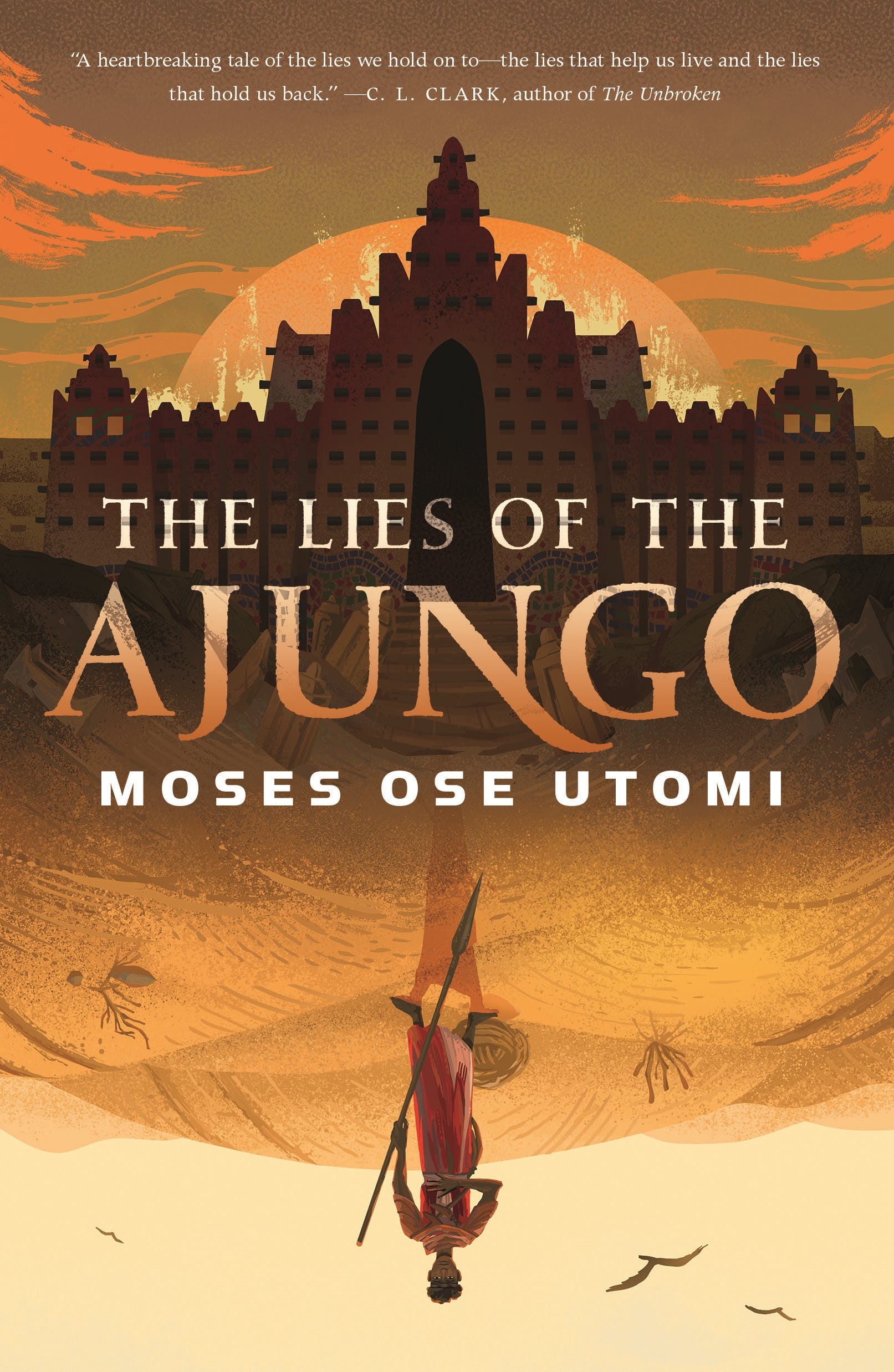
Set in a secondary world reminiscent of Saharan Africa, Moses Ose Utomi's debut novella, The Lies of the Ajungo, follows one boy's epic quest to bring water back to his city and save his mother's life. They say there is no water in the City of Lies. They say there are no heroes in the City of Lies. They say there are no friends beyond the City of Lies. But would you believe what they say in the City of Lies? In the City of Lies, they cut out your tongue when you turn thirteen, to appease the terrifying Ajungo Empire and make sure it continues sending water. Tutu will be thirteen in three days, but his parched mother won't last that long. So Tutu goes to his oba and makes a deal: she provides water for his mother, and in exchange he will travel out into the desert and bring back water for the city. Thus begins Tutu's quest for the salvation of his mother, his city, and himself. The Lies of the Ajungo opens the curtains on a tremendous world, and begins the epic fable of the Forever Desert. With every word, Moses Ose Utomi weaves magic
This is flowing tale with satisfying surprises along the way. It is much more interesting than the publisher-provided synopsis would suggest. I was swayed by reviews of others.
The Lies of the Ajungo is a short fantasy novella. The premise is that in the parched desert City of Lies, all thirteen year olds have their tongues cut out in order to satisfy the Ajungo who trade back a pittance of water. The almost-thirteen child Tutu chooses the alternative option, which is to set off into the desert alone on a hopeless quest to find another water source for the city. There he finds friends, betrayals, and plenty of truths.
For me, the crux of this story revolves about the power of narrative, which makes me excited to see that there is going to be a follow-up novella set in the future where (if I am reading the blurb correctly) the events of this book appear to be misconstrued.
I felt like there was a lot of good worldbuilding and character development packed into this novella, and …
The Lies of the Ajungo is a short fantasy novella. The premise is that in the parched desert City of Lies, all thirteen year olds have their tongues cut out in order to satisfy the Ajungo who trade back a pittance of water. The almost-thirteen child Tutu chooses the alternative option, which is to set off into the desert alone on a hopeless quest to find another water source for the city. There he finds friends, betrayals, and plenty of truths.
For me, the crux of this story revolves about the power of narrative, which makes me excited to see that there is going to be a follow-up novella set in the future where (if I am reading the blurb correctly) the events of this book appear to be misconstrued.
I felt like there was a lot of good worldbuilding and character development packed into this novella, and I love love loved the three cousins and the way they care for Tutu. If I have any complaint, it's that I feel like some of the magical elements here (non-spoilery handwaving) felt rushed in both plot and character development and I wish that had been taken more slowly or handled differently.
I really loved this. Utomi does a fabulous job of keeping this fable-feeling story from being bogged down by formula. Instead, he nods to the pacing of fable and myth while keeping the story lively and with smart twists. I'm looking forward to the next one.
I really loved this. Utomi does a fabulous job of keeping this fable-feeling story from being bogged down by formula. Instead, he nods to the pacing of fable and myth while keeping the story lively and with smart twists. I'm looking forward to the next one.