
Tak! reviewed The Mountain in the Sea by Ray Nayler
The Mountain in the Sea
5 stars
Every Ray Nayler book is a philosophical conundrum wrapped in an ecological tragedy wrapped in a rad scifi story.
Paperback, 464 pages
Published June 20, 2023 by Picador.
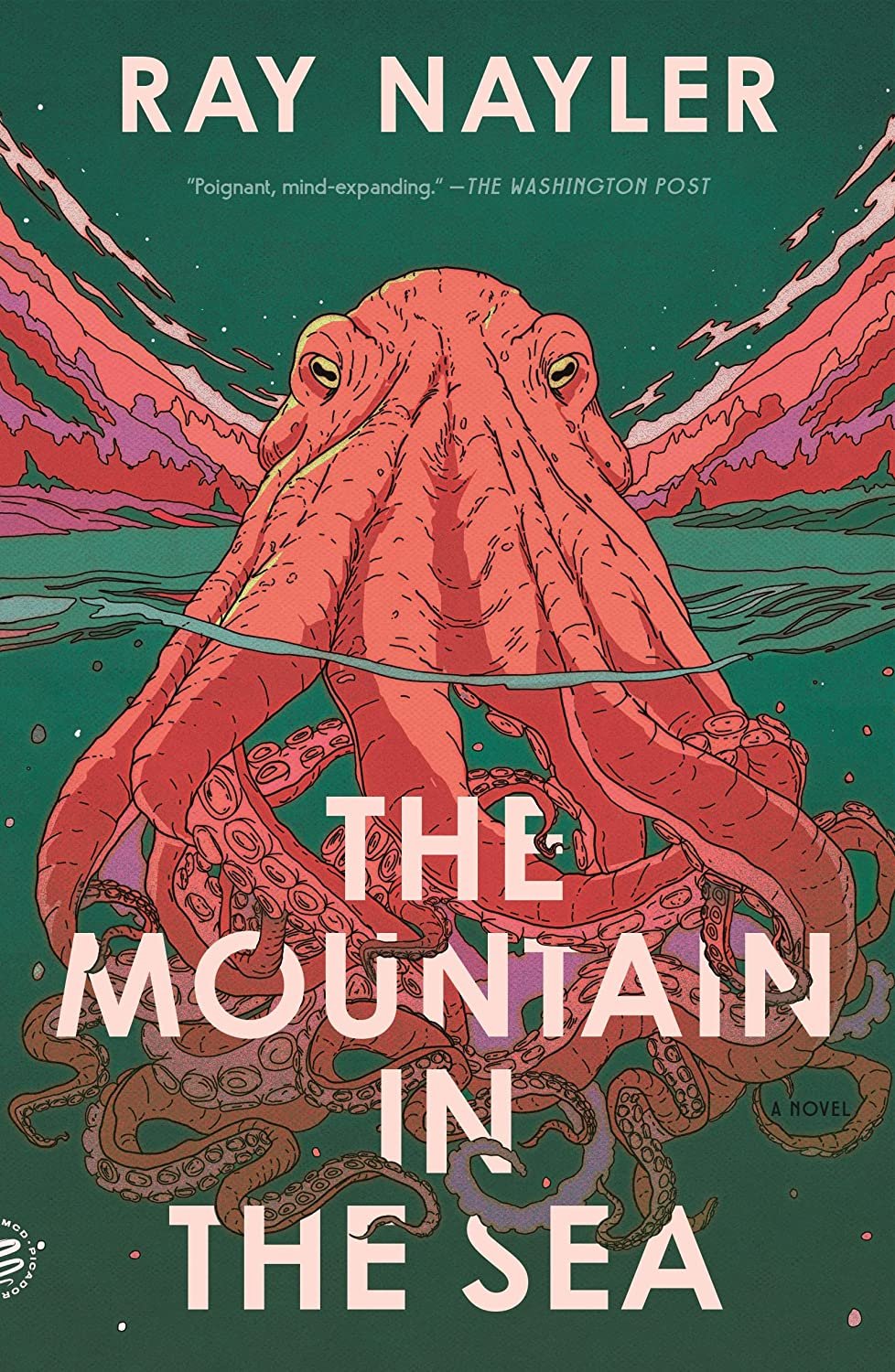
There are creatures in the water of Con Dao. To the locals, they're monsters. To the corporate owners of the island, an opportunity. To the team of three sent to study them, a revelation.
Their minds are unlike ours. Their bodies are malleable, transformable, shifting. They can communicate. And they want us to leave.
When pioneering marine biologist Dr. Ha Nguyen is offered the chance to travel to the remote Con Dao Archipelago to investigate a highly intelligent, dangerous octopus species, she doesn't pause long enough to look at the fine print. DIANIMA- a transnational tech corporation best known for its groundbreaking work in artificial intelligence - has purchased the islands, evacuated their population and sealed the archipelago off from the world so that Nguyen can focus on her research. But the stakes are high: the octopuses hold the key to unprecedented breakthroughs in extrahuman intelligence and there β¦
There are creatures in the water of Con Dao. To the locals, they're monsters. To the corporate owners of the island, an opportunity. To the team of three sent to study them, a revelation.
Their minds are unlike ours. Their bodies are malleable, transformable, shifting. They can communicate. And they want us to leave.
When pioneering marine biologist Dr. Ha Nguyen is offered the chance to travel to the remote Con Dao Archipelago to investigate a highly intelligent, dangerous octopus species, she doesn't pause long enough to look at the fine print. DIANIMA- a transnational tech corporation best known for its groundbreaking work in artificial intelligence - has purchased the islands, evacuated their population and sealed the archipelago off from the world so that Nguyen can focus on her research. But the stakes are high: the octopuses hold the key to unprecedented breakthroughs in extrahuman intelligence and there are vast fortunes to be made by whoever can take advantage of their advancements. And no one has yet asked the octopuses what they think. And what they might do about it.
Every Ray Nayler book is a philosophical conundrum wrapped in an ecological tragedy wrapped in a rad scifi story.
All the things I like about scifi: interesting questions and ideas based on current knowledge, good characters enveloped in a gripping story, and a strong sense of wonder at our world despite the suffering that seems inherent in it. The speculative chronology didn't always make sense to me but didn't matter much in the scheme of ideas being explored. Perhaps one day humans will enjoy cephalopod-authored fiction.
I absolutely flew through this book. It was an excellent read start to finish.
An interesting near-future thriller mainly set on the Con Dao archipelago in Vietnam, where a species of intelligent, communicative octopus have been discovered. To try to communicate with them, a specialist in octopus has been called in, and she will have to work alongside an android, which may be the first sentient AI created, and a security officer who is deadly serious in protecting the area from all intruders.
The attempts at communication with the octopus is the main basis for the story. But layered upon it are philosophical discussions over the nature of the octopus itself, how they may see the world and how you approach and communicate with sentient beings that don't share the same senses or even a brain network with us: octopus limbs can operate independently of the brain, and they send messages by changing the patterns on their skin.
Subplots in the story β¦
An interesting near-future thriller mainly set on the Con Dao archipelago in Vietnam, where a species of intelligent, communicative octopus have been discovered. To try to communicate with them, a specialist in octopus has been called in, and she will have to work alongside an android, which may be the first sentient AI created, and a security officer who is deadly serious in protecting the area from all intruders.
The attempts at communication with the octopus is the main basis for the story. But layered upon it are philosophical discussions over the nature of the octopus itself, how they may see the world and how you approach and communicate with sentient beings that don't share the same senses or even a brain network with us: octopus limbs can operate independently of the brain, and they send messages by changing the patterns on their skin.
Subplots in the story focus on a hacker who has been asked to hack into an extremely sophisticated neural network, and on a slave crew on an AI controlled ship hunting for fish in a world where predatory fishing companies have overfished the oceans and are eager to exploit the remaining places with fish. They serve to flesh out this world where wars have been fought, and new regional nations have risen, eager to make their mark on the world. AI technology has also matured and taken over many jobs, while people feel more isolated in a world where AI mediated communications is the norm.
At the end, various parts come together to show that the octopuses have their own ideas on communicating and dealing with humans, leaving the future open for further interactions, but on the octopuses terms.
On the surface, this is a future sf book about discovering sentient octopuses and trying to communicate with them. But, this is no Children of Ruin or even a Feed Them Silence; it hinges less on plot and characters, and feels more about worldbuilding in service to philosophy.
I quite enjoyed this book, and the strongest part was just how tightly the book's themes and ideas intertwined through the book's different point of views and the worldbuilding. It's a not-so-far future book with sentient octopuses, overfished waters, AI boats that drive themselves in search of profit, drones driven by humans in tanks, and the first android (but one reviled by humanity). It's a book about language and communication, memory and forgetting, what it means to be human and exist in community, and about fear of others.
On the surface, this is a future sf book about discovering sentient octopuses and trying to communicate with them. But, this is no Children of Ruin or even a Feed Them Silence; it hinges less on plot and characters, and feels more about worldbuilding in service to philosophy.
I quite enjoyed this book, and the strongest part was just how tightly the book's themes and ideas intertwined through the book's different point of views and the worldbuilding. It's a not-so-far future book with sentient octopuses, overfished waters, AI boats that drive themselves in search of profit, drones driven by humans in tanks, and the first android (but one reviled by humanity). It's a book about language and communication, memory and forgetting, what it means to be human and exist in community, and about fear of others.
This is a thoughtful work of sci-fi with the relationship between humans and their environment as a central theme. With a mystery at its center (or perhaps two or three mysteries, depending how you count), it was an exciting read, and also a moving and thought-provoking one, touching on themes what it means to be conscious, to communicate with other beings, to connect, to be a part / apart.
This was much "harder" on the science than most of what I've been reading recently, and certainly harder than the most of the recent Hugo and Nebula nominees and awards. I'm surprised I haven't seen more buzz about this book.
This is a thoughtful work of sci-fi with the relationship between humans and their environment as a central theme. With a mystery at its center (or perhaps two or three mysteries, depending how you count), it was an exciting read, and also a moving and thought-provoking one, touching on themes what it means to be conscious, to communicate with other beings, to connect, to be a part / apart.
This was much "harder" on the science than most of what I've been reading recently, and certainly harder than the most of the recent Hugo and Nebula nominees and awards. I'm surprised I haven't seen more buzz about this book.
So much to love about this book, how it weaves together unanswerable questions about consciousness and computation, together with a much more didactic message about humans' consumptive relationships with, well, everything including each other, and enough of a mystery story to keep the plot moving along. Also some great evocations of places (ahhh, multiple key scenes on Istanbul ferries), and of the ways peoples' reputations misrepresent their selves.
It's not a strongly character driven book - every character that is fleshed out seems to be a variant of "loner who wishes for connection" and largely a vehicle for the author's ideas - but there's enough depth to the characters to keep me reading. My one real criticism is that the ending felt a bit rushed. Not in the sort of too convenient, story-undermining way, but not quite satisfying either. It doesn't feel like a set up for a sequel, β¦
So much to love about this book, how it weaves together unanswerable questions about consciousness and computation, together with a much more didactic message about humans' consumptive relationships with, well, everything including each other, and enough of a mystery story to keep the plot moving along. Also some great evocations of places (ahhh, multiple key scenes on Istanbul ferries), and of the ways peoples' reputations misrepresent their selves.
It's not a strongly character driven book - every character that is fleshed out seems to be a variant of "loner who wishes for connection" and largely a vehicle for the author's ideas - but there's enough depth to the characters to keep me reading. My one real criticism is that the ending felt a bit rushed. Not in the sort of too convenient, story-undermining way, but not quite satisfying either. It doesn't feel like a set up for a sequel, but I kind of want Nayler to write a few short stories filling out the characters a bit more and picking up some of the loose ends - perhaps something like Sofia Samatar did with The Winged Histories.
So much to love about this book, how it weaves together unanswerable questions about consciousness and computation, together with a much more didactic message about humans' consumptive relationships with, well, everything including each other, and enough of a mystery story to keep the plot moving along. Also some great evocations of places (ahhh, multiple key scenes on Istanbul ferries), and of the ways peoples' reputations misrepresent their selves.
It's not a strongly character driven book - every character that is fleshed out seems to be a variant of "loner who wishes for connection" and largely a vehicle for the author's ideas - but there's enough depth to the characters to keep me reading. My one real criticism is that the ending felt a bit rushed. Not in the sort of too convenient, story-undermining way, but not quite satisfying either. It doesn't feel like a set up for a sequel, β¦
So much to love about this book, how it weaves together unanswerable questions about consciousness and computation, together with a much more didactic message about humans' consumptive relationships with, well, everything including each other, and enough of a mystery story to keep the plot moving along. Also some great evocations of places (ahhh, multiple key scenes on Istanbul ferries), and of the ways peoples' reputations misrepresent their selves.
It's not a strongly character driven book - every character that is fleshed out seems to be a variant of "loner who wishes for connection" and largely a vehicle for the author's ideas - but there's enough depth to the characters to keep me reading. My one real criticism is that the ending felt a bit rushed. Not in the sort of too convenient, story-undermining way, but not quite satisfying either. It doesn't feel like a set up for a sequel, but I kind of want Nayler to write a few short stories filling out the characters a bit more and picking up some of the loose ends - perhaps something like Sofia Samatar did with The Winged Histories.
This is less about the characters or the plot, and more about the philosophies and science. My favorite parts were actually the fictional book excerpts between chapters, and I may need to read the books he acknowledges as helping him shape the ideas presented in the book. This strikes me as a political thriller (without the thrill part) focused on connection, communication, and choice. Which, I suppose is a way of saying the book is about consciousness. Despite how dry that might sound, I actually enjoyed the book. I finished it fairly quickly; it reads smoothly and compellingly despite (or maybe because of?) the too-even tone, in my opinion. Pacing occasionally felt bogged down by setting, and there were some spots where the dialogues were clearly an info dump vehicle, but I found the info interesting so I didn't mind too much. The plot resolution was sudden and felt abrupt, β¦
This is less about the characters or the plot, and more about the philosophies and science. My favorite parts were actually the fictional book excerpts between chapters, and I may need to read the books he acknowledges as helping him shape the ideas presented in the book. This strikes me as a political thriller (without the thrill part) focused on connection, communication, and choice. Which, I suppose is a way of saying the book is about consciousness. Despite how dry that might sound, I actually enjoyed the book. I finished it fairly quickly; it reads smoothly and compellingly despite (or maybe because of?) the too-even tone, in my opinion. Pacing occasionally felt bogged down by setting, and there were some spots where the dialogues were clearly an info dump vehicle, but I found the info interesting so I didn't mind too much. The plot resolution was sudden and felt abrupt, but since the book wasn't so much about the story, I guess I didn't mind? I was actually just grateful it resolved, as I was fearful about a cliffhanger as the page count dwindled.
Another one I'm not sure what to say about, but this time for negative reasons. The premise is amazing, and I adore every scene with the octopuses themselves. But pretty much nothing else-plot, characters, dialogue, writing style-worked for me. However, it's a debut novel so perhaps the next one will be better.
It does the thing all good sci-fi should do: use the sci-fi setting.to examine and interrogate questions of ethics and society.
The narrative is fairly engaging, even if the characters' dialogue leaves them with very little in the way of distinct voices β perhaps for reasons that are maybe explained in-world.
Overall, it's a fun summer read that raises a lot of interesting ideas about what it means to be a person and how our actions impact those around us.
For parents of sci-fi readers, there's enough casual (but not really described in detail, thankfully) sex in the book that it's probably not one to hand to teenagers β so be aware of that.
It does the thing all good sci-fi should do: use the sci-fi setting.to examine and interrogate questions of ethics and society.
The narrative is fairly engaging, even if the characters' dialogue leaves them with very little in the way of distinct voices β perhaps for reasons that are maybe explained in-world.
Overall, it's a fun summer read that raises a lot of interesting ideas about what it means to be a person and how our actions impact those around us.
For parents of sci-fi readers, there's enough casual (but not really described in detail, thankfully) sex in the book that it's probably not one to hand to teenagers β so be aware of that.