
Tak! commented on Litany for a Broken World by Karen Conlin (Entangled Realities, #1)
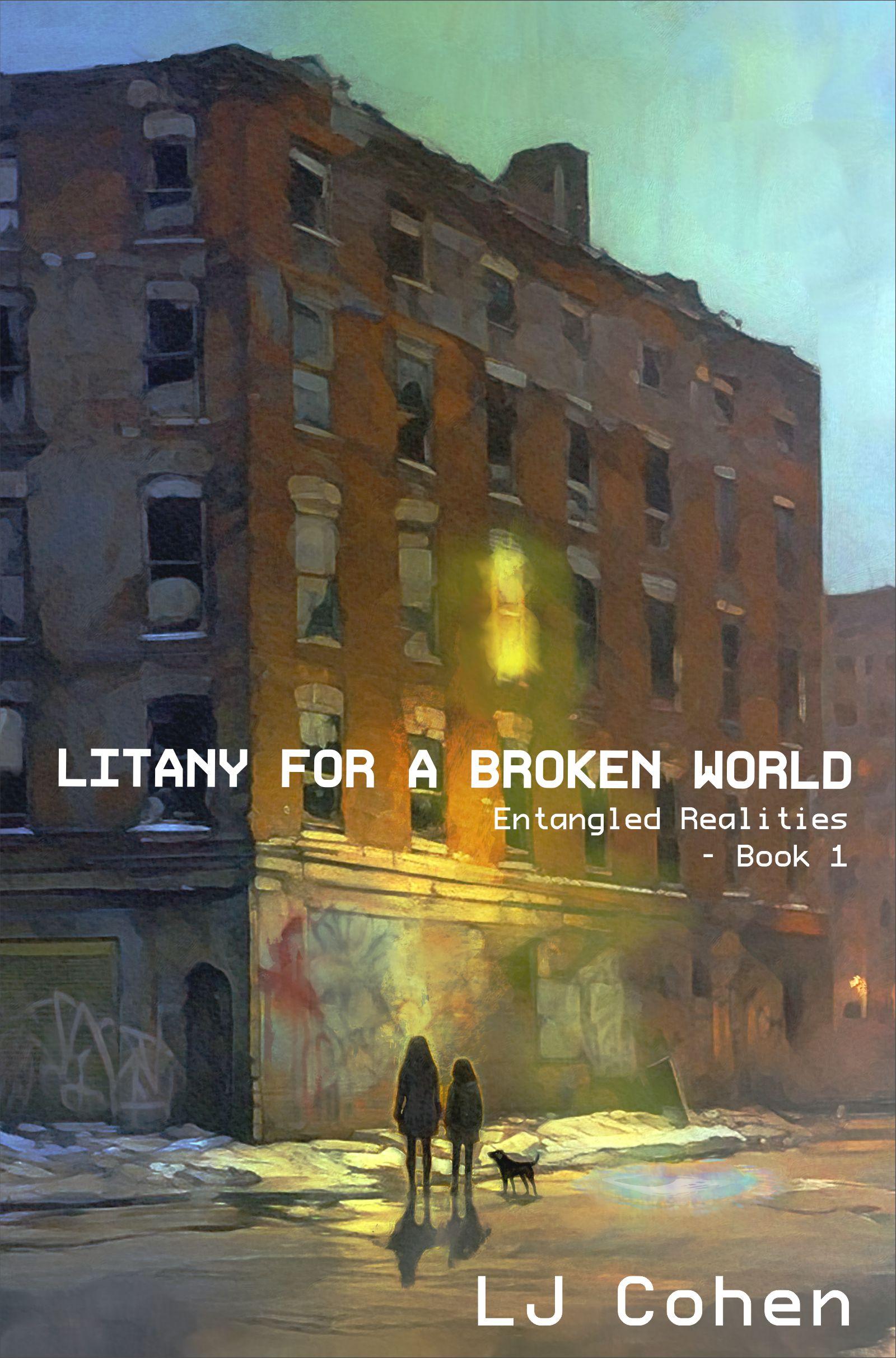
A young girl's disastrous first foray through the multiverse cleaves her from her family and …
The #SFFBookClub pick for March 2026
See tagged statuses in the local bookrastinating.com community
A young girl's disastrous first foray through the multiverse cleaves her from her family and …
The #SFFBookClub pick for March 2026
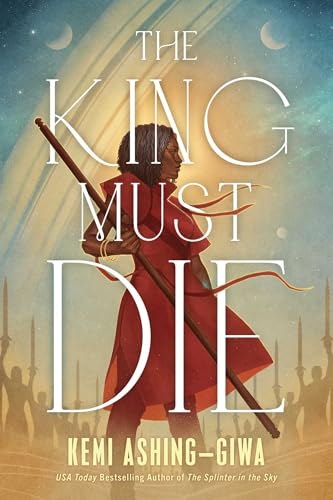
Fen’s world is crumbling. Newearth, a once-promising planet gifted by the all-powerful alien Makers, now …
This book was not for me. Maybe I was in the wrong space for reading it, but it felt like YA (derogatory). Everything felt a little too thin and pulled along by a plot. Folks who are at odds with each other resolve those feelings too quickly or in ways that feel unearned. (Especially feelings around Alekhai and Sijara both.)
There were a lot (a lot) of fight scenes. To me a good fight scene is like a good sex scene--there needs to be some character development driving it or I'm going to be bored. Many of these fell flat for me, but positively I really liked the one where Fen meets Alekhai for the first time, because there's so much going on emotionally for her there.
The book has so much intriguing drive-by worldbuilding, but none of it feels connected to the whole. Declaration ceremonies for names …
This book was not for me. Maybe I was in the wrong space for reading it, but it felt like YA (derogatory). Everything felt a little too thin and pulled along by a plot. Folks who are at odds with each other resolve those feelings too quickly or in ways that feel unearned. (Especially feelings around Alekhai and Sijara both.)
There were a lot (a lot) of fight scenes. To me a good fight scene is like a good sex scene--there needs to be some character development driving it or I'm going to be bored. Many of these fell flat for me, but positively I really liked the one where Fen meets Alekhai for the first time, because there's so much going on emotionally for her there.
The book has so much intriguing drive-by worldbuilding, but none of it feels connected to the whole. Declaration ceremonies for names and genders come up and are never mentioned again. The world is full of nanites? Undetectable alien neural chips?! The Accusers could have been been building infrastructure and teleporting food the whole time? Resurrected people are supposed to come back not quite the same, but this never happens (emotionally or mentally)?
I was really intrigued by the idea of the ecologically failing Newearth, and the capital letters of the Makers, Accusers, and Executors who constructed the situation and are still present. Unfortunately, they are all ultimately set dressing for the rebellion against the king who must die, and none of it truly gets fleshed out to any satisfying degree.
The fantasy politics of this world also felt a bit short. The word anarchism is only used once as a pejorative, and the replacement for the titular king is the glory of democracy. With minimal spoilers, the "mini boss" that must be faced before the "final boss" is group infighting. I'm not sure if I had a specific desire from this novel, but I was hoping there'd be something more weird, more speculative, more interesting. Maybe it's just me, but this kind of arc is not enough for me these days (and democracy doesn't really feel like the shiniest of destinations either).
Minorly, I saw a blurb that Alekhai is supposed to be trans-coded, but I'm not sure I see it. Is it just because everybody says he's so beautiful (as all of my trans friends are)? Is it that he says he would have used a randomizer for his declaration ceremony if he could? I would credit this more if I felt like it came up in any other way.
I don't like to complain about a book so much, but sometimes I have to articulate all the things that didn't work in order to understand my own feelings. A story about found family and the destruction of empire should have resonated with me a lot more deeply. I don't feel like this book was bad more than I was just disappointed--it didn't cohere for me and live up to what I hoped it could be.
(This was the #SFFBookClub pick for February 2026.)
Fen’s world is crumbling. Newearth, a once-promising planet gifted by the all-powerful alien Makers, now …
Mettan hadn’t been lying when he’d said the trek to the village was two hours. But it was two hours for relatively unstabbed people.
Fen’s world is crumbling. Newearth, a once-promising planet gifted by the all-powerful alien Makers, now …
For this land to escape slow, agonizing obliteration, all kings must die. There is no other way.
Fen’s world is crumbling. Newearth, a once-promising planet gifted by the all-powerful alien Makers, now …
Alekhai had been having a just-okay week when his sister’s assassins arrived.
Fantasy novel by Sarah Monette under the pseudonym Katherine Addison.
Even if he could have said, to those who whispered, that he did not wish to be emperor--and he could say no such thing, trapped as he was behind Edrehasivar's mask--he would not have been believed. No one in the Untheileneise Court would ever believe that one could wish not to be emperor. It was unthinkable.
— The Goblin Emperor by Katherine Addison (The Goblin Emperor, #1)
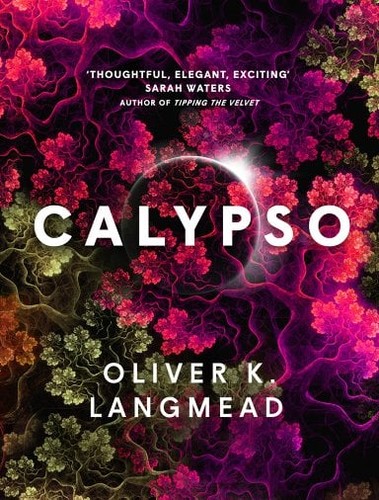
"Ambitious and immersive...an elegantly told meditation on how we can’t leave ourselves behind." -Esquire Magazine …
This was one of the books up for the #SFFBookClub poll that didn't win. The airquotes downside of putting the polls together is that everything on there is something I want to read, so I end up reading them all anyway.
This book was pitched as "a generation ship novel in verse" and it delivered. It felt like such a fresh way to talk about old concepts, and its flowery imagery felt less out of place than it would have in prose. It could have stood to be more weird, but each point of view had striking and effectively different styles, especially in terms of format, but also in imagery and tone and pacing. Overall, the plot didn't strike me as being particularly novel, but it was enjoyable and that wasn't really why I was coming to this book in the first place.
This was one of the books up for the #SFFBookClub poll that didn't win. The airquotes downside of putting the polls together is that everything on there is something I want to read, so I end up reading them all anyway.
This book was pitched as "a generation ship novel in verse" and it delivered. It felt like such a fresh way to talk about old concepts, and its flowery imagery felt less out of place than it would have in prose. It could have stood to be more weird, but each point of view had striking and effectively different styles, especially in terms of format, but also in imagery and tone and pacing. Overall, the plot didn't strike me as being particularly novel, but it was enjoyable and that wasn't really why I was coming to this book in the first place.
Fen’s world is crumbling. Newearth, a once-promising planet gifted by the all-powerful alien Makers, now …
Hey you! (Yes, you!) If you're seeing this, then you probably have an adjacent taste in books, so this could likely be of interest to you.
We're reading The King Must Die during this February for #SFFBookClub.
SFFBookClub is an asynchronous fediverse book club. There's no meeting or commitment. If this book looks interesting to you, then you can join in by reading it during February and posting on the hash tag #SFFBookClub with any feelings or thoughts or reviews or quotes.
More details: sffbookclub.eatgod.org/
Hey you! (Yes, you!) If you're seeing this, then you probably have an adjacent taste in books, so this could likely be of interest to you.
We're reading The King Must Die during this February for #SFFBookClub.
SFFBookClub is an asynchronous fediverse book club. There's no meeting or commitment. If this book looks interesting to you, then you can join in by reading it during February and posting on the hash tag #SFFBookClub with any feelings or thoughts or reviews or quotes.
More details: sffbookclub.eatgod.org/
Fen’s world is crumbling. Newearth, a once-promising planet gifted by the all-powerful alien Makers, now …
The #SFFBookClub pick for February 2026
"Ambitious and immersive...an elegantly told meditation on how we can’t leave ourselves behind." -Esquire Magazine …
When I heard of this book--a generation ship novel entirely in verse--I was excited and felt some trepidation, because it can be easy for a technical feat like that to overshadow the story. Once I had it in hand and flicked through, I felt both of those things more intensely, because parts of the book employ the sort of creative layouts I associate more with zines than novels.
It turns out that all of that drives the story and characterisation with a singular focus. Even the wackiest-looking page layouts are a guide for pacing and mood, and work fantastically well. I am unusually tempted to just go back to the beginning and read the whole thing through again.
It is also an interesting story, and the three main characters are compelling. It made sense to mostly focus on them at the expense of the ship's crew, but at …
When I heard of this book--a generation ship novel entirely in verse--I was excited and felt some trepidation, because it can be easy for a technical feat like that to overshadow the story. Once I had it in hand and flicked through, I felt both of those things more intensely, because parts of the book employ the sort of creative layouts I associate more with zines than novels.
It turns out that all of that drives the story and characterisation with a singular focus. Even the wackiest-looking page layouts are a guide for pacing and mood, and work fantastically well. I am unusually tempted to just go back to the beginning and read the whole thing through again.
It is also an interesting story, and the three main characters are compelling. It made sense to mostly focus on them at the expense of the ship's crew, but at the end I was left a little frustrated that one question was never addressed: what would have motivated rank-and-file members of the first generation crew to sign up?
It is also a deeply Christian story, enough so that I feel like that needs to be a potential CW. But this is handled in a very interesting way that worked for me as a non-Christian reader.
"Ambitious and immersive...an elegantly told meditation on how we can’t leave ourselves behind." -Esquire Magazine …
About half a chapter in, and I can already tell this is going to be gloriously batshit. I think I mean that as unqualified praise, ask me again after a couple of chapters. #SFFBookClub
About half a chapter in, and I can already tell this is going to be gloriously batshit. I think I mean that as unqualified praise, ask me again after a couple of chapters. #SFFBookClub
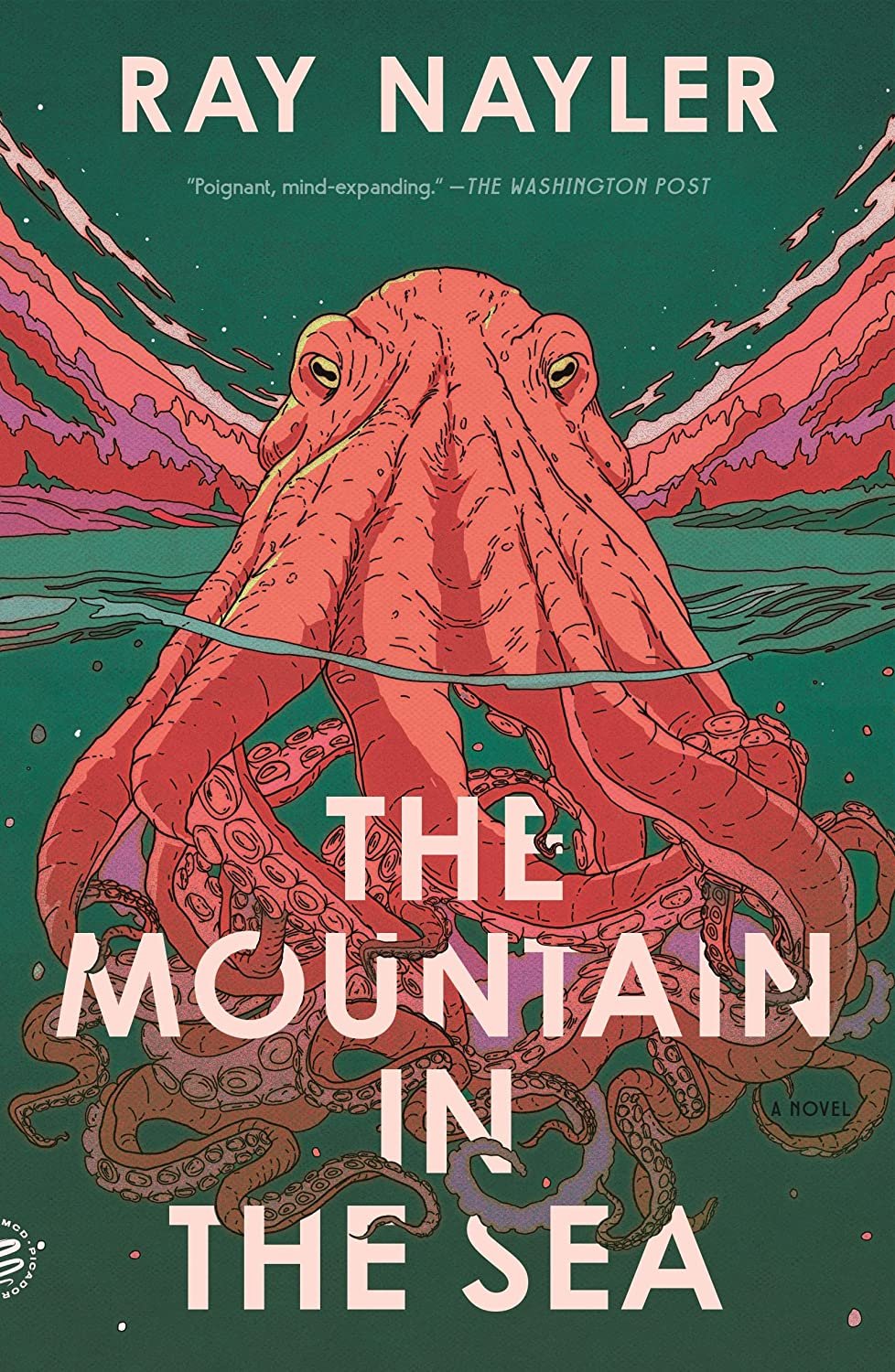
There are creatures in the water of Con Dao. To the locals, they're monsters. To …
Every Ray Nayler book is a philosophical conundrum wrapped in an ecological tragedy wrapped in a rad scifi story.
There are creatures in the water of Con Dao. To the locals, they're monsters. To …
The framing of "point fives" is particularly thought-provoking given the steadily increasing number of news reports of llm-induced psychosis
The framing of "point fives" is particularly thought-provoking given the steadily increasing number of news reports of llm-induced psychosis
There are creatures in the water of Con Dao. To the locals, they're monsters. To …
This society—what we call modern society, what we always think of as the most important time the world has ever known, simply because we are in it—is just the sausage made by grinding up history.
There are creatures in the water of Con Dao. To the locals, they're monsters. To …
Someone said that people don’t really want to date other people. They don’t really want equal partnership—you know, two full people in a relationship. Two people with demands and desires and differences of opinion about everything. What they want is one-point-five people in the relationship. They want to be the complete one, the person who controls the relationship—and they want the other person to be half a person. You know, someone who gets them, but who doesn’t have their own demands. Someone who appears complete, with all these personality quirks and their own opinions and stories about the world—but not in an annoying way. Not in a way that would demand you change.
I have never read such a short passage that provides such deep insight into human behavior