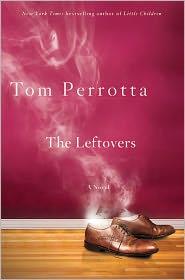

Dubi reviewed The leftovers by Tom Perrotta
Review of 'The leftovers' on 'Goodreads'
5 stars
I watched the first episode of the show and then ran to get the book, finishing it before I had a chance to watch any of the other episodes, I got this strange cross-spoilering thing going on.
The Leftovers is a strange post-apocalyptic tale, in that the apocalypse wasn't all it's cracked up to be and on the surface, very little changed. About 2% of the population (actually, I'm not sure that figure appears in the book - I might have picked it up from the show) disappeared all of a sudden, and everyone else just have to figure out their lives after something happens that makes to doubt everything you believed it. It's of course crafted after the idea of the rapture, but there are enough anomalies to make most people doubt that this is indeed what happened, but then science fails to provide an explanation either, leaving the …
I watched the first episode of the show and then ran to get the book, finishing it before I had a chance to watch any of the other episodes, I got this strange cross-spoilering thing going on.
The Leftovers is a strange post-apocalyptic tale, in that the apocalypse wasn't all it's cracked up to be and on the surface, very little changed. About 2% of the population (actually, I'm not sure that figure appears in the book - I might have picked it up from the show) disappeared all of a sudden, and everyone else just have to figure out their lives after something happens that makes to doubt everything you believed it. It's of course crafted after the idea of the rapture, but there are enough anomalies to make most people doubt that this is indeed what happened, but then science fails to provide an explanation either, leaving the majority of people just groping around to help themselves move on with their lives.
The book follows one family, the Garveys, whose various members experience the gamut of human responses to this anticlimactic apocalypse - the mother joins a quasi-Christian cult, the Guilty Remnants, that believe the events of October 14 were indeed the rapture, the son joins a cult of personality that grows from what seems like a mutation of the ethos of support groups, the daughter gives in to decadence and nihilism, while the father tries to push forward and make the world sane again, becoming mayor of their town of Mapleton and trying to figure out how to best set about to get back on track.
There is very little of the outside world in the book - Mapleton is a bubble, with only the son's -- Tom -- life extending beyond it, but even then there is very little context for what was dramatically a global catastrophe, but is experienced in the book as a very local one. And that's a good thing. Avoiding the scope that such an apocalypse would normally require makes it plausible to believe that Mapleton is just a good representative sample of what happened all over the world. Just like the apocalypse itself is somewhat underwhelming, the stories too are not ones of complete societal collapse, but small, individual crises. This is not a book about how the world, or a country, crumbles under an unfathomable catastrophe. It's a book about how people falter when they are left with nothing to believe in, yet life moves on.
At the very beginning Laurie, the mother, describes herself and her family as "agnostics", but the story reveals that this isn't really true - they believed in SOMETHING, and when that something was taken away from them, the family got ripped apart. It's a story about the importance of faith, but not in the religious sense, but in the sense that we as humans need to believe we have some grasp of the world around us, no matter how far removed from reality that grasp truly is. It's a story about the lengths we're willing to go to to re-establish that sense of grasp when it is shaken.