

User Profile

Vincent Tijms

vtijms@bookrastinating.com

Joined 3 years, 2 months ago

Alterego of this guy on Mastodon.

This link opens in a pop-up window

Vincent Tijms's books

Currently Reading

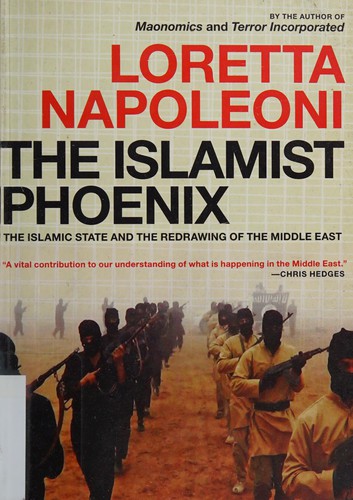
Loretta Napoleoni: The Islamist phoenix (2014)

Review of 'The Islamist phoenix' on 'Goodreads'

A fascinating if repetitive account of Islamic State, in which Napoleoni emphasizes how it should be considered an attempt at nation-building in a world that has otherwise regressed into premodern warfare. She discusses some of the economic and political aspects of that peculiar territorial terrorism that is IS, while pointing out how its use of propaganda and divide et impera eluded the apparatuses of highly developed states.

The analysis is plausible, but not very grounded. The work is light on (useful) citations and doesn't examine any of the dimensions of IS - economical, political, theological or ideological - in depth enough to provide good understanding.

The main thesis though, that globalisation has left a multipolar world in which space has appeared to move from terrorism into nation-building, is interesting enough to justify this read.


Review of 'Rontel' on 'Goodreads'

The brilliance of this book is its complete nothingness. There's only existence, some people claim, and existence isn't that much either.

Some people find Rontel really funny. I didn't. But I appreciate the characters in this absurd novella. They just... are.

Stuff like this is why I try to keep an eye on American fiction.

David Graeber: The Utopia of Rules: On Technology, Stupidity, and the Secret Joys of Bureaucracy

Review of 'The Utopia of Rules: On Technology, Stupidity, and the Secret Joys of Bureaucracy' on 'Goodreads'

I am a bit on the fence about this bundle. First of all, I hadn't expected it to be a bundle -- I figured that Graeber would provide an integrated critique of bureaucracy, since he seems to have been working on the topic for a while. Of course, essays can be perfect vehicles for the development of new ideas, and The Utopia of Rules certainly delivers in terms of exploration, but it falls a little short when it comes to substance.

That is not to say there's nothing of interest here: Graeber's style is intact and he explores some very interesting ideas. He argues that bureaucracy is predicated on violence and the power gradients that stem from it and introduces a concept he calls interpretive labor, which is roughly the same as the psychological theory of mind, but is contextualized within class society. The logic that takes him …

"The second volume of the bestselling landmark work on the history of the modern state …

Review of 'Political Order and Political Decay' on 'Goodreads'

It was a pleasure to join the clear mind of Francis Fukuyama in this second volume of his work on political order. Whilehis first volume ([b:The Origins of Political Order: From Prehuman Times to the French Revolution|9704856|The Origins of Political Order From Prehuman Times to the French Revolution|Francis Fukuyama|https://d.gr-assets.com/books/1317064084s/9704856.jpg|14593088]) argued in favor of a triad of rule of law, effective statehood and accountability, he used this second volume to show how different balances between these three elements have led to wildly varying political outcomes in the modern age.

Given the exhaustive nature of the political order project, I am pretty sure both books offer something for everyone. Personally, I found it quite interesting to read a strong defense of bureaucracy or, to be more precise, autonomous bureaucracy. Fukuyama's arguments in favor of a strong state should be taken to heart by minarchists and anarchists alike, especially since he argues that …

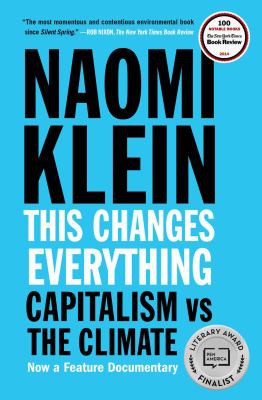
Naomi Klein: This Changes Everything (2014, Simon & Schuster)

This Changes Everything: Capitalism vs. the Climate is Naomi Klein's fourth book; it was published …

Review of 'This Changes Everything' on 'Goodreads'

Probably the most important book of the year. Climate change challenges anyone's pet ideology: it makes Marxists doubt their utopian materialism, forces laissez-faire capitalists to consider the peculiarities of externalities and makes anarchists wonder whether mutualist instincts are strong enough to deal with invisible, delayed forms of exploitation.

Klein argues for a planned economy, but like most contemporary socialists she subscribes to a rather anarchic, decentralized system to uphold norms like carbon emissions and tax fossil fuel burners. The details are sketchy - Klein unfortunately prefers a sophomoric discussion of Baconian thought to an in-depth look at how you can empower the State without reinforcing clientelism - but the general idea makes sense.

If anything, Klein conveys the urgency of the climate challenge. Right-wing populism has ensured that we are already too late and that environmental disasters are much worse than they could have been. If your political flavor of …