The Mysterious Affair at Styles is a detective novel by British writer Agatha Christie. It …
Review of 'The Mysterious Affair at Styles' on 'Goodreads'
3 stars
Agatha Christie's first book. For that it was very enjoyable. According to Wikipedia she wrote it as part of a challenge to write a book the reader could not spot the perp in. Turns out she did that by making it so obvious that noone ever thought this character could really have done it, and then adding multiple levels of other things that complicate matters. The book does suffer a bit in other areas: characterization is flat for most of the characters. Sometimes I found it hard to follow who actually was saying what to whom at any given point, despite not usually having this problem. And in the end Poirot and the narrator painstakingly put together the plot in form of a Socratic dialogue stretching over pages and pages while obviously all the other characters in the scene are just sitting there twiddling thumbs. All in all not a …
Agatha Christie's first book. For that it was very enjoyable. According to Wikipedia she wrote it as part of a challenge to write a book the reader could not spot the perp in. Turns out she did that by making it so obvious that noone ever thought this character could really have done it, and then adding multiple levels of other things that complicate matters. The book does suffer a bit in other areas: characterization is flat for most of the characters. Sometimes I found it hard to follow who actually was saying what to whom at any given point, despite not usually having this problem. And in the end Poirot and the narrator painstakingly put together the plot in form of a Socratic dialogue stretching over pages and pages while obviously all the other characters in the scene are just sitting there twiddling thumbs. All in all not a bad read, but justly overshadowed by her later mysteries.
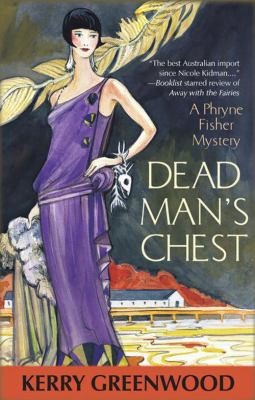
Review of 'Dead Mans Chest A Phryne Fisher Mystery' on 'Goodreads'
3 stars
The Phryne Fisher novels are very well written mystery novels set in 1920s Australia. In this novel Phryne takes a holiday. Yes, yet another one, she is titled and rich and can afford as many holidays as she wants I guess. This time she and her family visit idyllic seaside resort Queenscliff, which we already enountered briefly once before. The main plot of the novel is her daughter Ruth's discovery of a sophisticated cookbook among the books in the house they stay in, and her continuous improvement into someone who can run a kitchen on her own, dealing with local traders and staff, creating interesting new dishes, and becoming more versed in culinary things. Of course there is also the thing about the missing housekeepers that disappeared just before they arrived, someone else who raided the food supplies afterwards, someone clipping young girls' pigtails (and at one point a girl's …
The Phryne Fisher novels are very well written mystery novels set in 1920s Australia. In this novel Phryne takes a holiday. Yes, yet another one, she is titled and rich and can afford as many holidays as she wants I guess. This time she and her family visit idyllic seaside resort Queenscliff, which we already enountered briefly once before. The main plot of the novel is her daughter Ruth's discovery of a sophisticated cookbook among the books in the house they stay in, and her continuous improvement into someone who can run a kitchen on her own, dealing with local traders and staff, creating interesting new dishes, and becoming more versed in culinary things. Of course there is also the thing about the missing housekeepers that disappeared just before they arrived, someone else who raided the food supplies afterwards, someone clipping young girls' pigtails (and at one point a girl's throat), a rum smuggling operation, a film crew filming something about pirates close by, surrealists living in the next house, the (suspicious?) death of another neighbour, a crew of three well-off boys running wild, and the legend of a pirate treasure hidden somewhere in the area. Did I forget something? Maybe. Most likely. The amount of different plots and red herrings this novel throws at it's reader is dazzling. Ruth's cooking aspirations might have been planned as a bit of character development, but they end up making up the only consistent plot one can follow. The rest of the plot meanders through holidaying and crime investigation with barely any hint of what is going on in any given moment. Some of the mysteries have less description than the few scenes when Phryne takes a morning swim. This overabundance of plotlines even is lampshaded, when Phryne realizes that the one possible murder they might have encountered now was unsolvable because she forgot to look at the evidence she had, on account of all the other things going on. Far from the trinkling nothingness of its predecessor "Murder in the Dark" this novel has nearly too many plotlines to follow, although at least the writing and the characterization of the characters is so well done that even bit characters seem real. It's not really a mystery book, more a feel-good holiday novel.
The classic American story of a young man who has to piss away a fortune to gain another one. It has been made into movies multiple times, the most famous one being, most likely, the 1985 version with Richard Pryor. All the adaptions had the same basic plot, and here would be the original: Monty Brewster is a young man of limited means, working in a New York bank. He's not himself rich, but he has prospects. That is, by chapter 2 of the novel he doesn't have these prospects as his grandfather died and left him 1 Million dollars. The novel is set in 1902, back then that was a whole lot of money. Not quite clear yet what to do with the money at all he is informed about another death in the family: an uncle he never knew about has died and left him another 7 million, …
The classic American story of a young man who has to piss away a fortune to gain another one. It has been made into movies multiple times, the most famous one being, most likely, the 1985 version with Richard Pryor. All the adaptions had the same basic plot, and here would be the original: Monty Brewster is a young man of limited means, working in a New York bank. He's not himself rich, but he has prospects. That is, by chapter 2 of the novel he doesn't have these prospects as his grandfather died and left him 1 Million dollars. The novel is set in 1902, back then that was a whole lot of money. Not quite clear yet what to do with the money at all he is informed about another death in the family: an uncle he never knew about has died and left him another 7 million, under one condition: the uncle hated his grandfather, so he doesn't want his fortune mingled with his own. Brewster can only receive the 7 Million if he squanders the rest. As it turns out it's not easy at all to get rid of a million, especially when friends are trying to help him save money, the stock market just keeps on growing against all odds, and all games in Monte Carlo just like to be won.
It is a novel from 1902, and this is painfully obvious in the parts set in Egypt. Where previously only a few small comments showed the racism of the day, here we all of a sudden get a full blow of it in the face. Considering these events are forgotten about right afterwards one has to wonder why they were in there in the first place.
The book otherwise is delightful. The humour in a situation in which failing to spend money is worse than wasting it still translates to our times. A fun, light read.