






jm3 rated Anansi Boys: 5 stars
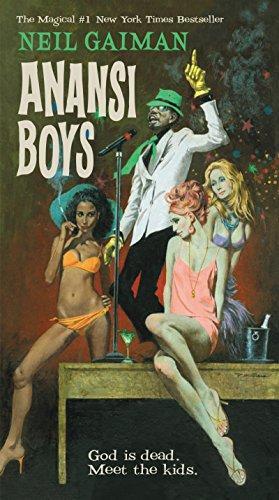
Anansi Boys by Neil Gaiman
Anansi Boys is a fantasy novel by English writer Neil Gaiman. In the novel, "Mr. Nancy" — an incarnation of …

I love books
This link opens in a pop-up window
Anansi Boys is a fantasy novel by English writer Neil Gaiman. In the novel, "Mr. Nancy" — an incarnation of …

"Michael Ovitz co-founded CAA in 1975 and served as its chairman until 1995. For most of the past two decades …

Review of Tim Cook the person - 5 stars.
The book itself is well written but not amazing. But as a human being, he's pretty legit.
Review of Tim Cook the person - 5 stars.
The book itself is well written but not amazing. But as a human being, he's pretty legit.

No soil? No sunlight? No problem. A hydroponic growing system gives you the power to grow plants anywhere. Simply suspend …

From entrepreneur Andrew Yang, the founder of Venture for America, an eye-opening look at how new technologies are erasing millions …
In June 2017, Travis Kalanick, the hard-charging CEO of Uber, was ousted in a boardroom coup that capped a brutal …

Hundreds of millions of people use Apple products every day; several thousand work on Apple's campus in Cupertino, California; but …
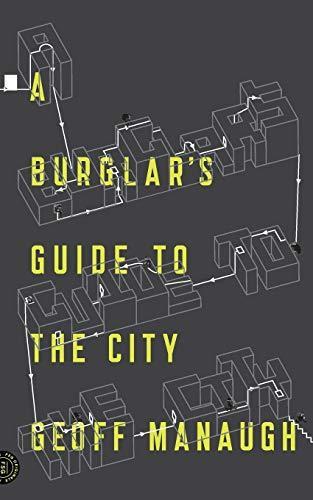
Encompassing nearly 2,000 years of heists and tunnel jobs, break-ins and escapes, A Burglar's Guide to the City offers an …

Neverwhere is the companion novelisation written by English author Neil Gaiman of the television serial Neverwhere, by Gaiman and Lenny …
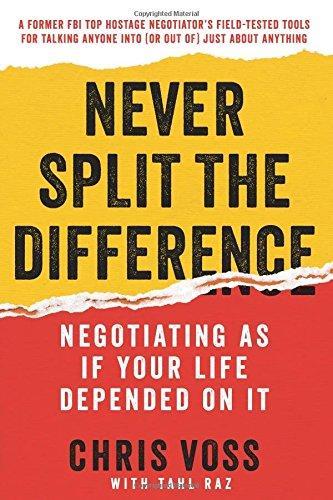
I think Andy’s review here on Goodreads sums it up well. The FBI hostage war stories are fun to read. Some of the principles in the book will be old hat to anyone with some successful experience in sales or other relationship oriented work. I learned some things but I think a giant bias of the book is the extremely deep domain expertise coming from his entire job and team and career being oriented around negotiation. That leads to a deep set of tools and perspectives on negotiation, many of which don’t map to the more common situation of someone who needs to negotiate like this maybe once very three years? I’m not sure the author does a great job mapping how his perspective being armpit deep in kidnapper psychology helps the average person eg. negotiate a raise or buy a used car, which is probably the more likely use …
I think Andy’s review here on Goodreads sums it up well. The FBI hostage war stories are fun to read. Some of the principles in the book will be old hat to anyone with some successful experience in sales or other relationship oriented work. I learned some things but I think a giant bias of the book is the extremely deep domain expertise coming from his entire job and team and career being oriented around negotiation. That leads to a deep set of tools and perspectives on negotiation, many of which don’t map to the more common situation of someone who needs to negotiate like this maybe once very three years? I’m not sure the author does a great job mapping how his perspective being armpit deep in kidnapper psychology helps the average person eg. negotiate a raise or buy a used car, which is probably the more likely use case for most readers.
Sorry that the writing in this review is so slapdash, I simply don’t care enough about the book to spend the time to improve the review.

Great book, fast read. Should be required reading for all Americans under 70. The book does three things exceptionally well:
1, it paints a picture of how the [online] Alt-Right and Alt-Light aren’t a monolith sprung from inchoate American white rage, but rather a coalition of about five or six Internet tribes, profiled in detail.
2, Despite the fact that the biggest champions of “Internet as crucible for a new decentralized, networked form of politics” were left-leaning, in the last decade it has been a New Right, and not the traditional left, whose coalition deployed the Internet for the maximum possible effect on presidential elections.
3, how “transgressive”, nihilist online communities, perhaps once considered likely “safe spaces” for libs, have been equally if not more owned by a new online community with zero interest in moving left, but who simply enjoy the power of these new online tools to impose …
Great book, fast read. Should be required reading for all Americans under 70. The book does three things exceptionally well:
1, it paints a picture of how the [online] Alt-Right and Alt-Light aren’t a monolith sprung from inchoate American white rage, but rather a coalition of about five or six Internet tribes, profiled in detail.
2, Despite the fact that the biggest champions of “Internet as crucible for a new decentralized, networked form of politics” were left-leaning, in the last decade it has been a New Right, and not the traditional left, whose coalition deployed the Internet for the maximum possible effect on presidential elections.
3, how “transgressive”, nihilist online communities, perhaps once considered likely “safe spaces” for libs, have been equally if not more owned by a new online community with zero interest in moving left, but who simply enjoy the power of these new online tools to impose their world on the Internet and the world outside it.
There are a few chapters and passages that might benefit from an editor; buffing out some of the academic jargon in a few sections (a few too many postmodern hegemonic whatever's), and smooth out some of the prose, but all in all, an extremely good and quite timely book.
Side note: It’s disappointing but not surprising to see that the author [a:Angela Nagle|14262423|Angela Nagle|https://images.gr-assets.com/authors/1497823622p2/14262423.jpg]'s Twitter account is now gone, after being active as recently as three days ago. Wondering, after so many other women critics have been run off the Internet after criticizing the Alt-Right / Alt-Light / Manosphere, whether that was a Twitter self-deportation or whether harassers fraudulently got Twitter to suspend her account, or?

We insist on setting up an opposition between concepts of success and failure, but this notion is unhelpful and can …