"Mitchell Esajas, creator of The Black Archives: ‘The far-right is trying to develop mythical historical narratives’
The co-founder of an archive on the history of the Dutch colonies speaks about the importance of memory and anti-racism, amid the rise of the far-right in the Netherlands"
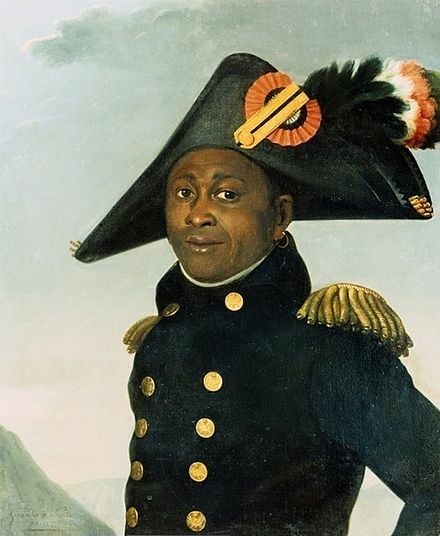
Today in Labor History August 22, 1791: Encouraged by the French and American revolutions, Toussaint Louverture led over 100,000 Haitian slaves in a revolt against the French. They were ultimately successful, making Haiti the first black republic in the world. The US refused recognition of Haiti until 1865, as a result of pressure from Southern slaveholders. The French demanded $21 billion In today’s dollars) in reparations for the losses to the former slaveholders, in exchange for peace and recognition of Haiti as an independent nation. The debt was financed through French banks and the U.S. bank, Citibank. The Haitians finally paid it off in 1947. However, the huge interest payments for their independence debt, and the debt incurred through the corruption of the Duvalier dynasty, have made Haiti one of the poorest nations in the western hemisphere. Prior to independence, Haiti was the richest and most productive of all of …
Today in Labor History August 22, 1791: Encouraged by the French and American revolutions, Toussaint Louverture led over 100,000 Haitian slaves in a revolt against the French. They were ultimately successful, making Haiti the first black republic in the world. The US refused recognition of Haiti until 1865, as a result of pressure from Southern slaveholders. The French demanded $21 billion In today’s dollars) in reparations for the losses to the former slaveholders, in exchange for peace and recognition of Haiti as an independent nation. The debt was financed through French banks and the U.S. bank, Citibank. The Haitians finally paid it off in 1947. However, the huge interest payments for their independence debt, and the debt incurred through the corruption of the Duvalier dynasty, have made Haiti one of the poorest nations in the western hemisphere. Prior to independence, Haiti was the richest and most productive of all of Europe’s colonies.
The best book I’ve read on the Haitian Revolution is “The Black Jacobins,” by Trinidadian socialist C.L.R. James. Cuban writer Alejo Carpentier explores the revolution in his novel, “The Kingdom of This World” (1949). You can read more about Toussaint Louverture and the slave uprising in Madison Smartt Bell’s trilogy called “All Souls' Rising” (1995) and Isabel Allende’s 2010 novel, “Island Beneath the Sea.”
From the New York Times bestselling author of When the Sea Came Alive and The …
Leona H. Woods: Where did the Manhattan District get the uranium that went into CP-1 (chain-reacting Pile-1)? A strange but true tale is that it was thanks to the foresightedness of Edgar Sengier, head of Union Minière, Katanga—a Brussels-based firm. John Gunther: Probably not one American in a hundred thousand has ever heard the name Edgar Edouard Sengier, nor is he well known in Europe outside of a limited circle. So far as I know, no photograph of him has ever appeared in an American newspaper or magazine of wide circulation. Edgar Sengier is, in his field, one of the great unknowns of our time. This is all the more remarkable because it was Mr. Sengier who made it possible for the United States to make the atomic bomb.
▶️ Adrian MUCKLE & Benoît TRÉPIED, Under the Colonial Radar? The History and Memory of an “Invisible” Mixed-Race Household in New Caledonia 👉 https://doi.org/10.1017/ahsse.2024.20
▶️ Lauren BENTON & Adam CLULOW, How Not to Possess an Island: Pitcairn and the Legal Circuits of British Empire in the Pacific World 👉 https://doi.org/10.1017/ahsse.2024.21
Before there was Francesca Albanese there was Richard Falk, Jewish-American professor emeritus of international law at Princeton University and former UN Special Rapporteur on Occupied Palestinian Territories.
In 2014 he gave this speech about the inevitability of Palestinian liberation, self-determination and nationhood.
"In the end the political goals that prompted the military attack in the first place lose their claim to be a "Mission Accomplished" and become acknowledged many deaths later as a "Mission Impossible"."
Today in Labor History March 19, 1742: Tupac Amaru was born. Tupac Amaru II had led a large Andean uprising against the Spanish. As a result, he became a mythical figure in the Peruvian struggle for independence and in the indigenous rights movement. The Tupamaros revolutionary movement in Uruguay (1960s-1970s) took their name from him. As did the Túpac Amaru Revolutionary guerrilla group, in Peru, and the Venezuelan Marxist political party Tupamaro. American rapper, Tupac Amaru Shakur, was also named after him. Chilean poet, Pablo Neruda, wrote a poem called “Tupac Amaru (1781).” And Clive Cussler’s book, “Inca Gold,” has a villain who claims to be descended from the revolutionary leader.
Today in Labor History March 19, 1742: Tupac Amaru was born. Tupac Amaru II had led a large Andean uprising against the Spanish. As a result, he became a mythical figure in the Peruvian struggle for independence and in the indigenous rights movement. The Tupamaros revolutionary movement in Uruguay (1960s-1970s) took their name from him. As did the Túpac Amaru Revolutionary guerrilla group, in Peru, and the Venezuelan Marxist political party Tupamaro. American rapper, Tupac Amaru Shakur, was also named after him. Chilean poet, Pablo Neruda, wrote a poem called “Tupac Amaru (1781).” And Clive Cussler’s book, “Inca Gold,” has a villain who claims to be descended from the revolutionary leader.
Canada and the RCMP did/do awful things to Inuit. One of these things was the widespread slaughter of dogs. Inuit relied upon these dogs for food, transportation, and protection.
An elder I know remembers the slaughter. Her father was out on the tundra with his dog team when RCMP came to her community and killed every dog.
Canada and the RCMP did/do awful things to Inuit. One of these things was the widespread slaughter of dogs. Inuit relied upon these dogs for food, transportation, and protection.
An elder I know remembers the slaughter. Her father was out on the tundra with his dog team when RCMP came to her community and killed every dog.
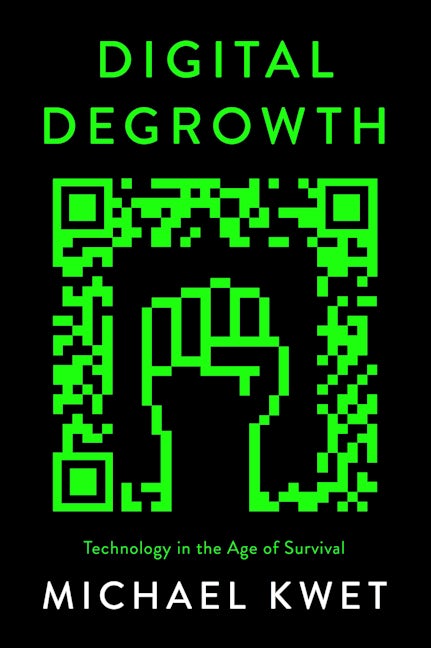
A new framework for the digital society that merges the science of degrowth with a …
The book is starting really strong, with an analysis and explanation of digital colonialism and critical economic theory. A lot of empirical evidence is provided but it does not disrupt the reading flow. Rather it makes me want to continue. Can definitely recommend so far!
#FediBooks#DigitalColonialism#DigitalDegrowth#Degrowth#Colonialism#MichaelKwet