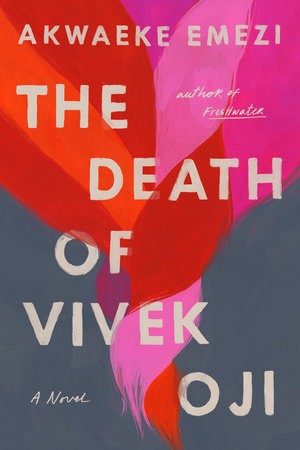
What does it mean for a family to lose a child they never really knew?
One afternoon, in a town in southeastern Nigeria, a mother opens her front door to discover her son’s body, wrapped in colorful fabric, at her feet. What follows is the tumultuous, heart-wrenching story of one family’s struggle to understand a child whose spirit is both gentle and mysterious. Raised by a distant father and an understanding but overprotective mother, Vivek suffers disorienting blackouts, moments of disconnection between self and surroundings. As adolescence gives way to adulthood, Vivek finds solace in friendships with the warm, boisterous daughters of the Nigerwives, foreign-born women married to Nigerian men. But Vivek’s closest bond is with Osita, the worldly, high-spirited cousin whose teasing confidence masks a guarded private life. As their relationship deepens—and Osita struggles to understand Vivek’s escalating crisis—the mystery gives way to a heart-stopping act of violence …
What does it mean for a family to lose a child they never really knew?
One afternoon, in a town in southeastern Nigeria, a mother opens her front door to discover her son’s body, wrapped in colorful fabric, at her feet. What follows is the tumultuous, heart-wrenching story of one family’s struggle to understand a child whose spirit is both gentle and mysterious. Raised by a distant father and an understanding but overprotective mother, Vivek suffers disorienting blackouts, moments of disconnection between self and surroundings. As adolescence gives way to adulthood, Vivek finds solace in friendships with the warm, boisterous daughters of the Nigerwives, foreign-born women married to Nigerian men. But Vivek’s closest bond is with Osita, the worldly, high-spirited cousin whose teasing confidence masks a guarded private life. As their relationship deepens—and Osita struggles to understand Vivek’s escalating crisis—the mystery gives way to a heart-stopping act of violence in a moment of exhilarating freedom.
Propulsively readable, teeming with unforgettable characters, The Death of Vivek Oji is a novel of family and friendship that challenges expectations—a dramatic story of loss and transcendence that will move every reader.
I felt like the actual story behind this was very good. It covers homophobia, has trans representation, and family members stuck in their ways due to tradition. It got overshadowed for me with the love story being incestuous. It did not have a major impact on the story, and I feel like it could have played out exactly the same if they were friends that had grown up together instead of first cousins. I wish we had heard a little more from Vivek through the story. Almost everything we know of their story is told through stories from others.
By sheer coincidence I started reading The Death of Vivek Oji right after the first time I ever read Chronicle of a Death Foretold (which I wasn't much impressed with, particularly because, having just read Love in the Time of Cholera before it, I was just about finished with Garcia Marquez's misogyny and characters who fall in love with their abusers). Soon after I started reading Vivek Oji I thought "this is what Chronicle could have been, if it loved its characters instead of hating them.
Only when I got to the acknowledgement did I find out Emezi directly cites Chronicle as a source of inspiration. So, yeah, it shows. But this one is so much better.
Set in Nigeria, primarily in Owerri, in Igboland, the story takes us back and forth in time to tell us everything about what brought about and what came out of the death of …
By sheer coincidence I started reading The Death of Vivek Oji right after the first time I ever read Chronicle of a Death Foretold (which I wasn't much impressed with, particularly because, having just read Love in the Time of Cholera before it, I was just about finished with Garcia Marquez's misogyny and characters who fall in love with their abusers). Soon after I started reading Vivek Oji I thought "this is what Chronicle could have been, if it loved its characters instead of hating them.
Only when I got to the acknowledgement did I find out Emezi directly cites Chronicle as a source of inspiration. So, yeah, it shows. But this one is so much better.
Set in Nigeria, primarily in Owerri, in Igboland, the story takes us back and forth in time to tell us everything about what brought about and what came out of the death of Vivek Oji. The book digs deep into the way hate and fear become a rot that spreads, infects, and undermines lives and love. This is as much true of homophobia and transphobia, the centre of this story, as it is of any other hate, which the book only touches on ever so fleetingly, merely recognizing the parallels - racism, misogyny, and so forth. It also does a great job in preempting any attempt to dismiss this as something that, for a reader like me in a Western country, happens "there", in "places that are different". I've never been to Nigeria, but the vivid depiction of life there makes it very clear that, while there are certainly differences in culture, this is a story about being human, and it is applicable to people everywhere. If you live in a western country and think "this could never happen here", you are so very, very wrong.
This book will rip your heart out, but then put it back in and tell you "don't forget the pain you've learned".