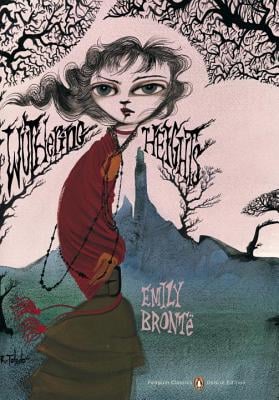
You said I killed you - haunt me, then' Lockwood, the new tenant of Thrushcross Grange on the bleak Yorkshire moors, is forced to seek shelter one night at Wuthering Heights, the home of his landlord.
There he discovers the history of the tempestuous events that took place years before: of the intense passion between the foundling Heathcliff and Catherine Earnshaw, and her betrayal of him.
As Heathcliff's bitterness and vengeance is visited upon the next generation, their innocent heirs must struggle to escape the legacy of the past.
'May you not rest, as long as I am living.
You said I killed you - haunt me, then' Lockwood, the new tenant of Thrushcross Grange on the bleak Yorkshire moors, is forced to seek shelter one night at Wuthering Heights, the home of his landlord.
There he discovers the history of the tempestuous events that took place years before: of the intense passion between the foundling Heathcliff and Catherine Earnshaw, and her betrayal of him.
As Heathcliff's bitterness and vengeance is visited upon the next generation, their innocent heirs must struggle to escape the legacy of the past.
How did I feel about this novel during my sixteenth summer? Too bad I didn't keep any sort of journal. I do remember liking it, and have vague memories of envisioning Heathcliff as some kind of suffering romantic.
This time, at more than three times that age, I still find it a compelling read, but not the one I'd expected. For one thing, I found Heathcliff and Catherine Earnshaw to be less than appealing, and felt very sorry for Edgar Linton, the man Catherine married. Their lives were fine after marriage, until Heathcliff returns to seek his revenge. He manages to ruin several lives and shorten the life of his beloved Catherine, in the bargain. His anger and hatred turn him into such a miserable, cruel villain that it is hard to retain any sympathy for him. Indeed, my sympathy was with everyone else.
However, after Heathcliff's unrequited love tragedy …
How did I feel about this novel during my sixteenth summer? Too bad I didn't keep any sort of journal. I do remember liking it, and have vague memories of envisioning Heathcliff as some kind of suffering romantic.
This time, at more than three times that age, I still find it a compelling read, but not the one I'd expected. For one thing, I found Heathcliff and Catherine Earnshaw to be less than appealing, and felt very sorry for Edgar Linton, the man Catherine married. Their lives were fine after marriage, until Heathcliff returns to seek his revenge. He manages to ruin several lives and shorten the life of his beloved Catherine, in the bargain. His anger and hatred turn him into such a miserable, cruel villain that it is hard to retain any sympathy for him. Indeed, my sympathy was with everyone else.
However, after Heathcliff's unrequited love tragedy has run its course, Emily Bronte does provide a happier echo for the ending with the next generation. The blossoming relationship between Catherine Linton and Hareton Earnshaw is actually quite romantic.
At times, it seemed that the Earnshaws and the Lintons were the only families on earth, because whatever happened that did not happen between them or at one of their estates seems very remote. There is a nearby town and church, but they are barely described.
It seems unfathomable to live such a dull, circumscribed life, but then, that was the life of the Bronte sisters. I'm grateful that they had such vivid imaginations! I enjoyed the way the story is told in flashback, by an unreliable narrator, servant Nelly Dean. It's a thought-provoking tale that I would recommend to most.