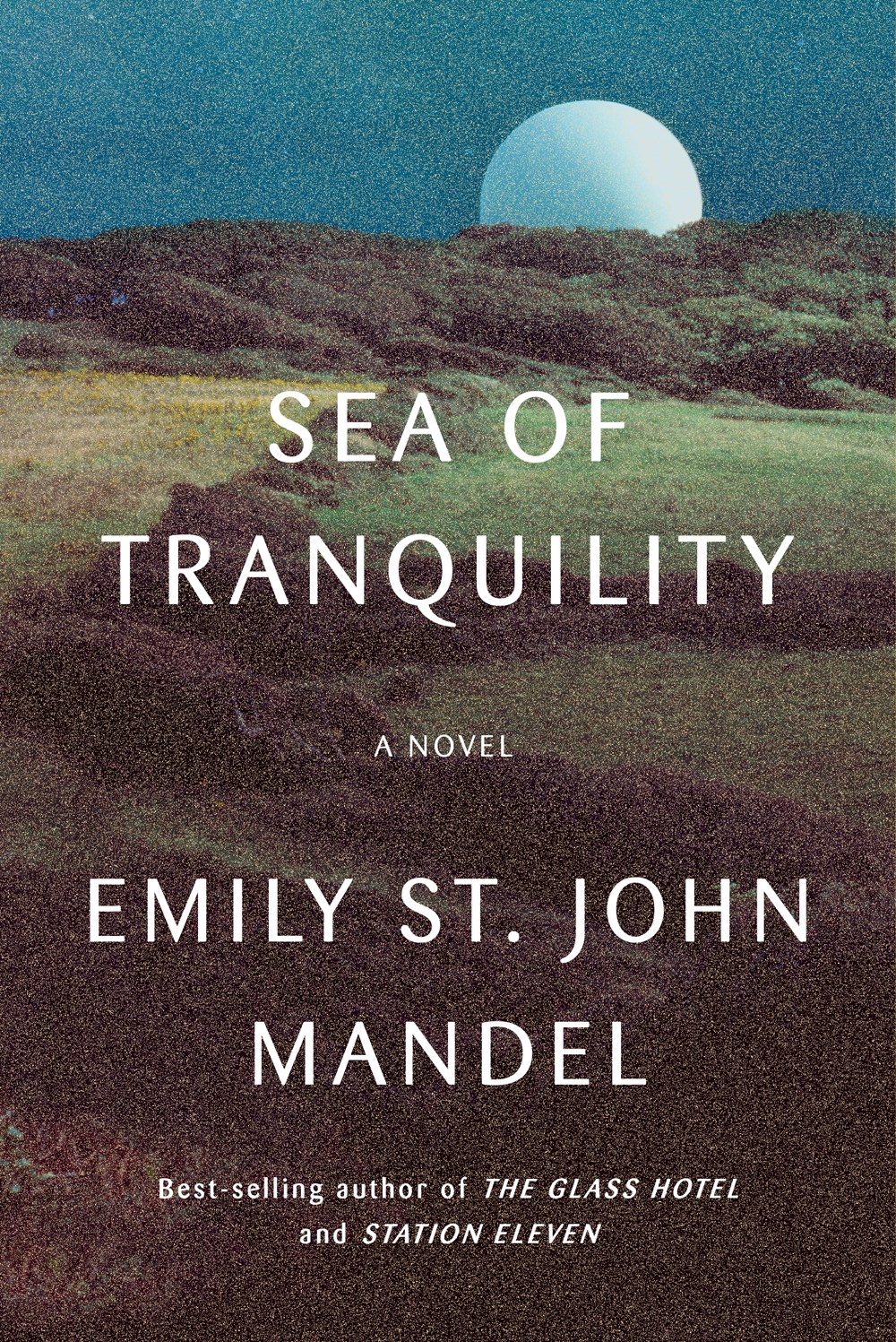
Edwin St. Andrew is eighteen years old when he crosses the Atlantic by steamship, exiled from polite society following an ill-conceived diatribe at a dinner party. He enters the forest, spellbound by the beauty of the Canadian wilderness, and suddenly hears the notes of a violin echoing in an airship terminal—an experience that shocks him to his core.
Two centuries later a famous writer named Olive Llewellyn is on a book tour. She’s traveling all over Earth, but her home is the second moon colony, a place of white stone, spired towers, and artificial beauty. Within the text of Olive’s best-selling pandemic novel lies a strange passage: a man plays his violin for change in the echoing corridor of an airship terminal as the trees of a forest rise around him.
When Gaspery-Jacques Roberts, a detective in the black-skied Night City, is hired to investigate an anomaly in …
Edwin St. Andrew is eighteen years old when he crosses the Atlantic by steamship, exiled from polite society following an ill-conceived diatribe at a dinner party. He enters the forest, spellbound by the beauty of the Canadian wilderness, and suddenly hears the notes of a violin echoing in an airship terminal—an experience that shocks him to his core.
Two centuries later a famous writer named Olive Llewellyn is on a book tour. She’s traveling all over Earth, but her home is the second moon colony, a place of white stone, spired towers, and artificial beauty. Within the text of Olive’s best-selling pandemic novel lies a strange passage: a man plays his violin for change in the echoing corridor of an airship terminal as the trees of a forest rise around him.
When Gaspery-Jacques Roberts, a detective in the black-skied Night City, is hired to investigate an anomaly in the North American wilderness, he uncovers a series of lives upended: The exiled son of an earl driven to madness, a writer trapped far from home as a pandemic ravages Earth, and a childhood friend from the Night City who, like Gaspery himself, has glimpsed the chance to do something extraordinary that will disrupt the timeline of the universe.
A virtuoso performance that is as human and tender as it is intellectually playful, Sea of Tranquility is a novel of time travel and metaphysics that precisely captures the reality of our current moment.
Plot, characters, themes, all flawlessly executed. A total package. Structurally really similar to Cloud Atlas—apparently an intentional borrowing on the author's part—but hangs together as a single work a lot better than Cloud Atlas did.
Plot, characters, themes, all flawlessly executed. A total package. Structurally really similar to Cloud Atlas—apparently an intentional borrowing on the author's part—but hangs together as a single work a lot better than Cloud Atlas did.
Le thème traité dans le livre est un classique dans le genre SF. Il y a eu de nombreux traitements, s'alimentant de l'imagination ou de la science et éventuelles conjectures.
Ici, c'est avant tout un prétexte, je pense, un prétexte pour déployer différentes questions sur la société, mais des questions de vie et perceptions individuelles. Sans écrire un roman en 20 tomes, l'autrice nous offre un roman agréable à lire et qui donne à penser.
Parfois, certains développement me donnaient envie de critiquer. La musique du récit m'emmenait à nouveau. On pourrait qualifier certains sujets d'éculés. S'ils sont maniés avec finesse ou légèretés, ils peuvent non moins être agréables.
Lu en anglais.
Le thème traité dans le livre est un classique dans le genre SF. Il y a eu de nombreux traitements, s'alimentant de l'imagination ou de la science et éventuelles conjectures.
Ici, c'est avant tout un prétexte, je pense, un prétexte pour déployer différentes questions sur la société, mais des questions de vie et perceptions individuelles. Sans écrire un roman en 20 tomes, l'autrice nous offre un roman agréable à lire et qui donne à penser.
Parfois, certains développement me donnaient envie de critiquer. La musique du récit m'emmenait à nouveau. On pourrait qualifier certains sujets d'éculés. S'ils sont maniés avec finesse ou légèretés, ils peuvent non moins être agréables.
I'm OK with the time travel paradoxes -- those are inevitable. But to me it's a pretty bad plot weakness here that the Time Institute notices, and manages to find documentation of, a glitch in the matrix that just looks to three observers like a migraine symptom or a petit mal epileptic fit. People's brains and senses make up all sorts of weird shit all the time, and nobody takes it as evidence of anything particularly significant.
There's a passage in the book where one of the characters complain that another characters portrayal of growing up on the moon is exaggerated and not reflective of her own experience, this is how I feel of the author's take on the pandemic.
There's a passage in the book where one of the characters complain that another characters portrayal of growing up on the moon is exaggerated and not reflective of her own experience, this is how I feel of the author's take on the pandemic.
Krasna knizecka. Opet trosku obava z pandemicke vlozky, prezil sem. Pro fandy hard bude cestovani casem jiste usmevny. Ale proste podobne jako ve Stanici 11 je tady spousta "poezie" v pribehu. Zaokrouhluju na ctyri hvezdy.
Zadna hvezda nesviti na porad.
Zadna hvezda nesviti na porad.
Zadna hvezda nesviti na porad.
Krasna knizecka. Opet trosku obava z pandemicke vlozky, prezil sem. Pro fandy hard bude cestovani casem jiste usmevny. Ale proste podobne jako ve Stanici 11 je tady spousta "poezie" v pribehu. Zaokrouhluju na ctyri hvezdy.
Although the time anomaly and time travel in this book are of the standard variety the author manages to give the concept an uniqie and compelling spin. It's more about the characters that encounter the anomaly and are linked through it while they're unstuck and kind of isolated in their own time. I appreciated the inclusion of pandemics in the narrative but it's a little depressing that people don't seem to have learned from them even centuries in the future. There are some minor flaws but I liked the overall feel of the book.
Although the time anomaly and time travel in this book are of the standard variety the author manages to give the concept an uniqie and compelling spin. It's more about the characters that encounter the anomaly and are linked through it while they're unstuck and kind of isolated in their own time. I appreciated the inclusion of pandemics in the narrative but it's a little depressing that people don't seem to have learned from them even centuries in the future. There are some minor flaws but I liked the overall feel of the book.
Goodreads Review of Sea of Tranquility by Emily St. John Mandel
5 stars
I'll never get over Emily St. John Mandel's ability to weave many different simple narratives into a compelling braid of a story that still manages to have surprises, twists, and turns without being overly bulky or needing extensive exposition. She always holds you right on the cusp of confusion, making you think you lost the plot, but you didn't. She will reel you right back in. This was the case for Station Eleven, and The Glass Hotel, and Sea of Tranquility was no exception.
In this book we follow a few different narratives, and those who have read her previous other works will find some familiar. Edwin St. Andrew is the lesser son of some English nobles, sent to colonized Canada in 1912 as a punishment where he experiences something extraordinary, and almost alien in the Canadian Wilderness. A man watches. Vincent (a character readers of the author's works …
I'll never get over Emily St. John Mandel's ability to weave many different simple narratives into a compelling braid of a story that still manages to have surprises, twists, and turns without being overly bulky or needing extensive exposition. She always holds you right on the cusp of confusion, making you think you lost the plot, but you didn't. She will reel you right back in. This was the case for Station Eleven, and The Glass Hotel, and Sea of Tranquility was no exception.
In this book we follow a few different narratives, and those who have read her previous other works will find some familiar. Edwin St. Andrew is the lesser son of some English nobles, sent to colonized Canada in 1912 as a punishment where he experiences something extraordinary, and almost alien in the Canadian Wilderness. A man watches. Vincent (a character readers of the author's works may be familiar with), has a same experience at the same place in the wilderness in 1994, filming with a personal camera. A man watches. In 2020, Mirella, a former friend of Vincent's, is looking for her, and comes to an experimental art show put on by Vincent's brother where he shows Vincent's recording of that event in 1994. A man watches. Olive is an author from the second colony of the moon in 2203. She's doing a book tour on Earth while the beginnings of a pandemic break out. A man watches. In 2401, Gaspery is a man living in the second colony in of the moon, aka Night City, who gets wrapped up in the business of his sister who works for an agency that governs time travel.
St. John Mandel's strength has always been structure and composition. She is truly an expert at revolutionizing how a story is told without burdening the reader with knots of stories. Her character work is also always something to look forward to as well. I love how she sometimes only allows us a surface level understanding of a character, like Edwin (even if maybe they're a protagonist) while others we get an in-depth, deep dive into their psyche, like Olive. It mirrors our own relationships with the people in our lives.
I continue to be impressed with everything I read from Emily St. John Mandel, and I will read everything she's written at this point. I should warn potential readers, while not necessary, it would be beneficial for you to read, at the very least, The Glass Hotel before you read this book. If you want some more small Easter eggs, you should also read Station Eleven before reading.
I found this touching and hopeful, I liked how poignantly the characters were drawn, and the themes of kindness and the vicissitudes of life.
My main complaint was that I think the simulation theory stuff was basically an unnecessary macguffin and didn't add to the themes (at least as far as they interested me).
I found this touching and hopeful, I liked how poignantly the characters were drawn, and the themes of kindness and the vicissitudes of life.
My main complaint was that I think the simulation theory stuff was basically an unnecessary macguffin and didn't add to the themes (at least as far as they interested me).
Content warning
Slight spoiler towards the end of the paragraph
… which is Goethe and translates as "one notices the intention and is disappointed". Which is the feeling I got from reading the book: While the sections set in the early 20th century work very well, the sci-fi settings have a forced and constructed feel; while the overall story arc makes sense, the details of the construction are visible too often (how everything is about what is real and what is virtual, about connection and loneliness, and in the end really only about the experience of Covid-19); and while the idea of using time travel as a plot device, not as the main topic, is great, there are just too many inconsistencies in how it is used (sometimes things happen the way they have always done because of some cross-time intervention, sometimes such an intervention causes things to change). Overall a nice read, but not much more.
I liked the story of isolated humans trying to find meaning in their lives, all tangled together and touched by the miraculous. It left me feeling hopeful and reassured.
This book washed over me. I loved the story and the way it made me feel about family, about time. The way the different stories knit together, the moments of realization that the author flawlessly sets up and executes... all of it. Lovely.