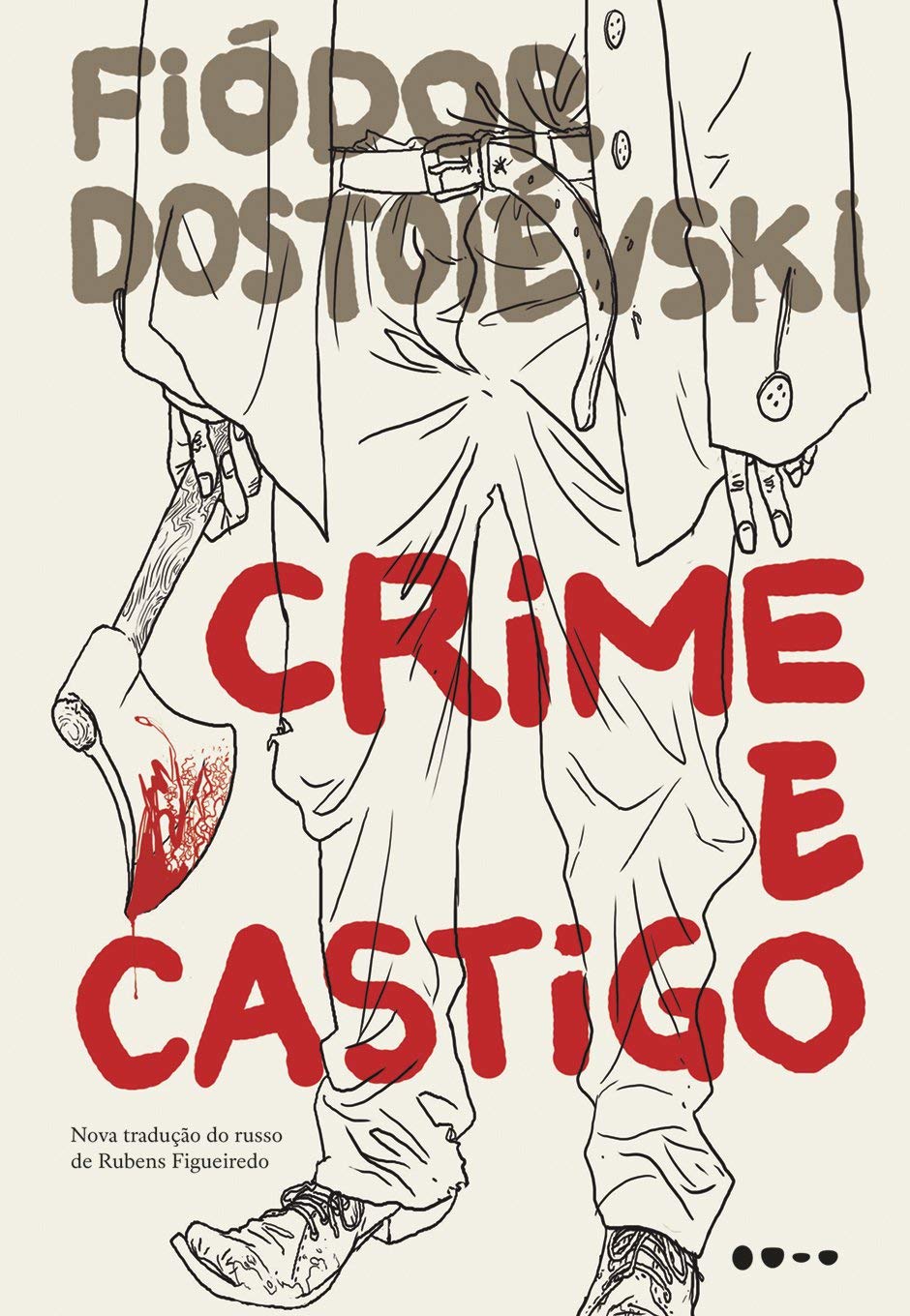
Nova tradução direto do russo, a cargo de Rubens Figueiredo, de um dos romances mais importantes e influentes de todos os tempos.
"Crime e castigo" é a obra mais célebre de Dostoiévski e um dos romances fundamentais da literatura ocidental. Escrita entre 1865 e 1866, quando Dostoiévski tinha 45 anos, foi publicada em partes na revista Rússki Viéstnik [O Mensageiro Russo], a mesma que vinha publicando, na época, o romance "Guerra e paz", de Liev Tolstói. A ideia do livro surgiu quando Dostoiévski propôs a Katkóv, editor da revista, redigir um "relato psicológico de um crime".
Na obra, Raskólnikov, um rapaz sombrio e orgulhoso, retraído mas também aberto à observação humana, precisa interromper seus estudos por falta de dinheiro. Devendo o aluguel à proprietária do cubículo desconfortável em que vive, ele se sente esmagado pela pobreza. Ao mesmo tempo, acha que está destinado a um grande futuro e, …
Nova tradução direto do russo, a cargo de Rubens Figueiredo, de um dos romances mais importantes e influentes de todos os tempos.
"Crime e castigo" é a obra mais célebre de Dostoiévski e um dos romances fundamentais da literatura ocidental. Escrita entre 1865 e 1866, quando Dostoiévski tinha 45 anos, foi publicada em partes na revista Rússki Viéstnik [O Mensageiro Russo], a mesma que vinha publicando, na época, o romance "Guerra e paz", de Liev Tolstói. A ideia do livro surgiu quando Dostoiévski propôs a Katkóv, editor da revista, redigir um "relato psicológico de um crime".
Na obra, Raskólnikov, um rapaz sombrio e orgulhoso, retraído mas também aberto à observação humana, precisa interromper seus estudos por falta de dinheiro. Devendo o aluguel à proprietária do cubículo desconfortável em que vive, ele se sente esmagado pela pobreza. Ao mesmo tempo, acha que está destinado a um grande futuro e, desdenhoso da moralidade comum, julga ter plenos direitos para cometer um crime – o que fará de uma maneira implacável.
Por meio da trajetória de Raskólnikov, Dostoiévski apresenta um testemunho eloquente da pobreza, do alcoolismo e das condições degradantes que empurram para o abismo anônimos nas grandes cidades. Ainda assim, a tragédia não exclui a perspectiva de uma vida luminosa, e o castigo pelo crime vai lhe abrir um longo caminho em direção à verdade.
Foi muito bom!!! Teve momentos que foram meio mornos, mas normal quando é um livro tão grande. Fiquei pensativo lendo. Os últimos capítulos foram ótimos, e a tensão no começo do livro também. As reviravoltas foram todas muito divertidas. Recomendo, um Strong 9
Review of 'Dostoevsky Crime & Punishment' on 'Goodreads'
4 stars
Growing up in former Yugoslavia, I was exposed to Russian literature from the very early age. There's still some of the old awe remaining in me when I read the old Russian masters, like Dostoevsky. I don't think I'm qualified or brazen enough to review the "Crime and Punishment," but I can offer some impressions the book made on me.
Let me begin by mentioning the language. My first language is Serbo-Croatian: a language which is nowadays split at the hyphen into two separate languages. I never realized that hyphen stood for the ethnic line between the two groups of people, though I was forced to learn it when the line broke in the bloody conflict of the Balkans, and the language split, just as the country did, into two separate entities. But, I digress. The point is that both, Croatian and Serbian language, are of the Slavic origin, as …
Growing up in former Yugoslavia, I was exposed to Russian literature from the very early age. There's still some of the old awe remaining in me when I read the old Russian masters, like Dostoevsky. I don't think I'm qualified or brazen enough to review the "Crime and Punishment," but I can offer some impressions the book made on me.
Let me begin by mentioning the language. My first language is Serbo-Croatian: a language which is nowadays split at the hyphen into two separate languages. I never realized that hyphen stood for the ethnic line between the two groups of people, though I was forced to learn it when the line broke in the bloody conflict of the Balkans, and the language split, just as the country did, into two separate entities. But, I digress. The point is that both, Croatian and Serbian language, are of the Slavic origin, as is Russian. Therefore, the translations from Russian into Croatian are seamless and the flow is natural, unlike the awkward and rigid form English translation gave to the "Crime and Punishment." I recently read another Russian classic translated in English, Tolstoy's "Ana Karenina", which had the same inflexible awkwardness.
Once you get over the language, you're teleported into Russian Empire at it's eleventh hour, with it's social and ideological problems, you catch a glimpse of the seed of ideas which will evolve--or devolve--into Communism; you feel the heat of rainless St. Petersburg, the stench of poverty, the corruption of the higher middle class. You feel for the criminal, and although you can't justify his crime, you feel and cheer for him. And, at the end, you are rewarded with the gift of hope.