Vincent Tijms rated Witte panters: 3 stars
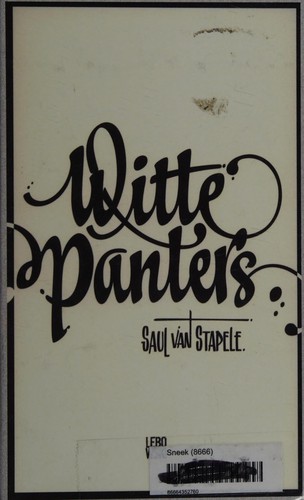
Witte panters by Saul van Stapele
Twee blanke jongens die opgroeien tijdens de hoogtijdagen van MTV en de rapcultuur in de jaren negentig, proberen uit alle …

Alterego of this guy on Mastodon.
This link opens in a pop-up window
Twee blanke jongens die opgroeien tijdens de hoogtijdagen van MTV en de rapcultuur in de jaren negentig, proberen uit alle …
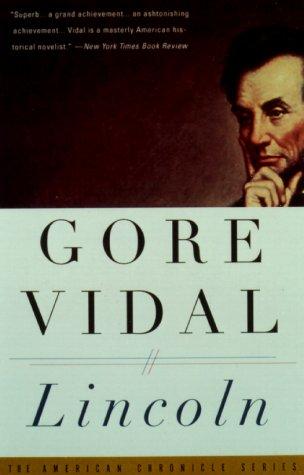
An historical novel that describes the presidency of Abraham Lincoln through the eyes of several historical figures including presidential secretary …

Burr is a 1973 historical novel by Gore Vidal that challenges the traditional Founding Fathers iconography of United States history, …
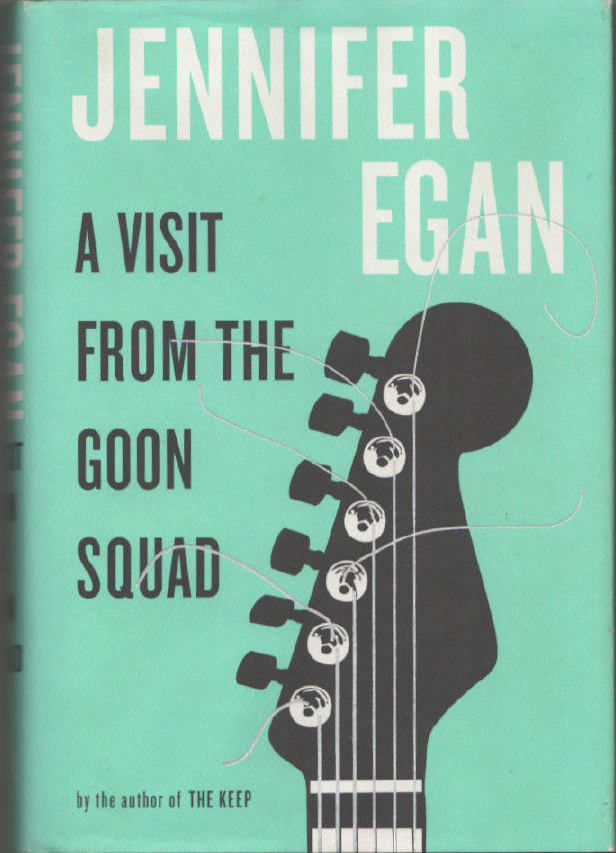
Jennifer Egan's spellbinding interlocking narratives circle the lives of Bennie Salazar, an aging former punk …
If you've been paying attention to American literature during the past decade or so, you will know the score of this novel. If that makes you want to skip it, you're making a huge mistake. Egan takes change, growing up, constrained freedom and all those other topics that US novelists love, but deals with them in a clever form that adds another layer of meaning. More detailed reviews can be found elsewhere, let me just say that I am happy to close off my 2013 readings with something as superb as this novel.
If you've been paying attention to American literature during the past decade or so, you will know the score of this novel. If that makes you want to skip it, you're making a huge mistake. Egan takes change, growing up, constrained freedom and all those other topics that US novelists love, but deals with them in a clever form that adds another layer of meaning. More detailed reviews can be found elsewhere, let me just say that I am happy to close off my 2013 readings with something as superb as this novel.
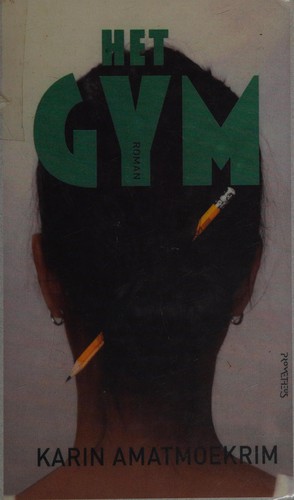
Roman over een Surinaams meisje uit een achterstandswijk dat -als enige uit haar klas- naar het gymnasium gaat.
Een …
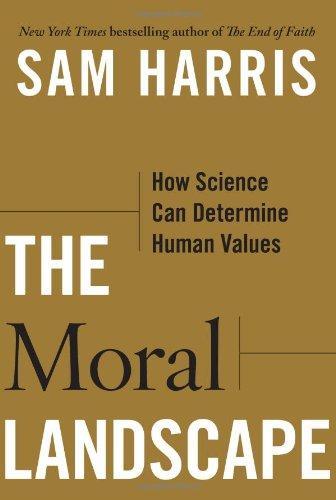
The Moral Landscape: How Science Can Determine Human Values is a 2010 book by Sam …
There isn't much of an argument found in this book. That's not to say that Harris is demonstrably wrong or uninteresting, it's just that the claim that there's something to be known about ethics is a weak proposition, that few will debate. The truly interesting parts, such as the defense of utilitarianism as a meta-ethical position, are wholly skipped by Harris. There's a lot to say on the problems of this book, but I will do so elsewhere. My verdict is that it's conceptually naive and, surprisingly enough, also primitive with regards to the interpretation of neuroimaging findings.
There isn't much of an argument found in this book. That's not to say that Harris is demonstrably wrong or uninteresting, it's just that the claim that there's something to be known about ethics is a weak proposition, that few will debate. The truly interesting parts, such as the defense of utilitarianism as a meta-ethical position, are wholly skipped by Harris. There's a lot to say on the problems of this book, but I will do so elsewhere. My verdict is that it's conceptually naive and, surprisingly enough, also primitive with regards to the interpretation of neuroimaging findings.

This work fails in several ways. Firstly, it fails as a historical novel. Its characters view their places in history from the neatly organised perspective that is the luxury of modern hindsight. Secondly, its stilted, expository style is only surpassed by [a:Plato|879|Plato|https://d202m5krfqbpi5.cloudfront.net/authors/1353468250p2/879.jpg]'s dialogues, and not even by far. If showing instead of telling is the hallmark of great narrative art, this book fails the test. Thirdly, the characters are flattened mouthpieces for the points Yalom wants to make: despite their philosophical and social differences, their mannerisms and speech are virtually identical.
Still, [b:When Nietzsche Wept|21031|When Nietzsche Wept|Irvin D. Yalom|https://d202m5krfqbpi5.cloudfront.net/books/1348795851s/21031.jpg|162267] is great. While any philosophy student can create a synthesis between existentialism and psychoanalytical theory, Yalom makes it seem as if the two are twins separated a birth. Throughout the dialogues between Breuer and Nietzsche, the reader meets central themes of their respective philosophies and and is persuaded to see them …
This work fails in several ways. Firstly, it fails as a historical novel. Its characters view their places in history from the neatly organised perspective that is the luxury of modern hindsight. Secondly, its stilted, expository style is only surpassed by [a:Plato|879|Plato|https://d202m5krfqbpi5.cloudfront.net/authors/1353468250p2/879.jpg]'s dialogues, and not even by far. If showing instead of telling is the hallmark of great narrative art, this book fails the test. Thirdly, the characters are flattened mouthpieces for the points Yalom wants to make: despite their philosophical and social differences, their mannerisms and speech are virtually identical.
Still, [b:When Nietzsche Wept|21031|When Nietzsche Wept|Irvin D. Yalom|https://d202m5krfqbpi5.cloudfront.net/books/1348795851s/21031.jpg|162267] is great. While any philosophy student can create a synthesis between existentialism and psychoanalytical theory, Yalom makes it seem as if the two are twins separated a birth. Throughout the dialogues between Breuer and Nietzsche, the reader meets central themes of their respective philosophies and and is persuaded to see them as deeply connected.
In fact, while all dialogue seems contrived and is way too explicit - a fact only marginally excused by the psychotherapeutical setting that is the premise of the story - deeper ties between Nietzsche's philosophy and psychoanalysis are more craftfully inserted into the story. For example, similarities between Nietzschean slave morality and [a:Freudian|10017|Sigmund Freud|https://d202m5krfqbpi5.cloudfront.net/authors/1291158417p2/10017.jpg] criticism of civilization itself -- as espoused in [b:Civilization and Its Discontents|357636|Civilization and Its Discontents|Sigmund Freud|https://d202m5krfqbpi5.cloudfront.net/books/1347581113s/357636.jpg|848942] -- are touched upon, but never elaborated. Similarly, parallels between Nietzsche's views on power and the peculiar relationship between psychotherapists and their patients are shown, not told. While When Nietzsche Wept lacks virtually all subtlety at the narrative level, it is very playful at a more thematic one.
Part of this playfulness stems from Yalom's comfort in weaving Nietzsche's aphorisms through the dialogues, while borrowing psychoanalytical insights from across history -- even from days way beyond those of Breuer's. It also comes from the way he approaches the Freudian concepts towards which the book is heavily biased. A therapist who is a patient, but transfers that state upon a patient who acts as his therapist and completely mirrors this, would probably be the most confusing case study ever, defying all attempts to be neatly categorized in the psychoanalytical framework. This tongue-in-cheek approach makes up for shoehorning skeptical Nietzsche into the role of an explorer of the subconscious, something he, who once mocked [a:Eduard Von Hartmann|12849|Eduard Von Hartmann|https://d202m5krfqbpi5.cloudfront.net/authors/1377212875p2/12849.jpg] for explaining something that cannot be known by essence, would probably have rejected with nihilistic passion.
The beauty of When Nietzsche Wept is not its poor style or lackluster imagination in portraying characters at the dawn of Vienna 1900. It is the excited synthesis that permeates the pages of the book, a synthesis that you cannot help but be dragged along with. Sometimes the synthesis is spelled out, while some of the more abstruse connections are left to the reader. The result is a work that is esoteric at heart, but in a way that simply scales with initiation.
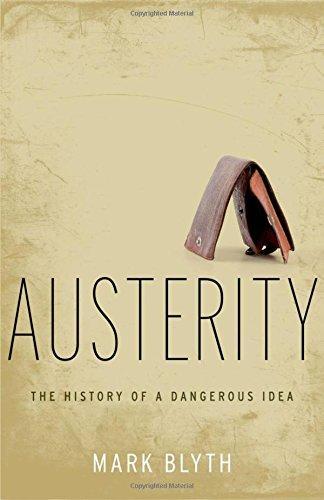
Austerity: The History of a Dangerous Idea is a 2013 book by Mark Blyth that explores the economic policy of …