Amanda rated Blindsight: 4 stars

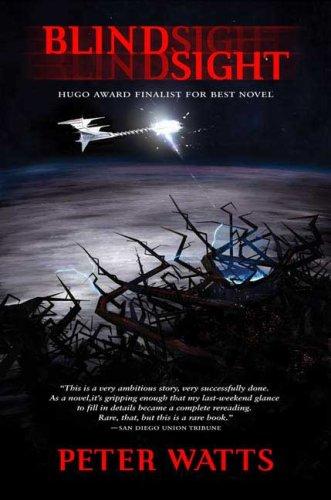
Blindsight by Peter Watts
Two months since the stars fell...
Two months since sixty-five thousand alien objects clenched around the Earth like a …
This link opens in a pop-up window
Success! Amanda has read 18 of 12 books.

Two months since the stars fell...
Two months since sixty-five thousand alien objects clenched around the Earth like a …
Referenced heavily on Lily Alexandre's Notes on Vanishing www.youtube.com/watch?v=cqhiup5qSY8&t=3s
Recommendation from it could happen here April 23rd on Nihilist violent extremism podcasts.apple.com/se/podcast/it-could-happen-here/id1449762156?i=1000704549897
Från Eld och rörelse #155 in Grönland
Recommendation from Q&A episode of It Could Happen Here: podcasts.apple.com/se/podcast/it-could-happen-here/id1449762156?i=1000682817148
I'm uncomfortably well versed in the Margaret Killjoy Extended Universe. I listen to most of her podcasts and have done so for a while. I've read (and own) several of her books. This book may be the most Margaret of all the ones I have read. That's neither warning nor endorsement; it's a statement of fact.
The Sapling Cage intersects the strictly controlled genres of young adult coming of age fiction and what I'd call low fantasy, with some of of the obligatory Killjoy eldritch horror elements. Both of these genres are laden with tropes. Fantasy as a genre usually handles the battle between good and evil, where good and evil are well-defined teams. It supplies two components: a mapping from moral alignment to aesthetics (good knights/evil orcs), and a theory of magic. How these are defined usually structures the rest of the story and setting. For YA fiction, …
I'm uncomfortably well versed in the Margaret Killjoy Extended Universe. I listen to most of her podcasts and have done so for a while. I've read (and own) several of her books. This book may be the most Margaret of all the ones I have read. That's neither warning nor endorsement; it's a statement of fact.
The Sapling Cage intersects the strictly controlled genres of young adult coming of age fiction and what I'd call low fantasy, with some of of the obligatory Killjoy eldritch horror elements. Both of these genres are laden with tropes. Fantasy as a genre usually handles the battle between good and evil, where good and evil are well-defined teams. It supplies two components: a mapping from moral alignment to aesthetics (good knights/evil orcs), and a theory of magic. How these are defined usually structures the rest of the story and setting. For YA fiction, the equivalent is the emotional and sometimes physical maturity of the main character and their relationships to friends, frenemies, enemies, and their collective struggle against authority, almost always adult authority, which is usually delusional compared to the young adults'.
Killjoy blends these tropes to produce an anti-authoritarian fantasy that feels thought through and realistic without going all the way into grim dark. The world of The Sapling Cage is gritty and cruel for sure, but there is also hope. Margaret positions this hope strongly within bounds of solidarity, friendship, and love.
The sapling cage also has a much richer theory of violence than most books in general and most fantasy books in particular. Violence is never aestheticised the way it usually is in fantasy, nor is it really heroic. It's sometimes necessary, but it's never cool.
What up my Beerheads! This book is surprisingly funny, and very well written. I like how it asks interesting questions without making everything trivial and boring.
It's also absolutely frightening.
What up my Beerheads! This book is surprisingly funny, and very well written. I like how it asks interesting questions without making everything trivial and boring.
It's also absolutely frightening.

"A tale of diversity within our damaged landscapes, The Mushroom at the End of the World follows one of the …