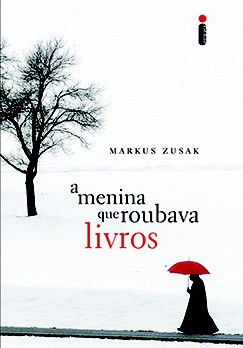
A trajetória de Liesel Meminger é contada por uma narradora mórbida, surpreendentemente simpática. Ao perceber que a pequena ladra de livros lhe escapa, a Morte afeiçoa-se à menina e rastreia suas pegadas de 1939 a 1943. Traços de uma sobrevivente: a mãe comunista, perseguida pelo nazismo, envia Liesel e o irmão para o subúrbio pobre de uma cidade alemã, onde um casal se dispõe a adotá-los por dinheiro. O garoto morre no trajeto e é enterrado por um coveiro que deixa cair um livro na neve. É o primeiro de uma série que a menina vai surrupiar ao longo dos anos. O único vínculo com a família é esta obra, que ela ainda não sabe ler.
Assombrada por pesadelos, ela compensa o medo e a solidão das noites com a conivência do pai adotivo, um pintor de parede bonachão que lhe dá lições de leitura. Alfabetizada sob vistas grossas …
A trajetória de Liesel Meminger é contada por uma narradora mórbida, surpreendentemente simpática. Ao perceber que a pequena ladra de livros lhe escapa, a Morte afeiçoa-se à menina e rastreia suas pegadas de 1939 a 1943. Traços de uma sobrevivente: a mãe comunista, perseguida pelo nazismo, envia Liesel e o irmão para o subúrbio pobre de uma cidade alemã, onde um casal se dispõe a adotá-los por dinheiro. O garoto morre no trajeto e é enterrado por um coveiro que deixa cair um livro na neve. É o primeiro de uma série que a menina vai surrupiar ao longo dos anos. O único vínculo com a família é esta obra, que ela ainda não sabe ler.
Assombrada por pesadelos, ela compensa o medo e a solidão das noites com a conivência do pai adotivo, um pintor de parede bonachão que lhe dá lições de leitura. Alfabetizada sob vistas grossas da madrasta, Liesel canaliza urgências para a literatura. Em tempos de livros incendiados, ela os furta, ou os lê na biblioteca do prefeito da cidade.
A vida ao redor é a pseudo-realidade criada em torno do culto a Hitler na Segunda Guerra. Ela assiste à eufórica celebração do aniversário do Führer pela vizinhança. Teme a dona da loja da esquina, colaboradora do Terceiro Reich. Faz amizade com um garoto obrigado a integrar a Juventude Hitlerista. E ajuda o pai a esconder no porão um judeu que escreve livros artesanais para contar a sua parte naquela História. A Morte, perplexa diante da violência humana, dá um tom leve e divertido à narrativa deste duro confronto entre a infância perdida e a crueldade do mundo adulto, um sucesso absoluto - e raro - de crítica e público.
I wanted to enjoy this. I would say I was moderately invested by the end but I didn’t love it. I felt confused trying to follow the characters and the timeline. I liked the concept of the story being told by death in Nazi Germany during World War II. I would’ve guessed the book was written longer ago than 2005 based on how it was written. I’m glad I read it but I wouldn’t want to read it again.
I normally steer clear of two kinds of books; coming of age stories and historical novels, in particular those set during world war II. This book is both, and I loved it anyway, which should tell you something.
What the author does with language and narrative framing is simply out of this world.
Reading books about WWII in Germany is hard for me. I don't know, the scope of what transpired back then, and the thought that my parents were part of the Nazi youth groups, it's a bit much. At least until the middle of the book, I was pretty meh about it all. The narrator, the Denglish, the for me very weird sentence structure, it put me off.
But the longer you read, the more all those various characters of Himmel Street grow on you. From Liesel to Rosa to the mayor's wife or Rudy, they're all very touching characters. They make the book. And that's why in the end I came to love this book about a German family in a small Bavarian town near Munich, and all the various, touching, tragic events that happened during the war.
Reading books about WWII in Germany is hard for me. I don't know, the scope of what transpired back then, and the thought that my parents were part of the Nazi youth groups, it's a bit much. At least until the middle of the book, I was pretty meh about it all. The narrator, the Denglish, the for me very weird sentence structure, it put me off.
But the longer you read, the more all those various characters of Himmel Street grow on you. From Liesel to Rosa to the mayor's wife or Rudy, they're all very touching characters. They make the book. And that's why in the end I came to love this book about a German family in a small Bavarian town near Munich, and all the various, touching, tragic events that happened during the war.