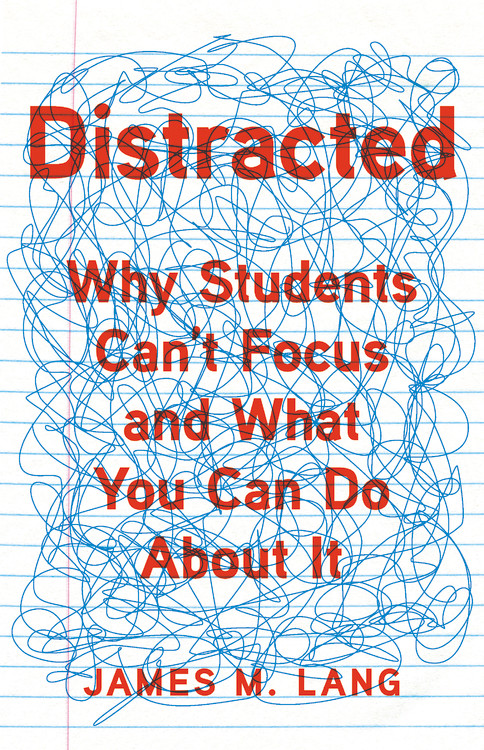
SocProf reviewed Distracted by James M. Lang
Review of 'Distracted' on 'Goodreads'
4 stars
I started this because (1) I'm a huge fan of Small Teaching, and (2) of course, the topic is extremely relevant, especially in those days of remote instruction. I did not find it as insightful as Small Teaching, however. It may be because I have read a lot since I read Small Teaching, and therefore, I am more informed than I was then.
So, there were far fewer new things to learn in this one.
Also, it seemed to me that this book makes a few common assumptions, very frequently present in a lot of the literature on higher ed instruction: (1) be extrovert, and (2) most of your students are extroverts too and will really like all the active stuff, and (3) have low boundaries with your students. If you are not (1) and do not meet (3), then, you will find the strategies presented in the book not …
I started this because (1) I'm a huge fan of Small Teaching, and (2) of course, the topic is extremely relevant, especially in those days of remote instruction. I did not find it as insightful as Small Teaching, however. It may be because I have read a lot since I read Small Teaching, and therefore, I am more informed than I was then.
So, there were far fewer new things to learn in this one.
Also, it seemed to me that this book makes a few common assumptions, very frequently present in a lot of the literature on higher ed instruction: (1) be extrovert, and (2) most of your students are extroverts too and will really like all the active stuff, and (3) have low boundaries with your students. If you are not (1) and do not meet (3), then, you will find the strategies presented in the book not very workable for yourself. Also, I will cope to finding the chapter on mindfulness not interesting, especially, since the author himself acknowledges that the research on the benefits of mindfulness in the classroom is just not there.
Otherwise, this might be a useful book for newer instructors but I would advise them to read Small Teaching first.
However, I do strongly support the attitude that we should cultivate attention but not by hectoring our students to "just focus!", especially, when, at the same time, we demand that they engage in situational awareness (i.e. distraction) in case of active shooter. This is no joke, the whole situational awareness is part of most active shooter drill and training. I think the author is right that there was no golden age when people were able to focus for real and now we can't because of smart devices. That's BS and yet, we hear it all the time.
Instead of fighting distraction, the author encourages us to use teaching practices that cultivate attention, as a skill to be achieved. The actual strategies proposed, though, have the assumptions mentioned above buy helpful nonetheless.
And also, we should read this because distraction / lack of focus is not just a problem for our students. Let's face it, most of us can't get through meetings and convocation days without our devices. We need to stop pretending that this affects only our students.
Anyhoo, despite my reservations, this is very well and clearly written. And I'm saying this as an introvert with the attention span of a fruit fly.