Chris Kara reviewed Let the Right One in by John Ajvide Lindqvist
.
3 stars
Vampire is not my favourite sub-genre and really I should just stop trying.
It’s ok. Rather long. And because of that I kept on drifting. Which is never a good sign.
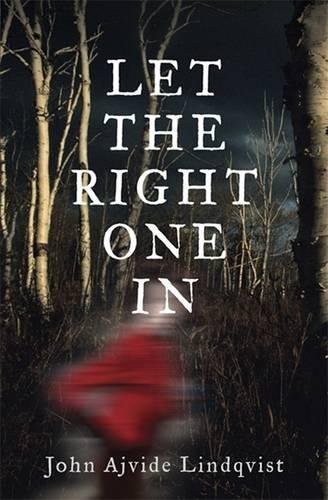
Hardcover, 528 pages
Published Nov. 3, 2007 by Quercus Publishing Plc.
It is autumn 1981 when the inconceivable comes to Blackeberg, a suburb in Sweden. The body of a teenage boy is found, emptied of blood, the murder rumored to be part of a ritual killing. Twelve-year-old Oskar is personally hoping that revenge has come at long last—revenge for the bullying he endures at school, day after day.
But the murder is not the most important thing on his mind. A new girl has moved in next door—a girl who has never seen a Rubik's Cube before, but who can solve it at once. There is something wrong with her, though, something odd. And she only comes out at night....
It is autumn 1981 when the inconceivable comes to Blackeberg, a suburb in Sweden. The body of a teenage boy is found, emptied of blood, the murder rumored to be part of a ritual killing. Twelve-year-old Oskar is personally hoping that revenge has come at long last—revenge for the bullying he endures at school, day after day.
But the murder is not the most important thing on his mind. A new girl has moved in next door—a girl who has never seen a Rubik's Cube before, but who can solve it at once. There is something wrong with her, though, something odd. And she only comes out at night....
Vampire is not my favourite sub-genre and really I should just stop trying.
It’s ok. Rather long. And because of that I kept on drifting. Which is never a good sign.
Håkan is an absolutely despicable and disgusting character and I hated every moment that he was brought up through this book. That's is. That's my review.
Haha.
This is a very bleak vampire story. It can be decently gruesome at times. A lot of sexual interactions, pedophilia, and bullying going on. I felt like there were a few too many characters and it made it drag on a bit. The overall concepts in this were interesting, though. I liked that while this takes place in Sweden, it's not the typical utopian town that we're usually seeing in the media.
There's nothing that's really hopeful or feel good through this book, so unless you're up for a long, bleak read, maybe skip on this one.
Håkan is an absolutely despicable and disgusting character and I hated every moment that he was brought up through this book. That's is. That's my review.
Haha.
This is a very bleak vampire story. It can be decently gruesome at times. A lot of sexual interactions, pedophilia, and bullying going on. I felt like there were a few too many characters and it made it drag on a bit. The overall concepts in this were interesting, though. I liked that while this takes place in Sweden, it's not the typical utopian town that we're usually seeing in the media.
There's nothing that's really hopeful or feel good through this book, so unless you're up for a long, bleak read, maybe skip on this one.
"Let the Right One In" is essentially a horror book combined with a Scandinavian thriller. And if you've ever read one of those, you know how bleak they can be, with this one no exception. This book is one of the bleakest and, strangely, most realistic vampire stories I've ever come across.
The rules of vampirism that Lindqvist decided on are on the strict side of the spectrum, and he handwaves nothing to make Eli fit better into society, like many other vampire media does in order to tell the story they want to tell. No fake blood substitutes, no constantly cloudy skies, not even the idea of vampires as a different, superior species which is so often used to explain why they're not morally conflicted over drinking blood. In fact, in this story, there are very few vampires because most of them end up killing themselves out of guilt. …
"Let the Right One In" is essentially a horror book combined with a Scandinavian thriller. And if you've ever read one of those, you know how bleak they can be, with this one no exception. This book is one of the bleakest and, strangely, most realistic vampire stories I've ever come across.
The rules of vampirism that Lindqvist decided on are on the strict side of the spectrum, and he handwaves nothing to make Eli fit better into society, like many other vampire media does in order to tell the story they want to tell. No fake blood substitutes, no constantly cloudy skies, not even the idea of vampires as a different, superior species which is so often used to explain why they're not morally conflicted over drinking blood. In fact, in this story, there are very few vampires because most of them end up killing themselves out of guilt. So, there are no grand vampire parallel societies, and the dietary needs of only one - Eli - turn an entire city up on its head as in a short span of time multiple bodies turn up drained of blood.
Even immortality and superpowers don't really seem to weigh up against the deeply lonely and fearful life this results in for Eli, who is forced to ally herself with a pedophile in order to keep up enough of a facade of normalcy to avoid detection.
It's this bleakness, however, that makes the relationship between Oskar and Eli so touching. They're both lonely, abused, ashamed of their bodies and linked with violence - Eli is violent to survive, Oskar is fascinated by it and fantasizes about killing his bullies. They are outcasts and victims, but not innocent. They both have monstrous elements to them. Yet, despite all the horror that surrounds it, and results from it, the love they have for each other, the acceptance they find with each other, is pure and good. Even if it eventually ends up drawing Oskar into the same lonely life of murder and fugitivism as Eli.
"Let the Right One In" is essentially a horror book combined with a Scandinavian thriller. And if you've ever read one of those, you know how bleak they can be, with this one no exception. This book is one of the bleakest and, strangely, most realistic vampire stories I've ever come across.
The rules of vampirism that Lindqvist decided on are on the strict side of the spectrum, and he handwaves nothing to make Eli fit better into society, like many other vampire media does in order to tell the story they want to tell. No fake blood substitutes, no constantly cloudy skies, not even the idea of vampires as a different, superior species which is so often used to explain why they're not morally conflicted over drinking blood. In fact, in this story, there are very few vampires because most of them end up killing themselves out of guilt. …
"Let the Right One In" is essentially a horror book combined with a Scandinavian thriller. And if you've ever read one of those, you know how bleak they can be, with this one no exception. This book is one of the bleakest and, strangely, most realistic vampire stories I've ever come across.
The rules of vampirism that Lindqvist decided on are on the strict side of the spectrum, and he handwaves nothing to make Eli fit better into society, like many other vampire media does in order to tell the story they want to tell. No fake blood substitutes, no constantly cloudy skies, not even the idea of vampires as a different, superior species which is so often used to explain why they're not morally conflicted over drinking blood. In fact, in this story, there are very few vampires because most of them end up killing themselves out of guilt. So, there are no grand vampire parallel societies, and the dietary needs of only one - Eli - turn an entire city up on its head as in a short span of time multiple bodies turn up drained of blood.
Even immortality and superpowers don't really seem to weigh up against the deeply lonely and fearful life this results in for Eli, who is forced to ally herself with a pedophile in order to keep up enough of a facade of normalcy to avoid detection.
It's this bleakness, however, that makes the relationship between Oskar and Eli so touching. They're both lonely, abused, ashamed of their bodies and linked with violence - Eli is violent to survive, Oskar is fascinated by it and fantasizes about killing his bullies. They are outcasts and victims, but not innocent. They both have monstrous elements to them. Yet, despite all the horror that surrounds it, and results from it, the love they have for each other, the acceptance they find with each other, is pure and good. Even if it eventually ends up drawing Oskar into the same lonely life of murder and fugitivism as Eli.
Like many of us, I had watched the highly acclaimed Swedish 2008 film and ignored Hollywood’s perplexing attempt to make a westernised version but, despite having the John Lindqvist book on my shelves for the past decade, and never quite got round to reading the original. Which is a pity, as the novel is a real treat and goes deeper and further than the film.
The first thing that strikes me about Lindqvist’s novel is its clear sense of space and location. This is a story that, in many ways, is first and foremost about a specific place and time in a particularly destitute part of Sweden. One reading of the novel could be that all the horror and supernatural elements of the story are a metaphor for the rotten core at the heart of this community, and read in such a way, the novel remains deeply uncomfortable. Regardless of …
Like many of us, I had watched the highly acclaimed Swedish 2008 film and ignored Hollywood’s perplexing attempt to make a westernised version but, despite having the John Lindqvist book on my shelves for the past decade, and never quite got round to reading the original. Which is a pity, as the novel is a real treat and goes deeper and further than the film.
The first thing that strikes me about Lindqvist’s novel is its clear sense of space and location. This is a story that, in many ways, is first and foremost about a specific place and time in a particularly destitute part of Sweden. One reading of the novel could be that all the horror and supernatural elements of the story are a metaphor for the rotten core at the heart of this community, and read in such a way, the novel remains deeply uncomfortable. Regardless of the vampire’s presence in the story, we are presented with countless people all of whom are beyond hope. One no-hoper, walking home drunk, comes up with a plan to turn his life around. He’ll go travelling; do what he’s always wanted to do. But we know he’ll never do it. He’ll wake up and find either that world won’t bend to his wishes or he doesn’t have the will to do the bending. His death when Eli takes him merely takes away the false hope.
The characters in this novel are generally unlikeable, or at least deeply flawed. It’s something to be said of Lindqvist’s style in that Eli is by far the most likeable character in the book, and Eli is a ruthless, pragmatic killer. Yet none of the other characters are irredeemable. Oskar, Tommy and Lacke all gain our sympathy, our pity, but all three stop short of being pleasant. Just when we think we should be entirely on Oskar’s side, Lindqvist gives us just enough dirt and grime to make us draw away. I feel sorry for Oskar, but I don’t think we could be friends.
And then, even Jimmy even the paedophile, Hakan, have moments to redeem them. Jimmy clearly has a troubled home life - he’s a product of the broken community he grows up in and, just like everyone else there, is damaged beyond repair before the vampire ever enters the scene. And Hakan? He’s selfish and cowardly, exploits young boys and seemingly the motivation for following Eli is his lust for the child-like vampire. Yet, he is also loyal, grateful and has does indeed a moral code and compass of sorts.
Eli, the character around which the novel circles, is fascinating. An enigma and an interesting take on the vampire myth. However, particularly in a modern context, a while after the novel was written and long after it was set, the most notable characteristic is their gender. I use “their” here because the novel refers to them as both a he and a she. Lindqvist appears to grant the authority of the novel to idea that Eli is a he. He was born a boy and, seemingly, still identifies as one. Clearly, as a character who refers to himself as a he, that should be the end of it. Furthermore, there is clearly nothing wrong with someone presenting as female and identifying as male. However, it appears the narrative is taking a “biology is truth” stance. All the evidence points against this. Eli presents as female and has clearly altered their name to a more feminine sounding name. When offered a choice of clothes to wear, Eli chooses the frock. The fact that Eli was both male is interesting, but the insistence in the narrative in changing the pronoun once the “biological truth” is revealed is problematic. That said, it seems likely that Lindqvist is more concerned with addressing the discomfort and confusion surrounding homosexuality with his treatment of Eli and, by extension, Oskar’s feelings for him.
Lindqvist tells a tale that continually plays with and undermines your expectations. As a vampire novel, it sits neither in the vampire-as-monster/villain genre, nor in the good/human/remorseful-vampire genre; but manages to walk along both those paths. It’s an uncomfortable novel, with a horrible sense of the inevitable, and an ending that is both powerful and unsatisfactory, and that’s not necessarily a criticism.
Wow, what a ride this book has been. I obviously really enjoyed it, because I simply could not stop reading it but I don't think I would watch either of the movie adaptations. I don't think I would be able to take it.
The story is set in the early 80s in a suburb of Stockholm. The protagonist is Oskar, a 12 year old boy who is bullied at school, incontinent, and above all lonely. His parents are divorced. In his spare time, he fantasizes about being strong enough to act against his bullies, having an unnatural interest in killers. One night he meets a girl from his apartment block on the playground: Eli.
From that point on, a crazy but above all entirely depressing story evolves concerning Eli and those around her. There's Hakan, who lives with her. A pedophile who is serving Eli so that she will let …
Wow, what a ride this book has been. I obviously really enjoyed it, because I simply could not stop reading it but I don't think I would watch either of the movie adaptations. I don't think I would be able to take it.
The story is set in the early 80s in a suburb of Stockholm. The protagonist is Oskar, a 12 year old boy who is bullied at school, incontinent, and above all lonely. His parents are divorced. In his spare time, he fantasizes about being strong enough to act against his bullies, having an unnatural interest in killers. One night he meets a girl from his apartment block on the playground: Eli.
From that point on, a crazy but above all entirely depressing story evolves concerning Eli and those around her. There's Hakan, who lives with her. A pedophile who is serving Eli so that she will let him touch her. There's Lacke, Virginia and friends, a bunch of worn out alcoholics leading a life of poverty and depression that is shook up when one of them disappears. There's Tommy, a teenage delinquent who has to come to terms with it that his mother is going to marry a stern police officer who doesn't have qualms about beating women. So many lives, all of them miserable, and in the middle of it all, the story about the vampire Eli.
If you are easily queasy, this might not be the book for you. I cringed my way through some parts, especially most things involving Hakan, or that terrible scene involving cats. There's lots of blood, violent deaths, but above all, loneliness and depression. This is not only a horror story, this is about the lonely dark places people go to. I felt particularly sad for the rather tragic Lacke. If you enjoy dark stories, this is definitely a good one to read.
Are all Swedish books dark and depressing? A long shot from my Astrid Lindgren-colored youth.