This book surprised me. I had expected glorification of the liberal frontal lobe, accompanied by severe mocking of conservatives, who are supposedly shown to be phobic automated response machines by modern cognitive psychology.
But the book wasn't like that. Instead, Mooney gives a neat summary of advances in political psychology and tentatively links it to partisan behavior. He is not particularly critical of the research he describes, but also certainly doesn't overplay the value of any study or body of work.
In fact, The Republican Brain is a rare popular science book that may speculate too little instead of too much. Some thoughts on why the different psychological profiles seem to balance out or how this research can be translated to contemporary politics outside of the US would have made the book a bit more inspiring. And although Mooney gives some attention to party-switchers, it could have been expanded on …
User Profile

Alterego of this guy on Mastodon.
This link opens in a pop-up window
Vincent Tijms's books
User Activity
RSS feed Back
Vincent Tijms reviewed The Republican Brain by Chris C. Mooney
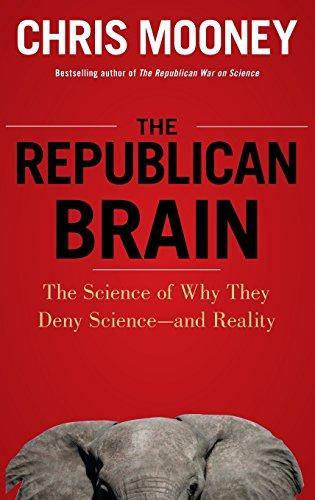
The Republican Brain: The Science of Why They Deny Science — and Reality is a …
Review of 'The Republican Brain' on 'Goodreads'
3 stars
This book surprised me. I had expected glorification of the liberal frontal lobe, accompanied by severe mocking of conservatives, who are supposedly shown to be phobic automated response machines by modern cognitive psychology.
But the book wasn't like that. Instead, Mooney gives a neat summary of advances in political psychology and tentatively links it to partisan behavior. He is not particularly critical of the research he describes, but also certainly doesn't overplay the value of any study or body of work.
In fact, The Republican Brain is a rare popular science book that may speculate too little instead of too much. Some thoughts on why the different psychological profiles seem to balance out or how this research can be translated to contemporary politics outside of the US would have made the book a bit more inspiring. And although Mooney gives some attention to party-switchers, it could have been expanded on a bit more.
Still, it's too easy to judge a book by what it's not. In the end, Mooney just wants to show that conservatives and liberals differ markedly in their respective psychologies. He makes good use of the evidence that's there - without too much exaggeration and, to my knowledge, without leaving out important studies -- to drive this point home. Nothing exciting for those who are familiar with the field, but definitely a worthwhile read for anybody looking for an overview of political psychology.
Vincent Tijms rated The Verificationist: 4 stars

Vincent Tijms reviewed The age of insight by Eric R. Kandel
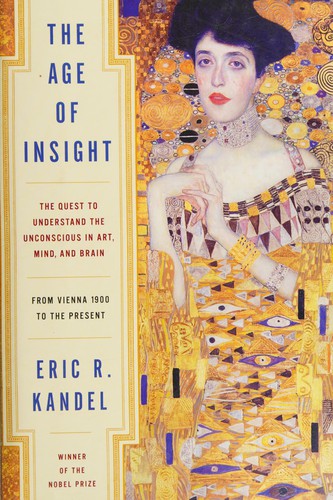
Review of 'The age of insight' on 'Goodreads'
2 stars
Eric Kandel deserves a lot of praise. Not only did his pioneering work on the neurobiology of memory pave the way for our modern understanding of mind, he has also untiringly pursued the integration of neuroscience and psychiatry. Moreover, he has always resisted going along with the widespread dismissal of Freudian thought in neuroscience, and kept an open mind with regard to psychoanalysis. For all his work, Kandel deserves praise.
But not for this book.
While I enjoyed his depiction of coffeehouse Vienna, where a new understanding of humanity was translated into medical practice, psychological thought and artistic expression, the book is mostly a failed attempt at integrating neuroscience and art. Failed, because the discussion of art is too limited in scope. Failed, because much of the neuroscience is superfluous. Failed, because these two strands only meet in a superficial, trivial fashion - it hardly ever becomes clear how the …
Eric Kandel deserves a lot of praise. Not only did his pioneering work on the neurobiology of memory pave the way for our modern understanding of mind, he has also untiringly pursued the integration of neuroscience and psychiatry. Moreover, he has always resisted going along with the widespread dismissal of Freudian thought in neuroscience, and kept an open mind with regard to psychoanalysis. For all his work, Kandel deserves praise.
But not for this book.
While I enjoyed his depiction of coffeehouse Vienna, where a new understanding of humanity was translated into medical practice, psychological thought and artistic expression, the book is mostly a failed attempt at integrating neuroscience and art. Failed, because the discussion of art is too limited in scope. Failed, because much of the neuroscience is superfluous. Failed, because these two strands only meet in a superficial, trivial fashion - it hardly ever becomes clear how the neuroscience of art perception is anything more than the neuroscience of perception, let alone how neuroscience could influence art, or the theorizing about it.
Moreover, despite Kandel's eminence in the field, his neuroscience is oversimplified. This is not just due to the popular nature of the book, it really seems like Kandel wants to shoehorn empirical data into his framework of how minds work. A naive reader might be forgiven for thinking that neuroscientists have no problem distinguishing conscious from non-conscious processes, that the social brain is a clearly delineated system and that brain lateralization holds the key to understanding creativity. However, none of this is the case and Kandel is most definitely overplaying the implications and certainty of the research he discusses.
This book could have been interesting, if it had been a more earnest attempt to bridge the gap between art and science. Spending more time on accurately portraying the state of neuroscience, having art historians weigh in on the claims about Vienna 1900 and focusing more on those areas where neuroscience and art theory can inform each other, might have made for a more enlightening read.
Vincent Tijms rated De vrije moraal: 4 stars

Vincent Tijms rated The tiger's wife: 5 stars

The tiger's wife by Téa Obreht
Remembering childhood stories her grandfather once told her, young physician Natalia becomes convinced that he spent his last days searching …
Vincent Tijms rated The origins of political order: 5 stars

The origins of political order by Francis Fukuyama
Francis Fukuyama examines the paths that different societies have taken to reach their current forms of political order.
Vincent Tijms rated The letter killers club: 3 stars

Vincent Tijms rated A Storm of Swords: 4 stars

A Storm of Swords by George R. R. Martin (A Song of Ice and Fire, #3)
Of the five contenders for power, one is dead, another in disfavor, and still the wars rage as alliances are …
Vincent Tijms reviewed Radical embodied cognitive science by Anthony Chemero (A Bradford Book)
Review of 'Radical embodied cognitive science' on 'Goodreads'
4 stars
Some quick comments on this excellent book:
The case for antirepresentationalism did not get to me. Then again, I'd say that a retinal activation is already a representation (even according to the definition Chemero offers). The fact that cognitive maps have been succesfully decoded from hippocampal place cell information shows just to what extent such representations are maintained in the brain. I am not sure whether direct perception can explain this.
The dynamic system models are put forward as being not merely descriptive of cognitive systems, but revealing as to their nature. The fact that the same equations apply to widely different systems should already give pause. I don't think they argue against representations in any way - it's just the the representations are not explicitly there in the model. Not looking at steady state dynamical coupling, but looking at the spread of oscillatory coupling (which requires an admittedly high …
Some quick comments on this excellent book:
The case for antirepresentationalism did not get to me. Then again, I'd say that a retinal activation is already a representation (even according to the definition Chemero offers). The fact that cognitive maps have been succesfully decoded from hippocampal place cell information shows just to what extent such representations are maintained in the brain. I am not sure whether direct perception can explain this.
The dynamic system models are put forward as being not merely descriptive of cognitive systems, but revealing as to their nature. The fact that the same equations apply to widely different systems should already give pause. I don't think they argue against representations in any way - it's just the the representations are not explicitly there in the model. Not looking at steady state dynamical coupling, but looking at the spread of oscillatory coupling (which requires an admittedly high temporal resolution) would reveal time constants on the order of neural processing, I'm sure. This process of coupling uses representations - at least in the sense of the word that I would use as a neuroscientist. We know this not through the dynamic systems model that hides the variables, but through mechanistic work on brain processing. Compare this to the transfer of oscillations through direct physical coupling, where it's molecular collisions carrying phase information: salt.uaa.alaska.edu/dept/metro.html
Direct perception of temporal derivatives like tau (or of tau, even) seems impossible without some form of memory, as physical events exist at specific points in time. Using an oscillatory model with momentum could solve some of this (and I would not object to anyone claiming such an echo is not a representation, although one could argue in favor of such a view), but only up to a certain point. Memory is a huge problem for direct perception, I would say. Chemero sidesteps this point by looking away from representations that are causally uncoupled, arguing that he best make his point for the more general case of representationalism. However, there's nothing general about focusing on the existence of representations that are still coupled to the mind through sensory input
Affordances truly offer a better way of doing behavioral science. I think even the radical reductionists from this book would admit they need to know their behavioral science - looking at this in terms of affordances could prove very fruitful. Not because they are perceived directly (they could just as well be computationally derived) but because they allow for a sophisticated behavioral setup and, while behavioral scientists can do without the brain, cognitive neuroscientists can't do without behavior.
I think there are some more points, but I will leave it at that. Hopefully, I will be able to write a clearer review soon.
RECS is a fascinating read for anyone who takes cognitive science seriously. Even if you do not agree with the main points made in the book, it will still open your mind to considering the field from a different perspective, which is only healthy when setting up and interpreting experiments. The book makes clear how the dynamic systems model can offer a way of approaching cognition from a different perspective, opens the way for extraneural cognition to be taken seriously (which I think is really necessary at this point) and forces the reader to think deep and hard about representations.
Do leave a comment if you'd like to discuss this title!
Vincent Tijms reviewed The Prince of Evolution by Lee Alan Dugatkin
Review of 'The Prince of Evolution' on 'Goodreads'
4 stars
Many years ago, I traveled across Europe in a peculiar caravan of scientists, artists and a large number of in-betweens. I had two jobs to do: firstly, I was supposed to collect the insights of the caravan members, as we moved from village to village in this tour of rural Europe. Secondly, I had to finish a report on a four-month research I did to obtain my BSc in chemistry.
The experiment I had been supposed to do was fairly straightforward. Some mysterious protein in cyanobacteria was expressed under stressful conditions (e.g. intense light), and I needed to measure how this protein changes things like growth rate, photo-toxicity, etc. Without wanting to go into much details (this is a review after all, not my autobiography), I started thinking about the relations between individual bacteria. In high school, [a:Richard Dawkins|1194|Richard Dawkins|http://photo.goodreads.com/authors/1188068989p2/1194.jpg]' [b:The Selfish Gene|315240|Selfish Gene|Richard Dawkins|http://photo.goodreads.com/books/1298502214s/315240.jpg|1746717] had convinced me to adopt …
Many years ago, I traveled across Europe in a peculiar caravan of scientists, artists and a large number of in-betweens. I had two jobs to do: firstly, I was supposed to collect the insights of the caravan members, as we moved from village to village in this tour of rural Europe. Secondly, I had to finish a report on a four-month research I did to obtain my BSc in chemistry.
The experiment I had been supposed to do was fairly straightforward. Some mysterious protein in cyanobacteria was expressed under stressful conditions (e.g. intense light), and I needed to measure how this protein changes things like growth rate, photo-toxicity, etc. Without wanting to go into much details (this is a review after all, not my autobiography), I started thinking about the relations between individual bacteria. In high school, [a:Richard Dawkins|1194|Richard Dawkins|http://photo.goodreads.com/authors/1188068989p2/1194.jpg]' [b:The Selfish Gene|315240|Selfish Gene|Richard Dawkins|http://photo.goodreads.com/books/1298502214s/315240.jpg|1746717] had convinced me to adopt a gene-centered view on evolution and I wondered: could some of the cyanobacteria be absorbing dangerous radiation to let their genetically almost identical counterparts flourish?
I set up some off-the-record experiments to test this, but had trouble making good sense of the results. I had to lean on some convincing assumptions regarding self-organization and so, when the caravan was on the road and I wasn't writing stuff about European villages, I worked through [a:Scott Camazine|343977|Scott Camazine|http://www.goodreads.com/images/nophoto/nophoto-U-50x66.jpg]'s [b:Self-Organization in Biological Systems|925585|Self-Organization in Biological Systems |Scott Camazine|http://photo.goodreads.com/books/1179509673s/925585.jpg|910593], hoping for inspiration that I could put to use, together with [b:Brock's Biology of Microorganisms|929081|Brock's Biology of Microorganisms (10th Edition)|Michael T. Madigan|http://photo.goodreads.com/books/1179538945s/929081.jpg|914073].
The reason I am sharing this, is because it sets the stage for my introduction to [a:Peter Kropotkin|34296|Peter Kropotkin|http://photo.goodreads.com/authors/1195877110p2/34296.jpg] and will explain why I enjoyed [a:Lee Dugatkin|697080|Lee Dugatkin|http://www.goodreads.com/images/nophoto/nophoto-U-50x66.jpg]'s account of the anarchistic prince so much. One night, having set camp up somewhere in the Baltic region, the caravan was suddenly overcome with heavy rain. Unfortunately for me, I kept my copy of Brock's Biology in a camper that was not exactly waterproof and found the book soaking wet the next day.
This was a disaster, because it was the only way for me to find all the mechanisms and species that I needed to draw on to make my report look somewhat good. The guardian of my books, a fundamentalist cynic with a heavy negativity bias, started mocking me about caring about something (the caravan sported an interesting cast of characters), but I insisted that it was important for me to finish this work. Seeing as this is the fifth paragraph already, without a review in sight, I won't explain why the work was so important, but will simply say that the book guardian continued her mockery and pulled out something from her own stash of books. She told me it was also a biology book and implied that I should shut up already.
The book was a 19th-century treatise on Siberian ecology, and while it didn't help me write the report that was long overdue at the time, it was exactly what I was looking for. My love for cellular chemistry has started with me being astonished at its complexity and resilience, without central planning. My interest in self-organization - or construction without blueprint, as I believe Camazine put it - carried similar political dimensions. And here was a Russian prince, named Peter Kropotkin, making observations that were at times poor from the perspective of modern biology, but essentially stating the same thing. This, and the conflict that I saw between villages and the State during my travels, consolidated the ideals of anarchism in me, and shifted my interest in self-organization towards the emergence of group behavior.
Yet, this entry is not about me nor my about my thoughts on the evolution of mutualism. It's about The Prince of Evolution, a brief account of the life of Peter Kropotkin. In the book, Dugatkin easily shifts between the political and biological ideas of Kropotkin, and shows how both of them followed from this passion for naturalism. Stated matter-of-factly, the biography allows readers see how an aristocrat became receptive to radical politics and became convinced his utopia was possible because he witnessed it in the animal kingdom. Never does Dugatkin take a stance on Kropotkin's ideas, and so we read about the Russian biologist's embrace of Lamarckism without judgment or even a contemporary caveat.
This detachment works well. The Prince of Evolution is about ideas, but it's not about the validity of these ideas. It's about how they can move from one domain to another, about how seemingly academic ideas about the mutual dependence of ducks can lead to very real, grim events, such as Kropotkin's imprisonment in the Peter and Paul Fortress. Maybe, it's also about how political dimensions can attenuate the spread of scientific ideas. When I first read Kropotkin, I could not help but think about whether his philosophy gave us the first faint shimmers of the Cold War, during which Kropotkin's homeland adapted the creed of communism, while the Anglo-Saxon world embraced the thought frame of Herbert Spencer's "survival of the fittest". Indeed, modern biology only started taking mutual aid and altruism seriously once the likes of [a:E.O. Wilson|31624|E.O. Wilson|http://photo.goodreads.com/authors/1227367019p2/31624.jpg] managed to describe a sociobiology that fit with capitalism and even conservative thought.
I am not sure whether Dugatkin would agree, but I think Kropotkin's relative obscurity in the western world is one of the reasons why, time and again, people point to the role of Darwinism in the precipitation of ideologies like national-socialism. It is not that nobody was opposing simplifications like "survival of the fittest", it is just that historic forces decided to keep these voices out of the limelight. Dugatkin's book may contribute to correcting that mistake, making The Prince of Evolution a worthwhile read for anyone interested in the history of thought, even if they're not anarchists.
The Beginning of Infinity: Explanations That Transform the World by David Deutsch
The Beginning of Infinity: Explanations that Transform the World is a popular science book by the physicist David Deutsch first …
Vincent Tijms reviewed 1Q84 (1Q84, #3) by Haruki Murakami

1Q84 (いちきゅうはちよん, Ichi-Kyū-Hachi-Yon, stylized in the Japanese cover as "ichi-kew-hachi-yon") is a novel written by …
Review of '1Q84 (1Q84, #3)' on 'Goodreads'
5 stars
There are plots that bend and plots that twist. Plots that feel like a roller coaster and plots that are as exciting as riding a stair lift. And then there are plots that feel like you're slowly floating down a river in a shabby boat. The drift is smooth and you can enjoy the surroundings, but at the same time you're anxiously keeping an eye on on the holes that are letting in water, bracing yourself as even the slightest curve may cause your vessel to spiral out of control.
[b:1Q84|10357575|1Q84|Haruki Murakami|http://photo.goodreads.com/books/1316729331s/10357575.jpg|18160093] is like that. Not that there's anything wrong with it: the slow pace of the novel allows its protagonists to grow on you, while you join their ever-continuing inner voices during what feels like silent observation. By having the reader eavesdrop on these inner voices, [a:Haruki Murakami|3354|Haruki Murakami|http://photo.goodreads.com/authors/1285812707p2/3354.jpg] can show characters in their complete loneliness, a theme that …
There are plots that bend and plots that twist. Plots that feel like a roller coaster and plots that are as exciting as riding a stair lift. And then there are plots that feel like you're slowly floating down a river in a shabby boat. The drift is smooth and you can enjoy the surroundings, but at the same time you're anxiously keeping an eye on on the holes that are letting in water, bracing yourself as even the slightest curve may cause your vessel to spiral out of control.
[b:1Q84|10357575|1Q84|Haruki Murakami|http://photo.goodreads.com/books/1316729331s/10357575.jpg|18160093] is like that. Not that there's anything wrong with it: the slow pace of the novel allows its protagonists to grow on you, while you join their ever-continuing inner voices during what feels like silent observation. By having the reader eavesdrop on these inner voices, [a:Haruki Murakami|3354|Haruki Murakami|http://photo.goodreads.com/authors/1285812707p2/3354.jpg] can show characters in their complete loneliness, a theme that is central in this magical-realist piece of writing.
The inner voices also allows the reader to witness how both main characters -- Tengo, a writer and math teacher, and Aomame, a fitness instructor and hit woman -- realize that what is seemingly free will (namely their inner thoughts and outer actions) is actually determined by their earlier life stories. The way their lives were written has turned Tengo into a single 30-year old with an Oedipal sex relation, while it has made Aomame hunt down abusive men, while courting old men with thinning hair for one night stands. Still, the opening of the book sees Aomame move off the beaten track (to avoid the traffic jam there) in a move that opens a whole new reality to her. She calls this reality 1Q84, a questionable version of the 1984 in which the story is set.
This is not just a casual nod to [a:George Orwell|3706|George Orwell|http://photo.goodreads.com/authors/1175614486p2/3706.jpg]'s [b:Nineteen Eighty-Four|5471|Nineteen Eighty-Four|George Orwell|http://photo.goodreads.com/books/1327892247s/5471.jpg|153313]. At one point, Tengo has to explain what Nineteen Eighty-Four was about and he then focuses on the rewriting work done by the Ministry of Truth. True totalitarianism is dictating a shared world, he seems to say, as it is this shared world that constrains individual freedom. Unknowingly, his own writing does just that: while secretly acting as a ghost writer on a story brought to him a girl who fled from a mysterious cult, reality start to mimic fiction, all the way down to the appearance of a second moon.
It isn't clear whether everybody in Tengo's world sees the two moons, although Aomame, unbeknownst to him -- as he hasn't seen her since they were both 10 years old -- certainly does, once she enters 1Q84. Of course, neither talks about this (explicitly) with anyone else. While it is sort of silly that they don't find a way to slip it into conversation, Tengo and Aomame's fear of having gone mad once again shows that the outside world expects a certain outlook on life. They may have found some freedom by seeing a unique world, but this comes at the price of loneliness, as an unshared reality is a cold one indeed. This is ultimately what drives Tengo and Aomame together -- a love that is explained by the desire to share a reality that is also your own.
Yet where does the strange world of 1Q84 come from? It has something to do with the book that Tengo was ghostwriting, something to do with the mysterious cult and something to do with the so-called Little People, hybrids between Big Brother and the Seven Dwarfs, who seem to be the source of inner (and outer?) voices. They are a medium for creative thought, for construction of a shadow reality, but at the same time they are powerless if that reality is shared (as with Tengo's rewriting) or made manifest (as with Aomame's unborn child). The ambiguity that surrounds the Little People will certainly frustrate some readers, while others will delight in the Lynch-like incomprehensibility they offer. For me, it did both.
1Q84 is laden with complexity, as love, loneliness, free will, authorship, creativity, faith and alienation are all interwoven through many layers of narrative. Although Murakami's prose is dry and at times even flat, he throws around literary references as if he were [a:Umberto Eco|1730|Umberto Eco|http://photo.goodreads.com/authors/1319590745p2/1730.jpg]. Perhaps these references provide a hint of what the Little People signify: much as they construct their "air chrysales" by picking strands from the air, Murakami connects thematic strands that he picked up from all the novels he enjoyed himself. The ghostwriting that Tengo did is not all that different from authorship in general -- a process of inner speech that brings together the imprints of the outer world. Whether that speech is meaningful or madness is as impossible to ascertain as the reality of the two moons.