
Allan LEONARD rated To Kill a Mockingbird: 4 stars
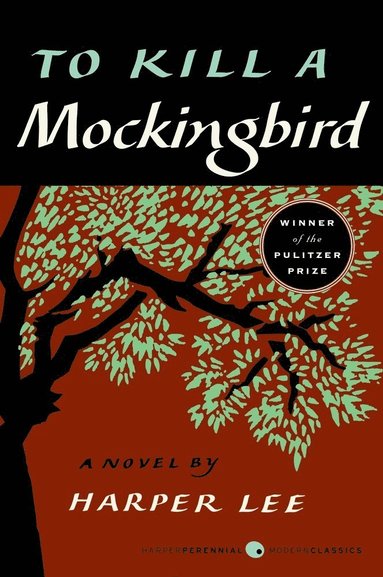
To Kill a Mockingbird by Harper Lee
One of the best-loved stories of all time, To Kill a Mockingbird has earned many distinctions since its oritinal publication …

Peacebuilding a shared Northern Irish society ✌️ Editor 🔍 Writer ✏️ Photographer 📸
This link opens in a pop-up window
One of the best-loved stories of all time, To Kill a Mockingbird has earned many distinctions since its oritinal publication …
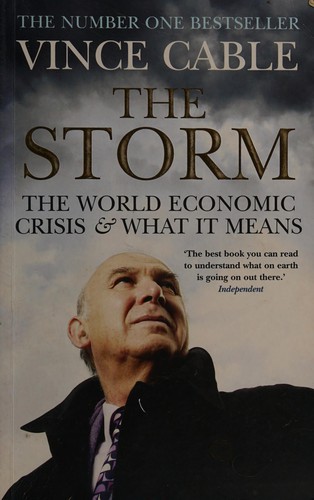
Vince Cable is the chief economic spokesperson for the Liberal Democrats, and his lucid explanations of the credit crunch and overall current parlous global economic situation has seen him well sought after by mainstream news media outlets. For good reason -- his analysis has been proven spot on.
In his book, The Storm: The World Economic Crisis & What It Means, Cable reviews both distant and more recent economic history to put the current situation in context. This includes a chapter on the surge in commodity prices in 2008. Here, his professional experience as a chief economist for Shell provides credence to his arguments.
Cable does his best to present the intricacies of international finance and macroeconomics to the lay reader, but having some education in economics does no harm, e.g. appreciating the difference between a trade balance and balance of payments.
My favoured sections were towards the end, when …
Vince Cable is the chief economic spokesperson for the Liberal Democrats, and his lucid explanations of the credit crunch and overall current parlous global economic situation has seen him well sought after by mainstream news media outlets. For good reason -- his analysis has been proven spot on.
In his book, The Storm: The World Economic Crisis & What It Means, Cable reviews both distant and more recent economic history to put the current situation in context. This includes a chapter on the surge in commodity prices in 2008. Here, his professional experience as a chief economist for Shell provides credence to his arguments.
Cable does his best to present the intricacies of international finance and macroeconomics to the lay reader, but having some education in economics does no harm, e.g. appreciating the difference between a trade balance and balance of payments.
My favoured sections were towards the end, when Cable suggests some actions for the way forward:
Central bank monetary policy to deal with asset prices as well as inflation (a la Irving Fisher; the Swedish experience)
Remove mortgage tax relief (USA) (reduce over-borrowing) and business interest tax relief (UK) (reduce excessive leverage)
Replace cash salary bonuses with stock with delayed redemption
Agreed international accounting standards and reporting (greater transparency)
More challenging is Cable's suggestion for a new multilateralism that places Asia "at the heart" of the world economy.
Indeed, The Economist published an excellent article that described the role that China's gigantic trade surplus had in flooding the American financial markets with funds needing investing ("When a flow becomes a flood" 22/1/2009)
Cable calls for a New Bretton Woods, hosted in a place like Singapore, with key participants the USA, China, Japan, the eurozone, and India.
Part of Cable's motivation is to prevent economic nationalism, or "state capitalism", which encourages protectionism under numerous guises, including "economic security". Cable isn't predicting a repeat of what happened in the 1930s interwar years, but he repeatedly paints an ominous picture of what a failure to properly address the current issues could mean.
Cable has an enduring faith in liberal markets producing wealth and prosperity, which includes public services, and implores with policy makers to take the appropriate actions to ensure this remains the case.
My criticism would only be that I wished Cable had presented more detail on his own suggested actions, as well as on what he would deem as best practices around the world. Perhaps that's the scope of a future volume.
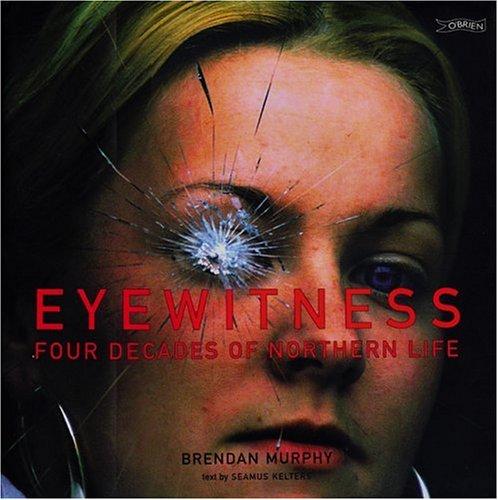
A brilliant book. Murphy's photographs may not be the polished style of trained photo-journalists -- the shots you see in AP and AFP -- but they are blessed with sincerity and honesty.
As Murphy admits himself, when he started photography he missed many shots, taking time to learn what he had to do. It is worth reading Seamus Kelters' text, as it is a truly interesting discovery of Murphy's thinking behind the camera lens.
Murphy's accounts reveal truths that make sense for those who live in Northern Ireland, but perhaps others find peculiar.
For example, he explains how the boxing arena is "one of the few truly politically correct places":
"Nationalist and Unionists, loyalists and republicans, police even, all crush in side by side. Any animosity is left at the door. The atmosphere is no less charged for that ... Religion doesn't matter. All that's important is a man's ability."
…
A brilliant book. Murphy's photographs may not be the polished style of trained photo-journalists -- the shots you see in AP and AFP -- but they are blessed with sincerity and honesty.
As Murphy admits himself, when he started photography he missed many shots, taking time to learn what he had to do. It is worth reading Seamus Kelters' text, as it is a truly interesting discovery of Murphy's thinking behind the camera lens.
Murphy's accounts reveal truths that make sense for those who live in Northern Ireland, but perhaps others find peculiar.
For example, he explains how the boxing arena is "one of the few truly politically correct places":
"Nationalist and Unionists, loyalists and republicans, police even, all crush in side by side. Any animosity is left at the door. The atmosphere is no less charged for that ... Religion doesn't matter. All that's important is a man's ability."
And there's the cross-community protection among fellow photographers:
"Strangers would expect Catholic and Protestant photographers to be at each other's throats. That was never the case. Nothing was further from reality. Protestant photographers have told me to stick close to them when we've been in fiercely loyalist areas. I've returned the favour. If they have faults and frailties, local press photographers also have great strength and integrity."
The book's title is apt: this is a journey of one man firsthand account of what he saw and recorded on film. So much has changed over 40 years -- technically with cameras and historically with Northern Ireland politics -- but Murphy has remained true to his community-oriented background.
This is demonstrated in Murphy's coverage of sectarian attacks:
"Few bombing or shootings ever happened in middle-class areas ... they usually wouldn't want the attack highlighted. They would want to get on with their lives. Working class areas are different. Friends and family mostly live in the same area. The entire community was in the same boat. They would insist what had happened could not be swept away with the broken glass."
Indeed, the last photograph in the book is an otherwise unremarkable photo of a Belfast corner shop, taken in 1974. But then comes the accompanying description: "The corner shop and bar were the hub of a community ... More social work went on in these places than a host of government agencies. They were lost to redevelopment and supermarkets. With them went a way of life."
Thankfully, Brendan Murphy remains a freelance photographer, and his new photographs regularly appear in the Irish News.
As I was going to be travelling through the same country -- nay, exact city of Hiroshima -- as author Glenn Patterson, I thought I'd read The Third Party (978-0856408090) during my actual journey. That was rewarding: Patterson's script and detail as his characters wander through the place of the atomic bomb was truly accurate and a joy to read.
I understood the character development also, between the relatively dull protagonist and a complementary, more mysterious character, an unlikely star writer who's come from a chequered background. For the first half of the novel, I didn't mind the conversations and tension between the two.
The pace quickens in the last third, and the climatic event is left very late. I won't spoil it, but I was rather disappointed. Considering the use of subtlety and exposing the complications that is mature adulthood (demonstrations of accomplished writing), the sudden halt came across …
As I was going to be travelling through the same country -- nay, exact city of Hiroshima -- as author Glenn Patterson, I thought I'd read The Third Party (978-0856408090) during my actual journey. That was rewarding: Patterson's script and detail as his characters wander through the place of the atomic bomb was truly accurate and a joy to read.
I understood the character development also, between the relatively dull protagonist and a complementary, more mysterious character, an unlikely star writer who's come from a chequered background. For the first half of the novel, I didn't mind the conversations and tension between the two.
The pace quickens in the last third, and the climatic event is left very late. I won't spoil it, but I was rather disappointed. Considering the use of subtlety and exposing the complications that is mature adulthood (demonstrations of accomplished writing), the sudden halt came across like a secondary school essay. It's the reason I don't watch soap operas; they're so predictable, and the ending to The Third Party left me feeling cheated. But perhaps that's Patterson's point?
Reads as a piece of motivation, which is no bad thing. You could just skip to the interview questions -- the core value of the book -- but it takes hardly any time to read the preceding chapters. The book's compact size makes it easy to keep with you for any family interview opportunity.
Reads as a piece of motivation, which is no bad thing. You could just skip to the interview questions -- the core value of the book -- but it takes hardly any time to read the preceding chapters. The book's compact size makes it easy to keep with you for any family interview opportunity.

The Book of General Ignorance is the first in a series of books based on …
Yes, I'm a fan of QI, so I knew I would like this book, a gift from a considerate brother and sister-in-law.
The foreword by Stephen Fry is appropriate, as he hosts the QI television programme.
There are over 200 questions, where the obvious answers are so obviously wrong.
Some are silly, like "How long can a chicken live without its head?" (Answer: 2 years, apparently.) Also, it's a relief to know that drinking alcohol doesn't kill brain cells (it just makes it harder for new ones to grow). Hitler's vegetarianism is also debunked (doctors recommended a vegetarian diet for his chronic flatulence). More controversially, it is pointed out that the Immaculate Conception refers to Mary, not Jesus, citing Saint Paul's letter to the Romans. But at least we learn that Santa -- Saint Nicholas -- comes from Turkey.
If this kind of trivia isn't your cup of tea, you …
Yes, I'm a fan of QI, so I knew I would like this book, a gift from a considerate brother and sister-in-law.
The foreword by Stephen Fry is appropriate, as he hosts the QI television programme.
There are over 200 questions, where the obvious answers are so obviously wrong.
Some are silly, like "How long can a chicken live without its head?" (Answer: 2 years, apparently.) Also, it's a relief to know that drinking alcohol doesn't kill brain cells (it just makes it harder for new ones to grow). Hitler's vegetarianism is also debunked (doctors recommended a vegetarian diet for his chronic flatulence). More controversially, it is pointed out that the Immaculate Conception refers to Mary, not Jesus, citing Saint Paul's letter to the Romans. But at least we learn that Santa -- Saint Nicholas -- comes from Turkey.
If this kind of trivia isn't your cup of tea, you know it is for one of your friends or family.
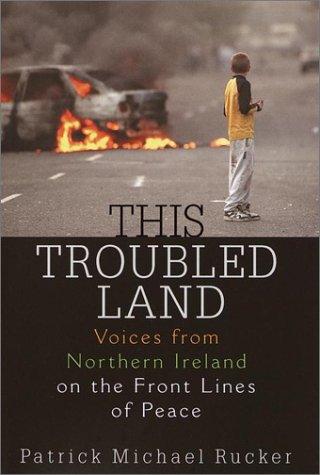
Rucker's investigations are all true and interesting in their own right, but leaves you feeling in despair through the end. May have benefited with more accounts of the difficulties of cross-community work as well as the willingness by many in Northern Ireland to live in their own segregated worlds.
Rucker's investigations are all true and interesting in their own right, but leaves you feeling in despair through the end. May have benefited with more accounts of the difficulties of cross-community work as well as the willingness by many in Northern Ireland to live in their own segregated worlds.
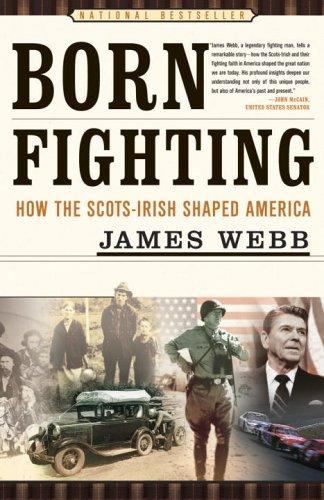
There's no denying the fighting spirit of the Scots-Irish, particularly as James Webb describes the defence of the frontier in the Appalachian Mountains. However, Webb goes too far in defining this attribute as somehow ethnically unique.
Webb also overplays the Scots-Irish role in the American War of Independence. One throwaway passage is, "Although the trained minds of New England's Puritan culture and Virginia's Cavalier aristocracy had shaped the finer intellectual points of the argument for political disuinion, the true passion for individual rights emanated from the radical individualism of the Presbyterian and, increasingly, Baptist pulpits. This concept ... dovetailed neatly with the aristocratic forces of revolution in the East."
One can appreciate Webb's desire to emphasise the passion of the Scots-Irish, but his arguments could have been stronger by demonstrating a more fulsome knowledge of the "finer intellectual points". For example, it was no mean feat to convince some of …
There's no denying the fighting spirit of the Scots-Irish, particularly as James Webb describes the defence of the frontier in the Appalachian Mountains. However, Webb goes too far in defining this attribute as somehow ethnically unique.
Webb also overplays the Scots-Irish role in the American War of Independence. One throwaway passage is, "Although the trained minds of New England's Puritan culture and Virginia's Cavalier aristocracy had shaped the finer intellectual points of the argument for political disuinion, the true passion for individual rights emanated from the radical individualism of the Presbyterian and, increasingly, Baptist pulpits. This concept ... dovetailed neatly with the aristocratic forces of revolution in the East."
One can appreciate Webb's desire to emphasise the passion of the Scots-Irish, but his arguments could have been stronger by demonstrating a more fulsome knowledge of the "finer intellectual points". For example, it was no mean feat to convince some of the reluctant colonial governors to side with the cause of independence. Furthermore, these "trained minds" included many of America's Founding Fathers, whose wisdom established the political philosophy by which the US government still lives by.
So, while Born Fighting is a decent read about a proud Scots-Irish American's perspective on his communal ancestors' contributions to American culture and society, this not the more serious investigation as it at times pretends to be.

Michael Faulkner, son of Brian, loses his Sante Fe style furniture business and home in Scotland. Retreats to family cabin on an otherwise uninhabited small island in Strangford Lough, Ards Peninsula, Northern Ireland.
This is reading through a couple's challenging times, that part of the wedding vows that read, "for better or worse".
There are plenty of happy times -- the guests, the picnics, the sublime peace of the place. All the while checked by the harsher realities of no mains electricity or regular water supply, and a barely insulated house.
Faulkner writes in a simple yet effective prose. In few words and sentences, you're perhaps suddenly caught by the deep emotion involved.
The Blue Cabin is an enjoyable read, proving the adage of the road less travelled...
Michael Faulkner, son of Brian, loses his Sante Fe style furniture business and home in Scotland. Retreats to family cabin on an otherwise uninhabited small island in Strangford Lough, Ards Peninsula, Northern Ireland.
This is reading through a couple's challenging times, that part of the wedding vows that read, "for better or worse".
There are plenty of happy times -- the guests, the picnics, the sublime peace of the place. All the while checked by the harsher realities of no mains electricity or regular water supply, and a barely insulated house.
Faulkner writes in a simple yet effective prose. In few words and sentences, you're perhaps suddenly caught by the deep emotion involved.
The Blue Cabin is an enjoyable read, proving the adage of the road less travelled...
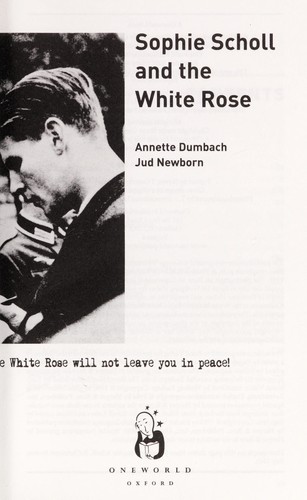
A surperbly well researched and presented account of an act of honour and bravery by conscientious young German students, who dared to stand up against the mind numbing machine of Nazism and the Nationalist Socialist movement during World War II.
In 1989, I visited an exhibition in the Reichstag, where there were a variety of uniforms for every aspect of life -- the postman, the milkman -- one for everyone! It was as if all German society was so bound up in this regimented and unforgiving mode of living.
Thus it was all the more refreshing to learn about the Scholl siblings and their quest to make Germans think. "We are your bad conscience!" they declared in one of the leaflets.
Sophie School and the White Rose could not have been a better written book. Dumback and Newborn describe not only the events in fine detail, but provide insightful background …
A surperbly well researched and presented account of an act of honour and bravery by conscientious young German students, who dared to stand up against the mind numbing machine of Nazism and the Nationalist Socialist movement during World War II.
In 1989, I visited an exhibition in the Reichstag, where there were a variety of uniforms for every aspect of life -- the postman, the milkman -- one for everyone! It was as if all German society was so bound up in this regimented and unforgiving mode of living.
Thus it was all the more refreshing to learn about the Scholl siblings and their quest to make Germans think. "We are your bad conscience!" they declared in one of the leaflets.
Sophie School and the White Rose could not have been a better written book. Dumback and Newborn describe not only the events in fine detail, but provide insightful background perspectives of all the characters involved.
No advanced knowledge of the war is required. This is a story of a desperate campaign for freedom during Europe's darkest days. As such, it should be required reading on every civics, philosophy, history or ethics course.
To cite the last sentence of the book, "...if people like those who formed the White Rose can exist, believe as they believed, act as they acted, maybe it means that this weary, corrupted, and extremely endangered species we belong to has the right to survive, and to keep on trying."
Unlike De Botton, I'm seldom disappointed with my travels, but I share his curiosity about considering why we want to travel in the first place.
De Botton achieves this by reflections on the thoughts and experiences of other travellers, whether explorers, writers or other artists. What makes The Art of Travel particularly enjoyable is the realisation that many before have gone through the trials and rewards of travelling.
Perhaps not surprisingly, De Botton identifies more with the trials. But he is a fine writer, and even the perpetually happy traveller should read this book.
Unlike De Botton, I'm seldom disappointed with my travels, but I share his curiosity about considering why we want to travel in the first place.
De Botton achieves this by reflections on the thoughts and experiences of other travellers, whether explorers, writers or other artists. What makes The Art of Travel particularly enjoyable is the realisation that many before have gone through the trials and rewards of travelling.
Perhaps not surprisingly, De Botton identifies more with the trials. But he is a fine writer, and even the perpetually happy traveller should read this book.
There are plenty of science books to explain the origins of the universe. However, Barrow's work is the best for the layman. Barrow's prose is plain English. His explanations of very sophisticated concepts are clear and accessible.
For example, Barrows calmly points out the difference between the universe -- everything that is -- and the visible universe, that finite realm where there has been enough time for light to reach us.
While no degree in physics (or any other science) is required, a general understanding of basic laws, e.g. speed of light, absolute zero, will help. This is one book to have at hand to handle some of the more mind-bending theories of the universe, not only its origins but where it may all be going.
There are plenty of science books to explain the origins of the universe. However, Barrow's work is the best for the layman. Barrow's prose is plain English. His explanations of very sophisticated concepts are clear and accessible.
For example, Barrows calmly points out the difference between the universe -- everything that is -- and the visible universe, that finite realm where there has been enough time for light to reach us.
While no degree in physics (or any other science) is required, a general understanding of basic laws, e.g. speed of light, absolute zero, will help. This is one book to have at hand to handle some of the more mind-bending theories of the universe, not only its origins but where it may all be going.
In 1999, Andrew Smith was interviewing Charlie Duke, astronaut and moon walker, for the Sunday …
Andrew Smith tracks down nine surviving moonwalkers, to learn of their experiences in the Apollo Moon Programme. He reveals the characters and personal politics involved, in prose not unlike a travel journal, which works well enough. The astronauts' responses to their unique journey are as varied as their personalities themselves -- just like real, human life back here on earth.
Andrew Smith tracks down nine surviving moonwalkers, to learn of their experiences in the Apollo Moon Programme. He reveals the characters and personal politics involved, in prose not unlike a travel journal, which works well enough. The astronauts' responses to their unique journey are as varied as their personalities themselves -- just like real, human life back here on earth.