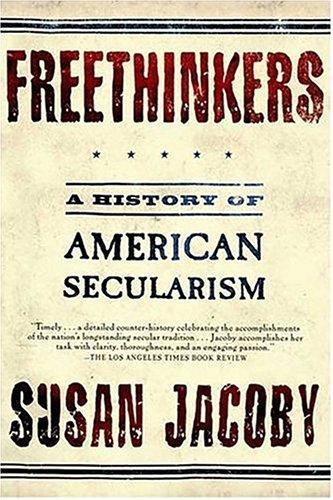
Review of 'Freethinkers: A History of American Secularism' on 'Goodreads'
No rating
As a friend pointed out, the US has a strict separation of church and state (no mention of God in the US Constitution), but a healthy practice of religion in its political life. Meanwhile, the UK (sans NI) has an established church, but an absence of religion in its politics (again, sans NI).
By far the clearest account of what happened in the Northern Ireland conflict - and …
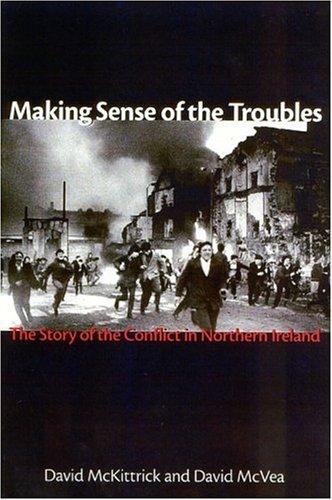
Review of 'Making sense of the troubles' on 'Goodreads'
3 stars
Good for accuracy, not so good for background
Making Sense stays true to its objective, to tell ‘a straightforward and gripping story … in an accessible way’. It is a straightforward read.
But is it a good read? Yes, if you don’t want to be bogged down with pre-Troubles history (too simplistically outlined in the book) or don’t need to understand the ideologies of unionism and nationalism per se. In this way, Making Sense feels written for a general English/benign foreign audience.
However, if you know some Irish history and/or can appreciate the ethno-nationalist competition in Northern Ireland, then you may very well be let down.
The factual reportage in Making Sense is flawless, but the story told is not neutral. Of course, no account of the Troubles can be. Yet after reading Making Sense, one leaves with a sense that: a) Northern Protestants really don’t like Catholics; b) republican …
Good for accuracy, not so good for background
Making Sense stays true to its objective, to tell ‘a straightforward and gripping story … in an accessible way’. It is a straightforward read.
But is it a good read? Yes, if you don’t want to be bogged down with pre-Troubles history (too simplistically outlined in the book) or don’t need to understand the ideologies of unionism and nationalism per se. In this way, Making Sense feels written for a general English/benign foreign audience.
However, if you know some Irish history and/or can appreciate the ethno-nationalist competition in Northern Ireland, then you may very well be let down.
The factual reportage in Making Sense is flawless, but the story told is not neutral. Of course, no account of the Troubles can be. Yet after reading Making Sense, one leaves with a sense that: a) Northern Protestants really don’t like Catholics; b) republican violence stems from a ideological struggle while loyalist violence is just sectarian hatred; c) the British government could have done more from 1921 forward, but were frustrated by intransigent unionists. All entirely acceptable to believe if one wishes, but by no means a neutral or fair position.
Thus, I was disappointed that Making Sense didn’t try harder to place the Troubles in an all-Ireland context. This would require more history, but would help explain some unionist perspective as well as the sometimes variable relationship between the Irish Republican government and Northern nationalists.
For the general reader, I would recommend A Pocket History of Ulster, by Brian Bardon (ISBN 086278428x). For more detail, try A History of Northern Ireland 1920-1996, by Thomas Hennessey (ISBN 0717124002), who has also written a book on the Northern Ireland peace process (ISBN 0717129462).
This is a wonderful hardcover Special Collector’s Edition. Let’s face it: there are plenty of us the same age as Roger Hargreaves’ son, Adam, who still enjoy the Mr Men series.
This Special Collector’s Edition is prefaced with a 7-page introduction by Adam Hargreaves, with then-and-now snapshots. Adam continues to draw and create new stories for the Mr Men series.
What follows is Mr Tickle’s story, the very first of the Mr Men! Just as enjoyable now as it was then.
If you love the Mr Men, you must get this Special Collector’s Edition book. It is a real treat!
Also look out for a brand new character, Mr Cheeky, with his own storybook.
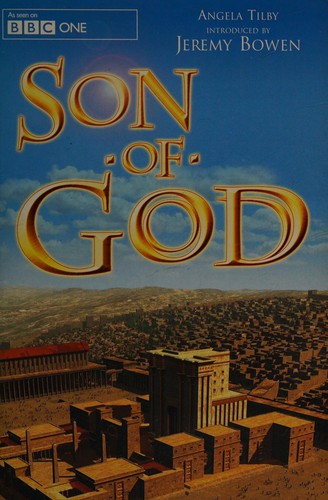
I wanted to read Son of God because of the tie-in with the BBC televised programme of the same name. Surprisingly, the book was not to be found in my local BBC shops or bookshops at the time the programme aired. (Who to blame: BBC or book publishers Hodder & Stoughton?)
Having secured the book, I was disappointed that the link between it and the programme was so weak. So, don’t purchase this book if this is your expectation. (However, the two sets of colour plate illustrations are taken from the programme.)
How about the book itself? The 182 pages are easy enough to read, with large font size and generalist-style prose. Indeed, the book is to be recommended as a starter guide to the human (but not divine) life of Jesus. In this context, it is a good read. …
A good text to start with on Jesus the man
I wanted to read Son of God because of the tie-in with the BBC televised programme of the same name. Surprisingly, the book was not to be found in my local BBC shops or bookshops at the time the programme aired. (Who to blame: BBC or book publishers Hodder & Stoughton?)
Having secured the book, I was disappointed that the link between it and the programme was so weak. So, don’t purchase this book if this is your expectation. (However, the two sets of colour plate illustrations are taken from the programme.)
How about the book itself? The 182 pages are easy enough to read, with large font size and generalist-style prose. Indeed, the book is to be recommended as a starter guide to the human (but not divine) life of Jesus. In this context, it is a good read. Presenting the historical knowledge of surely the most significant human of existence in an easy-to-read format could not be a simple task, and Angela Tilby does well.
The compromise of this approach is to have to omit background knowledge of certain events. Tilby does her best efforts here, but the treatment of historical contextualisation reads like an insider’s knowledge: if you already know the political history at the time of Jesus’ life, then what is presented suffices; if you don’t you just carry on, paying attention to the detail on Jesus. To make curious ignoramuses like me happier, a more comprehensive reading list at the end would have been appreciated: not just on the history of the life of Jesus, but to learn more on the ‘wretched and undistinguished career’ of Pilate, for example.
Overall, Son of God is a satisfactory book. It deflated my raised expectations after watching the very interesting television programme. But the book is a good text to start with, to learn the history of Jesus the man.
Review of 'Party elites in divided societies' on 'Goodreads'
5 stars
A tour des forces study of consociational democracy
This is quite a comprehensive comparative study of those countries acclaimed to be practising consociational democracies. The prose is highly academic (in tradition of Routledge), and is not recommended for those without a sound understanding of the consociational model. For this, Lijphart’s Democracy in Plural Societies (1977) is a genuine starting point.
Party Elites is a strong book. The theoretical framework and case studies are solid. My study topic is Northern Ireland politics, and the chapters on Belgium and Israel particularly interest me. Deschouwer makes an important point that the development of working federalism is no mean feat. ‘Classic consociationalism’ argues for federal structures, but achieving them can be quite a challenge with the claims of segmental autonomy. I argue that ‘classic consociationalism’ is more consistent with confederalism, and federalism is more representative of what is termed ‘integrative power-sharing’, as defined …
A tour des forces study of consociational democracy
This is quite a comprehensive comparative study of those countries acclaimed to be practising consociational democracies. The prose is highly academic (in tradition of Routledge), and is not recommended for those without a sound understanding of the consociational model. For this, Lijphart’s Democracy in Plural Societies (1977) is a genuine starting point.
Party Elites is a strong book. The theoretical framework and case studies are solid. My study topic is Northern Ireland politics, and the chapters on Belgium and Israel particularly interest me. Deschouwer makes an important point that the development of working federalism is no mean feat. ‘Classic consociationalism’ argues for federal structures, but achieving them can be quite a challenge with the claims of segmental autonomy. I argue that ‘classic consociationalism’ is more consistent with confederalism, and federalism is more representative of what is termed ‘integrative power-sharing’, as defined by Timothy Sisk, Power Sharing and International Mediation in Ethnic Conflicts (1996), informed by Donald Horowitz, Ethnic Groups in Conflict (1985). The integrative model does not juxtapose opposing models of power-sharing, only different emphasises, strengths, and weaknesses.
Overall, however, Party Elites is a tour des forces on consociational democracy; just consider other possible models of power-sharing!
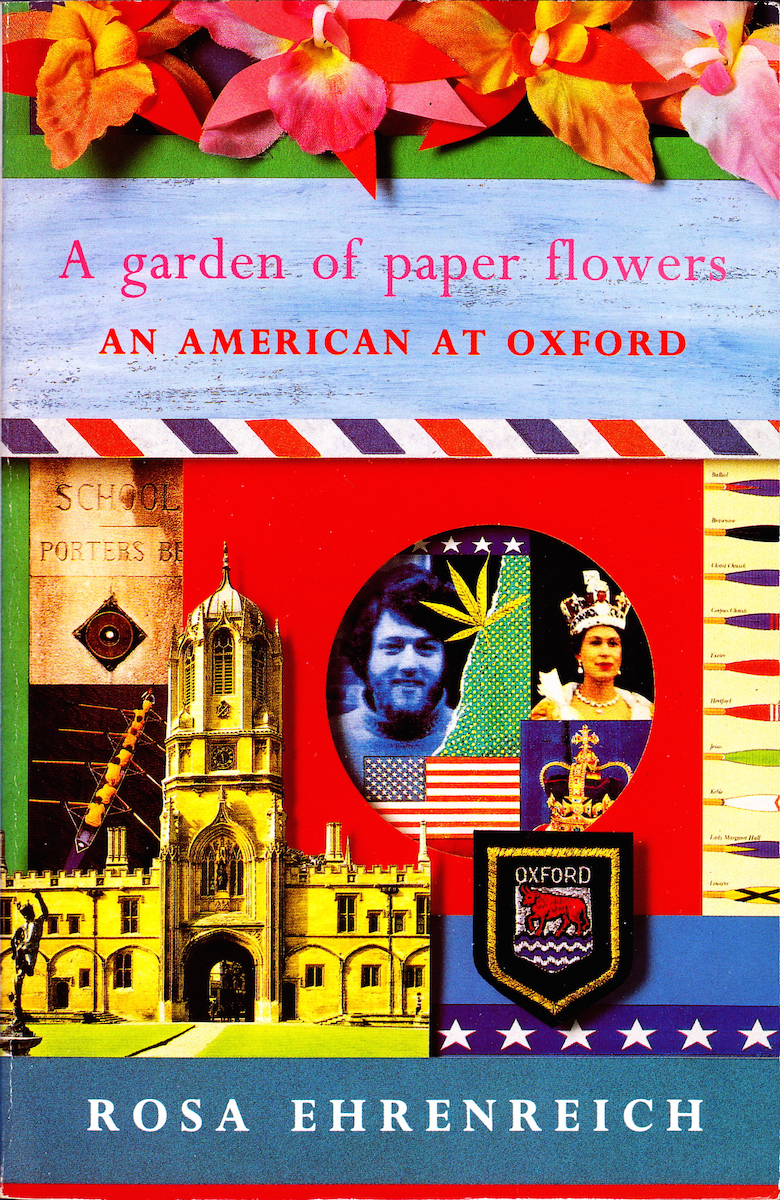
Review of 'A Garden of Paper Flowers' on 'Goodreads'
4 stars
I had the privilege of participating in a study abroad programme while enrolled at Boston University. I attended St Catherine's College, Oxford for the Michaelmus term, 1989. I experienced the peculiarities and uniqueness that is Oxford.
No one describes this better than Rosa Ehrenreich in A Garden of Paper Flowers. I immediately identified with her reactions to the arcane customs, traditions and attitudes.
My favourite example is her essay writing experience. At the start of her studies, she put much effort only to receive mediocre scores. She suspected that her tutor wasn't actually reading her work, so she began inserting random irrelevant words and phrases. By the end of the term she was submitting gibberish, yet her tutor told her how much her writing was improving, with grades to match.
A reader's health warning is the subtitle, An American at Oxford. Ehrenreich does her best to appreciate the cultural differences, …
I had the privilege of participating in a study abroad programme while enrolled at Boston University. I attended St Catherine's College, Oxford for the Michaelmus term, 1989. I experienced the peculiarities and uniqueness that is Oxford.
No one describes this better than Rosa Ehrenreich in A Garden of Paper Flowers. I immediately identified with her reactions to the arcane customs, traditions and attitudes.
My favourite example is her essay writing experience. At the start of her studies, she put much effort only to receive mediocre scores. She suspected that her tutor wasn't actually reading her work, so she began inserting random irrelevant words and phrases. By the end of the term she was submitting gibberish, yet her tutor told her how much her writing was improving, with grades to match.
A reader's health warning is the subtitle, An American at Oxford. Ehrenreich does her best to appreciate the cultural differences, but doesn't pretend to overcome them. While any Yank who's ever had a taste of Oxford will promptly understand Ehrenreich's perspective, regular Oxford alumni should appreciate this alternative view, too.