Garrett rated The man without a face: 4 stars
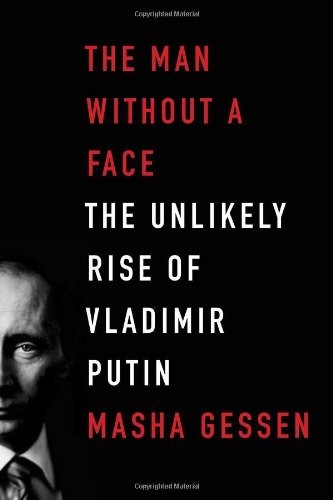
The man without a face by Masha Gessen
This is the chilling account of how a low-level, small-minded KGB operative ascended to the Russian presidency and, in an …

i like computers and the weird things people do with them.
This link opens in a pop-up window
This is the chilling account of how a low-level, small-minded KGB operative ascended to the Russian presidency and, in an …

This was a treat that delved into a lot of American history. Even the El Salvador essay speaks to certain qualities of being an American in the world. They're all to the point and explore things that weren't quite part of the original narrative. From the Central Park Five, to the Clinton scandal and even the aftermath of 9/11, the essays look at the context and impact. They take a dive into the points around that weren't popular to consider. I think this is one of the gifts of much of Didion's writing, exploring what it means to be part of something, an event or a group. What is created as a result of your participation. This is something that is always worth thinking about as an American, as a human.
This was a treat that delved into a lot of American history. Even the El Salvador essay speaks to certain qualities of being an American in the world. They're all to the point and explore things that weren't quite part of the original narrative. From the Central Park Five, to the Clinton scandal and even the aftermath of 9/11, the essays look at the context and impact. They take a dive into the points around that weren't popular to consider. I think this is one of the gifts of much of Didion's writing, exploring what it means to be part of something, an event or a group. What is created as a result of your participation. This is something that is always worth thinking about as an American, as a human.
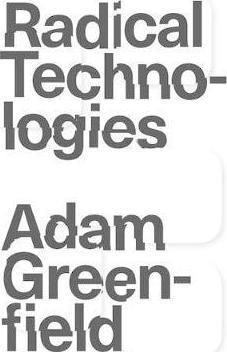
Radical Technologies is a non-fiction book by the UK-based American author Adam Greenfield. Subtitled 'The …
I think this book might be a great primer for folks looking to understand emerging technologies as well as a serious critique of each to help temper a bit of the rampant hype that you're likely still seeing surrounding most of these. When new technologies are presented as a "paradigm shift" or an opportunity to increase our wealth, time, quality of life, we have a tendency to get swept up in the potential. Greenfield almost provides a framework for asking critical questions not just of the technology but of the role we take in it.
My "highlighter" ran out on this one with certain bites that really crystalized what I was already thinking about but hadn't encapsulated so succinctly. In particular, the section about blockchain beyond Bitcoin and its elaboration of DAO's, decentralized autonomous organizations. The author points to an example of a neighborhood organization that has a DAO pitched …
I think this book might be a great primer for folks looking to understand emerging technologies as well as a serious critique of each to help temper a bit of the rampant hype that you're likely still seeing surrounding most of these. When new technologies are presented as a "paradigm shift" or an opportunity to increase our wealth, time, quality of life, we have a tendency to get swept up in the potential. Greenfield almost provides a framework for asking critical questions not just of the technology but of the role we take in it.
My "highlighter" ran out on this one with certain bites that really crystalized what I was already thinking about but hadn't encapsulated so succinctly. In particular, the section about blockchain beyond Bitcoin and its elaboration of DAO's, decentralized autonomous organizations. The author points to an example of a neighborhood organization that has a DAO pitched as an alternative for certain functions that have typically been managed in person or by small community groups. After this example, it's brought up that with the best that can be created for simplifying life in a community is modeling their ambitions after the market. The more I thought about the changes in blockchain since the book's publishing, primarily NFTs as an avenue for selling art, I've increasingly had the feeling that the artificial commoditization of otherwise available resources and recreation of market structures to put arbitrary values on these resources only serves to cheapen our ability to interact. Of course, there's more to wax poetic about here although many others have done significantly better.
Other resources:
"New Dark Age" by James Bridle
Line Goes Up – The Problem With NFTs (youtu.be/YQ_xWvX1n9g)

"Between 1999 and 2017, an estimated 250,000 Americans died from overdoses involving prescription painkillers, a …
After already reading Empire of Pain and watching "The Crime of the Century" on HBO, I already had a fair amount of background on the opioid crisis although it's one of those broad issues that you never really get enough of. Since this book was presented as an early informer of many of the things that Empire of Pain touched on, I figured it was worth a read. Writing is concise, descriptions are powerful. The updated version is great although if you're looking for a one-and-done book on the topic, I'd probably recommend just going over to "Empire of Pain" by Patrick Radden Keefe, a phenomenally written and power account of the opioid crisis and in particular, the Sacklers role in its genesis.
Related:
"Empire of Pain" by Patrick Radden Keefe
"The Crime of the Century" by Alex Gibney (www.imdb.com/title/tt14055432/)
After already reading Empire of Pain and watching "The Crime of the Century" on HBO, I already had a fair amount of background on the opioid crisis although it's one of those broad issues that you never really get enough of. Since this book was presented as an early informer of many of the things that Empire of Pain touched on, I figured it was worth a read. Writing is concise, descriptions are powerful. The updated version is great although if you're looking for a one-and-done book on the topic, I'd probably recommend just going over to "Empire of Pain" by Patrick Radden Keefe, a phenomenally written and power account of the opioid crisis and in particular, the Sacklers role in its genesis.
Related:
"Empire of Pain" by Patrick Radden Keefe
"The Crime of the Century" by Alex Gibney (www.imdb.com/title/tt14055432/)
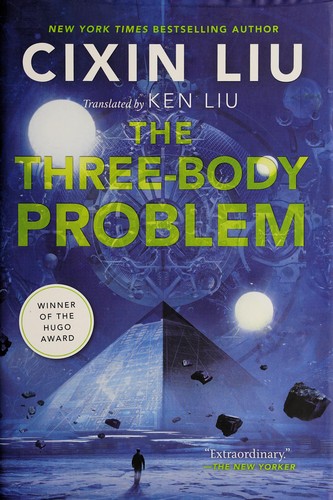
Within the context of the Chinese Cultural Revolution, a military project sends messages to alien …
The sentiment on the internet has always been that this is one of the best science fiction books to read, with its fresh take on what can often times be a stale genre. The perspective is unique and has moments of revelation that feel surprisingly different from the traditional "investigation of self" that I typically get from science fiction, identifying moments of hope despite the fractures in civilization. Despite the intense shift towards the end, it leaves a lot to feel good about which I don't commonly leave hard sci-fi with.
The sentiment on the internet has always been that this is one of the best science fiction books to read, with its fresh take on what can often times be a stale genre. The perspective is unique and has moments of revelation that feel surprisingly different from the traditional "investigation of self" that I typically get from science fiction, identifying moments of hope despite the fractures in civilization. Despite the intense shift towards the end, it leaves a lot to feel good about which I don't commonly leave hard sci-fi with.
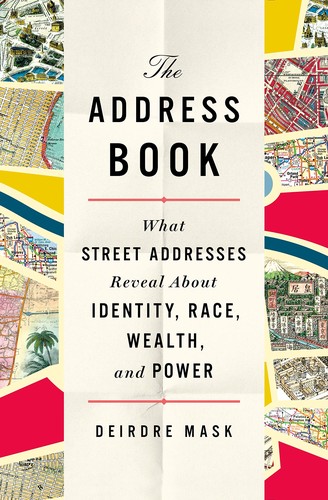
An exuberant work of popular history: the story of how streets got their names and …
This was a fun read with an interesting dive into the way that addressing impacts our lives as well as the way that our daily existence is informed by addressing. Honestly, never thought much about addressing at all and this gave a really fun non-fiction read.

There are few remaining frontiers on our planet. But perhaps the wildest, and least understood, …
I wasn't really sure what to expect going into this although what I got was an excellently written and organized story about a slice of the world that we don't get a lot of time seeing. It's fair to say that most folks don't think much about what happens on the oceans. This story spends time jumping into a bunch of different topics that typically are rooted in the difficult enforcing what few rules we do have for international waters with the emphasis on how these waters, while seemingly disparate, actually tie us all together.
I wasn't really sure what to expect going into this although what I got was an excellently written and organized story about a slice of the world that we don't get a lot of time seeing. It's fair to say that most folks don't think much about what happens on the oceans. This story spends time jumping into a bunch of different topics that typically are rooted in the difficult enforcing what few rules we do have for international waters with the emphasis on how these waters, while seemingly disparate, actually tie us all together.

Sue Prideaux: I am dynamite! (2018)
"A biography of the philosopher Friedrich Nietzsche"--
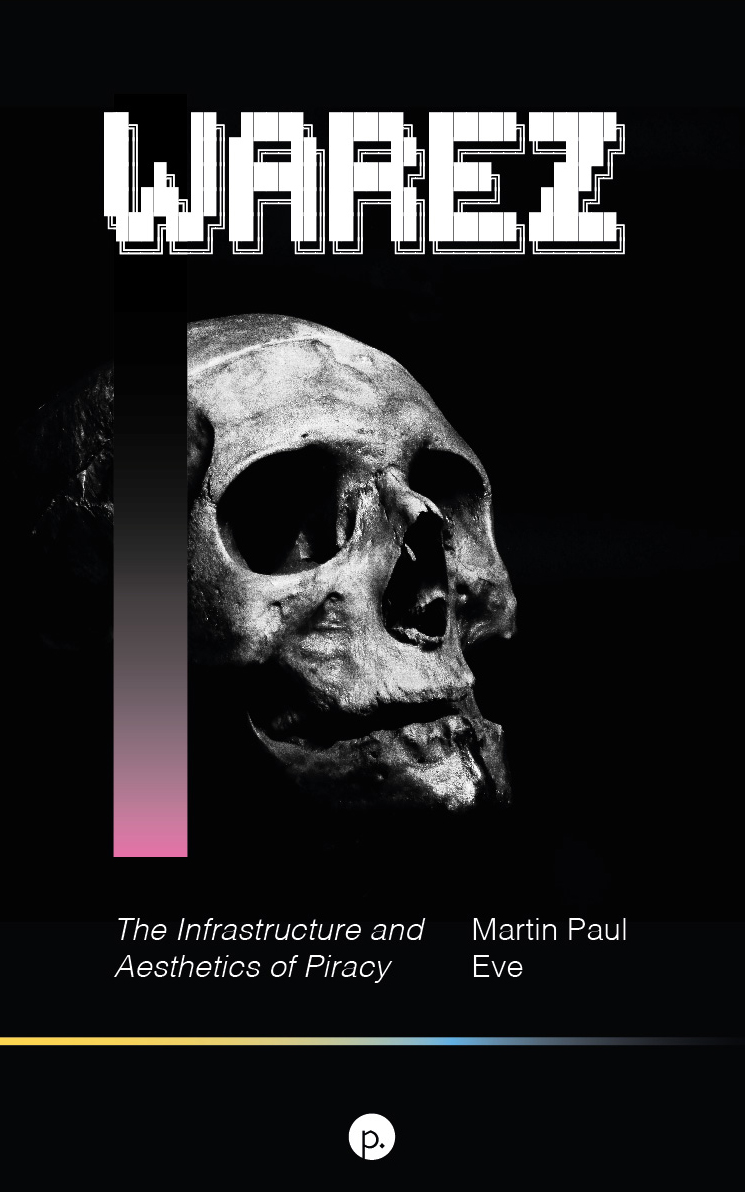
When most people think of piracy, they think of Bittorrent and The Pirate Bay. These …
I was hopeful for a fun history on the foundation, infrastructure and aesthetics of the "Warez Scene". While the book does touch on these topics, it struggles from an identity crisis the entire time that drags down the quality of the work. Rather than a strong narrative, the author decided to apply the template of academic paper which I imagine is their comfort zone. While books with the structure of an academic paper can have great information, they're rarely enjoyable to read and provide no meaningful narrative. In this case, the entirety of the book is without personality, having no interviews and only catering a core argument that just underwhelms ("Warez Scene as an ARG"). The tangents don't feel related, adding bulk to a book that really didn't need it. They only seem included to show the virtue of the author rather than a useful challenge to any systemic issues …
I was hopeful for a fun history on the foundation, infrastructure and aesthetics of the "Warez Scene". While the book does touch on these topics, it struggles from an identity crisis the entire time that drags down the quality of the work. Rather than a strong narrative, the author decided to apply the template of academic paper which I imagine is their comfort zone. While books with the structure of an academic paper can have great information, they're rarely enjoyable to read and provide no meaningful narrative. In this case, the entirety of the book is without personality, having no interviews and only catering a core argument that just underwhelms ("Warez Scene as an ARG"). The tangents don't feel related, adding bulk to a book that really didn't need it. They only seem included to show the virtue of the author rather than a useful challenge to any systemic issues even though the author tries to note that "watching anime" is their only example of "appreciating foreign culture" which feels kinda racist when you could just say these kids like weird cartoons.
Even that core argument feels flimsy and unassessed. Bits of the "Scene" are presented and the author says something like "As part of an ARG..." without ever meaningfully interrogating that idea. During the chapter on takedowns, the author presents the people as compulsive, needing to do this for some sense of community and power. While you could say that's an ARG, it feels reductive when there's more to say about the actual people involved and the fracture in their sense of self that would cause them to spend "12 to 15 hours a day checking for new releases". The idea is presented solely to paper over the fact that the author did not perform any interviews or try finding anything beyond the NFO dumps and news sites.
Ultimately, it's got some details but the structure is poor. I don't think there's going to be something better for some time short of the much better but much more limited in scope "How Music Got Free" by Stephen Richard Witt with its deep dive into the music industry, its conditions and the thrust that piracy placed upon it during the decline of the CD.
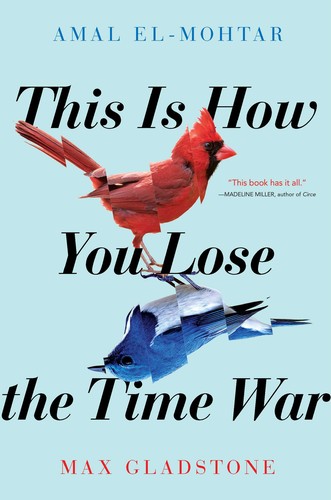
Two time-traveling agents from warring futures, working their way through the past, begin to exchange letters—and fall in love in …