Chronicles the American Revolution during the year 1776, examining the leadership of George Washington and …
Making it real
5 stars
Many history texts don't bring you along. They make you understand but not feel as though you were, in part, there. McCullough's texts buck that trend consistently. I felt, I still feel, as though I could smell, hear and feel some of what happened in the company of George Washington and his "Army" in 1776.
Many history texts don't bring you along. They make you understand but not feel as though you were, in part, there. McCullough's texts buck that trend consistently. I felt, I still feel, as though I could smell, hear and feel some of what happened in the company of George Washington and his "Army" in 1776.
@Beef@noagendasocial.com All models are wrong, some are useful. I think viewing racism as cancer is a useful model for considering policy choices both with regards to urgency and severity.
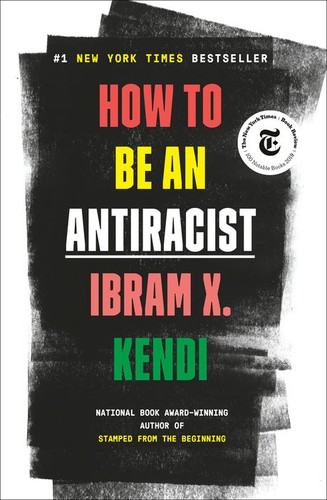
Antiracism is a transformative concept that reorients and reenergizes the conversation about racism—and, even more …
A journey of ideas
5 stars
Dr. Kendi takes us on two parallel journeys. His own, through his own life and struggles, and that of our society which both end up in a place where antiracism and the policies that support it are in the forefront of his discourse. I loved this text. Like so many great texts it pulls together thoughts I already had and makes clearer the motivations behind them. We all are on a journey and I'm so happy I was able to get a peek into these.
Dr. Kendi takes us on two parallel journeys. His own, through his own life and struggles, and that of our society which both end up in a place where antiracism and the policies that support it are in the forefront of his discourse. I loved this text. Like so many great texts it pulls together thoughts I already had and makes clearer the motivations behind them. We all are on a journey and I'm so happy I was able to get a peek into these.
Antiracism is a transformative concept that reorients and reenergizes the conversation about racism—and, even more fundamentally, points us toward liberating …
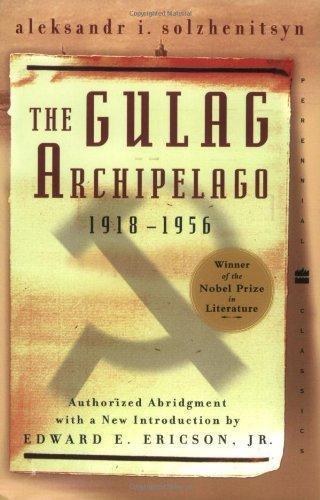
The Gulag Archipelago is Solzhenitsyn's masterwork, a vast canvas of camps, prisons, transit centres and …
Well, that was depressing. A lesson in the Soviet approach to totalitarian population control. Solzhenitsyn thoroughly documents the inhumanity of the Soviet political prison apparatus. Did enjoy it? Uh... no. That's not the point though. It is a documentary monument to those who went through it. In the same period of time (1918-1956) the Soviet Union "accomplished" many things, but it did it while standing firmly on the neck of its own people.
Well, that was depressing. A lesson in the Soviet approach to totalitarian population control. Solzhenitsyn thoroughly documents the inhumanity of the Soviet political prison apparatus. Did enjoy it? Uh... no. That's not the point though. It is a documentary monument to those who went through it. In the same period of time (1918-1956) the Soviet Union "accomplished" many things, but it did it while standing firmly on the neck of its own people.
Two Years before the Mast is but an episode in the life of Richard Henry …
What a treasure
5 stars
I'd long heard of this book as being used as source material for other texts. I can see why... Dana's clear and compelling prose transported me to the age of sail. I felt myself tasting the salt of the sea and many other details so wonderfully woven into this tale. The epilogue of his return to California after the transformative 24 years of the late 1840s and 50s is a real treat. I am a lover of first person histories un-interpreted by succeeding years. This text hits the mark squarely. I knew it to be a book about life at sea and of the merchant trade in the late years of sail, but the description of the sparsely populated Alta California coast with its Missions and Presidios in the years before the Mexican - American war were a great treasure
I'd long heard of this book as being used as source material for other texts. I can see why... Dana's clear and compelling prose transported me to the age of sail. I felt myself tasting the salt of the sea and many other details so wonderfully woven into this tale. The epilogue of his return to California after the transformative 24 years of the late 1840s and 50s is a real treat. I am a lover of first person histories un-interpreted by succeeding years. This text hits the mark squarely. I knew it to be a book about life at sea and of the merchant trade in the late years of sail, but the description of the sparsely populated Alta California coast with its Missions and Presidios in the years before the Mexican - American war were a great treasure
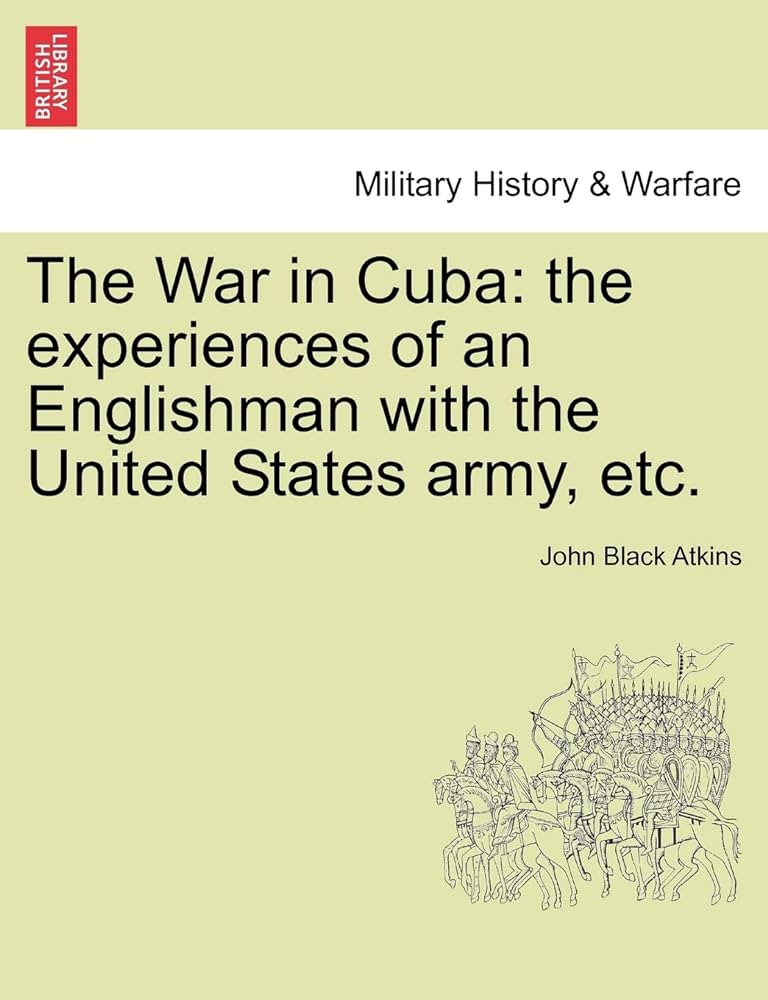
Unlike other wars in American history the Spanish American war for me is somewhat distant. It's causes obscure and the actions brief and poorly described.
John Black Atkins a British journalist takes the reader on a tour of the conflict from the encampment in Tampa Florida to the campaign including brutal combat in Cuba and Spanish surrender both there and in Puerto Rico. Atkins' world is a world gone by where the industrialization of war is at once in full swing but hasn't hit its peak.
A full scan in PDF format of this text with illustrations is available from the British Library catalog
John Asser provides a rare first person window into the life and times of 9th century Wessex and the character of the only "Great" King to rule in Britain. He has a task to accomplish, but he doesn't get right to it which is a relief to me. For, in the meandering path he takes to explain the deeds of the Great King are telling moments and appreciated context.
John Asser provides a rare first person window into the life and times of 9th century Wessex and the character of the only "Great" King to rule in Britain. He has a task to accomplish, but he doesn't get right to it which is a relief to me. For, in the meandering path he takes to explain the deeds of the Great King are telling moments and appreciated context.
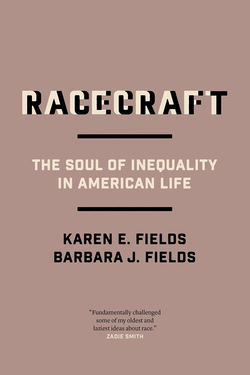
As said by others the ideas herein are fire! They are, unfortunately, shielded from the average reader by dense sections of prose which are frankly not written for the average reader. I found it impossible to get through it by reading the text directly. Determined to absorb the ideas, I borrowed the audiobook from the library and let some of the denser portions wash over my mind. The conclusion is, although still strewn with $100 words, the best part of the text and fully summarizes the ideas. This sat on my shelf too long... don't let it sit on yours, because the ideas are too important!!! 4 stars because of readability.
My favorite bits: "The racecraft-inspired political synecdoche short-circuits the issue of accountability"
"In the shadow of racecraft, 'discrimination' shoves 'unfareness' out of the vocabulary available for public debate"
"Skillfully invoked, racecraft can discredit any public policy initiative, good or …
As said by others the ideas herein are fire! They are, unfortunately, shielded from the average reader by dense sections of prose which are frankly not written for the average reader. I found it impossible to get through it by reading the text directly. Determined to absorb the ideas, I borrowed the audiobook from the library and let some of the denser portions wash over my mind. The conclusion is, although still strewn with $100 words, the best part of the text and fully summarizes the ideas. This sat on my shelf too long... don't let it sit on yours, because the ideas are too important!!! 4 stars because of readability.
My favorite bits: "The racecraft-inspired political synecdoche short-circuits the issue of accountability"
"In the shadow of racecraft, 'discrimination' shoves 'unfareness' out of the vocabulary available for public debate"
"Skillfully invoked, racecraft can discredit any public policy initiative, good or bad, whether or not designed with Afro-Americans in mind."
//and the best for last... literally the last para in the book. //
"By crowding inequality off the public agenda, racecraft has stranded this country again and again over its history. It may do so again, permitting an economic sickness that arose from inequality to be treated homeopathically by further doses of inequality, which may eventually provoke rage that will sweep away respect for democratic politics and for the rule of law. Forestalling that calamity is our duty. The first and fundamental step in that direction is to observe racecraft in action, study its moves, listen to its language, and root it out. Only after doing so will we be prepare for the still harder work of tackling inequality. Are we up to it?"
I only set book goals that are totally unachievable or I get frustrated and anxious trying to meet them. I also get frustrated and anxious if I do not set a goal at all, so this seems the only way forward.