Representatives from Africa and people of African descent came together at the conference on November 15, 2024, to reflect on the history and lasting impacts 140 years after the opening of the 1884/5 Berlin Africa Conference, where European powers expanded their colonial reach across the African continent. Civil society organizations working on the legacies of #colonialism in the world, including its ongoing impact on #HumanRights, also joined the November 15 conference.
" #Colonialism is not a thinking machine, nor a body endowed with reasoning faculties. It is #violence in its #natural state, and it will only yield when confronted with greater violence."
Today I learned that pineapples are not native to Hawaii. Why? Colonialism.
“James Dole identified Hawaii as the ideal location for farming and trade of this cash crop fruit. The Dole Corporation ultimately displaced Hawaiian sovereignty, ruling for a time as a republic, before ultimately influencing Congress to adopt the islands as a state.”
Reading "King Leopold's Ghost" by Hochschild is wild. Revelation after revelation.
Like, did you know that "the Independent State of Congo," as it was known once Leopold laid claim to it, was actually Leopold's personal possession? Not, initially, an actual colony of the country of Belgium but his private fiefdom. He referred to himself as its proprietor at times.
How?? First, he set up the "International African Association" (Association Internationale pour l'Exploration et la Civilisation de l'Afrique Centrale), tricking people into thinking this was a real independent non-profit organization. Then, under the pretense of humanitarianism, he hired Henry Morton Stanley to traverse the Congo River and trick local elites into signing treaties and contracts with the King of the Belgians. These false treaties were then put to use in convincing first the USA and then the European powers, during the Berlin Conference of 1884-85, to recognize Leopold as …
Reading "King Leopold's Ghost" by Hochschild is wild. Revelation after revelation.
Like, did you know that "the Independent State of Congo," as it was known once Leopold laid claim to it, was actually Leopold's personal possession? Not, initially, an actual colony of the country of Belgium but his private fiefdom. He referred to himself as its proprietor at times.
How?? First, he set up the "International African Association" (Association Internationale pour l'Exploration et la Civilisation de l'Afrique Centrale), tricking people into thinking this was a real independent non-profit organization. Then, under the pretense of humanitarianism, he hired Henry Morton Stanley to traverse the Congo River and trick local elites into signing treaties and contracts with the King of the Belgians. These false treaties were then put to use in convincing first the USA and then the European powers, during the Berlin Conference of 1884-85, to recognize Leopold as the sovereign of "L'État indépendant du Congo" (the Independent State of Congo). Ironically, the conference also resulted in a pact among the Europeans to put an end to African and Arab slavery.
The death toll of Leopold's forced labor regime, geared towards his personal enrichment via the extraction first of ivory and then rubber, is estimated at around 10 million people. He used these riches, in part, to fund his obsession with architecture, leading to his moniker in his home country, the "Builder King."
Today in Labor History August 22, 1791: Encouraged by the French and American revolutions, Toussaint Louverture led over 100,000 Haitian slaves in a revolt against the French. They were ultimately successful, making Haiti the first black republic in the world. The US refused recognition of Haiti until 1865, as a result of pressure from Southern slaveholders. The French demanded $21 billion In today’s dollars) in reparations for the losses to the former slaveholders, in exchange for peace and recognition of Haiti as an independent nation. The debt was financed through French banks and the U.S. bank, Citibank. The Haitians finally paid it off in 1947. However, the huge interest payments for their independence debt, and the debt incurred through the corruption of the Duvalier dynasty, have made Haiti one of the poorest nations in the western hemisphere. Prior to independence, Haiti was the richest and most productive of all of …
Today in Labor History August 22, 1791: Encouraged by the French and American revolutions, Toussaint Louverture led over 100,000 Haitian slaves in a revolt against the French. They were ultimately successful, making Haiti the first black republic in the world. The US refused recognition of Haiti until 1865, as a result of pressure from Southern slaveholders. The French demanded $21 billion In today’s dollars) in reparations for the losses to the former slaveholders, in exchange for peace and recognition of Haiti as an independent nation. The debt was financed through French banks and the U.S. bank, Citibank. The Haitians finally paid it off in 1947. However, the huge interest payments for their independence debt, and the debt incurred through the corruption of the Duvalier dynasty, have made Haiti one of the poorest nations in the western hemisphere. Prior to independence, Haiti was the richest and most productive of all of Europe’s colonies.
The best book I’ve read on the Haitian Revolution is “The Black Jacobins,” by Trinidadian socialist C.L.R. James. Cuban writer Alejo Carpentier explores the revolution in his novel, “The Kingdom of This World” (1949). You can read more about Toussaint Louverture and the slave uprising in Madison Smartt Bell’s trilogy called “All Souls' Rising” (1995) and Isabel Allende’s 2010 novel, “Island Beneath the Sea.”
"Klee speaks on how colonialism, #capitalism and police are part of the dynamic affecting violence against women and the destruction of sacred places, and the roles of Treaties and sovereignty.
"Klee shares the Indigenous way of being and peacemaking in parallel to police and prisons, and the need for the restoration of traditional Indigenous systems for healing.
"Watch the video, in English, with new French subtitles by Christine Prat. Klee passed to the Spirit World in December.
"Klee's book, finished shortly before his passing, can be ordered at Detritus Books. "No Spiritual Surrender: Indigenous Anarchy in Defense of the Sacred"
"Klee speaks on how colonialism, #capitalism and police are part of the dynamic affecting violence against women and the destruction of sacred places, and the roles of Treaties and sovereignty.
"Klee shares the Indigenous way of being and peacemaking in parallel to police and prisons, and the need for the restoration of traditional Indigenous systems for healing.
"Watch the video, in English, with new French subtitles by Christine Prat. Klee passed to the Spirit World in December.
"Klee's book, finished shortly before his passing, can be ordered at Detritus Books. "No Spiritual Surrender: Indigenous Anarchy in Defense of the Sacred"
"Native Americans discovered the use of petroleum jelly for protecting and healing skin. Sophisticated oil pits had been built as early as 1415–1450 in Western Pennsylvania.
...
Chesebrough patented the process of making petroleum jelly by U.S. patent 127,568 in 1872."
📣SAVE THE DATE📣Saturday June 22nd, 1–2:30 PM EST • 10–11:30 AM PST
Join us for a virtual, interactive workshop with Dr. May Sanaee, Associate Professor with the Department of Obstetrics and Gynecology at the University of #Alberta!
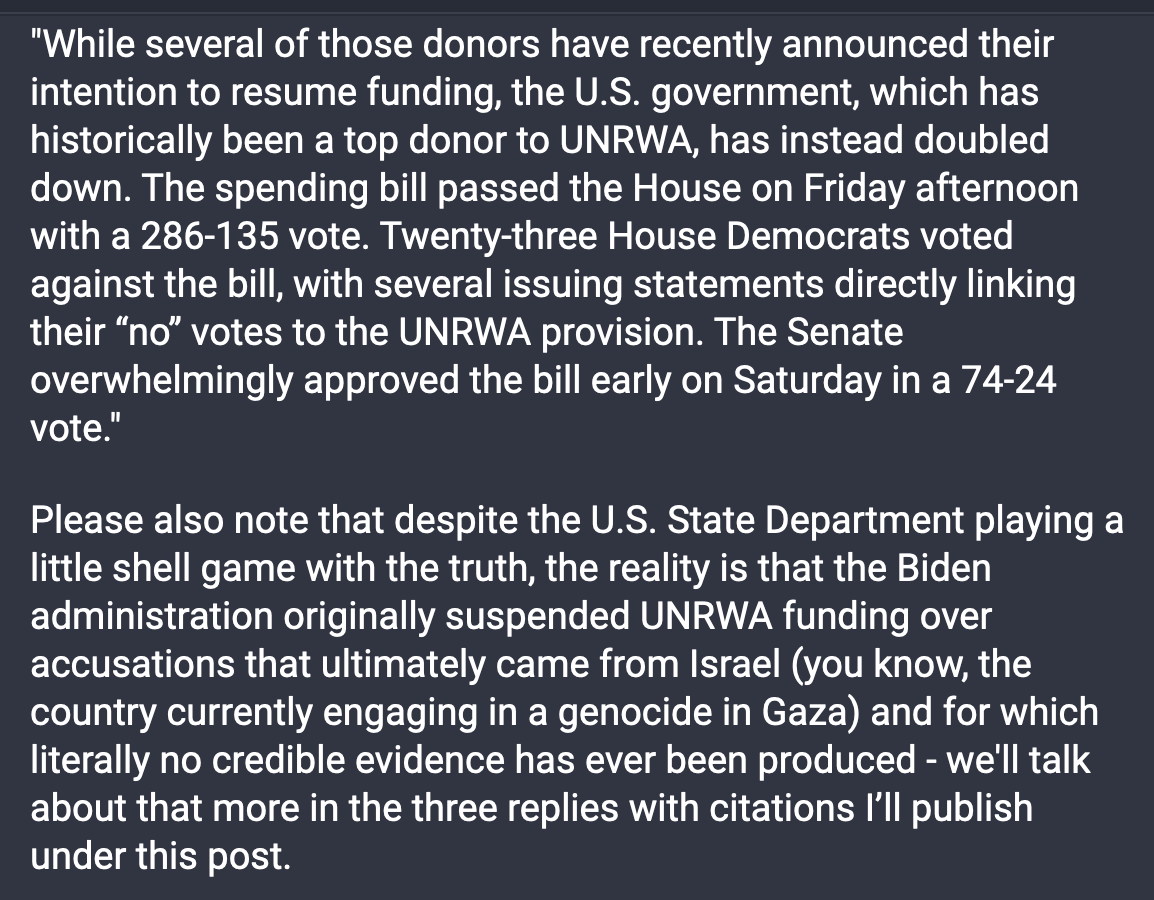
When US responded to #ICJ ruling of plausible case, by stripping all funding from #UNRWA, I argued that was active US execution of #Genocide against #Gaza. New spending bill defunding it until 2025 outstrips that in viciousness & scope.
ALSO NOTE her citation of CNN reporting from 3 wks ago: UN clearly says Israeli govt ***used torture on UN staff*** to extract false confessions.