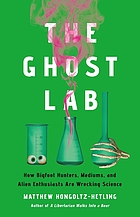
Norton Glover reviewed Ghost Lab by Matthew Hongoltz-Hetling
Interesting character study of true believers, with shaky conclusions.
3 stars
The majority of the book is the story of the rise and fall of KRI, a New Hampshire group of obsessives who believe in and research ghosts, crytptozoology, and UFOs. Hongoltz-Hetling's portrayal of the KRI folk is sympathetic. While not accepting their beliefs uncritically, he never makes fun of them, and describes their lives and what led them to (and away from) KRI.
Hongoltz-Hetling tries to connect this to a broader argument about the decline in public trust of institutions. I'm not sure he particularly succeeds in this. There's an occasional quote from various studies about declining support for science and academia, but it doesn't really seem to connect to KRI. There's always been a cultural fringe.
The part of the book I liked the least is the author's conclusion about how society should interact. Hongoltz-Hetling holds that we should ignore the truth, and relate to them in …
The majority of the book is the story of the rise and fall of KRI, a New Hampshire group of obsessives who believe in and research ghosts, crytptozoology, and UFOs. Hongoltz-Hetling's portrayal of the KRI folk is sympathetic. While not accepting their beliefs uncritically, he never makes fun of them, and describes their lives and what led them to (and away from) KRI.
Hongoltz-Hetling tries to connect this to a broader argument about the decline in public trust of institutions. I'm not sure he particularly succeeds in this. There's an occasional quote from various studies about declining support for science and academia, but it doesn't really seem to connect to KRI. There's always been a cultural fringe.
The part of the book I liked the least is the author's conclusion about how society should interact. Hongoltz-Hetling holds that we should ignore the truth, and relate to them in terms of the existing beliefs, what he calls destigmatization. For example, he suggests official licensing of medium and psychics, whether or not their beliefs are true (they're not...)
Destigmatization seems weirdly paternalistic. These people are adults. If they're making claims about the real world that are wrong, we should be free to say so.
I like the human story of this small collection of oddballs, but the author fails in his broader analysis.