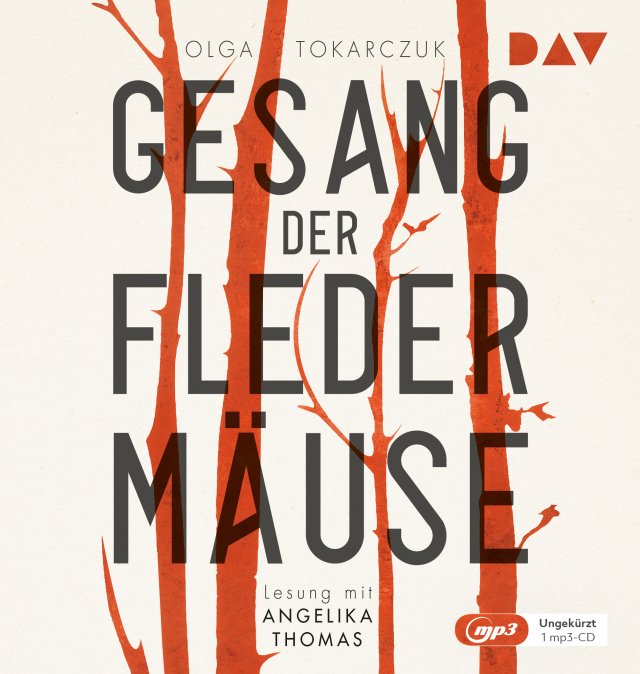
Janina Duszejko ist eine Einsiedlerin. Sie lebt abgeschottet auf einem Hochplateau an der polnisch-tschechischen Grenze, umgeben vom Wald und dessen Bewohnern. Auf die meisten Menschen wirkt sie etwas verschroben. Sie glaubt an die Macht der Astrologie, sieht das Horoskop eines Menschen als schicksalsbestimmend und glaubt an ein fast mystisches Bewusstsein der Tiere. Doch ebenjene Tiere des Waldes, mit denen Janina sich sehr verbunden fühlt, werden bedroht. Eines Nachts macht sie eine grausame Entdeckung: Die Leiche ihres Nachbarn liegt, umringt von Rehfleisch und Knochenresten, am Küchentisch. Der Jäger war offensichtlich an seiner Beute erstickt. Janina sieht in dieser Tragödie ein Zeichen – die Tiere rächen sich. Die Natur schlägt zurück. Und es geschehen noch weitere mysteriöse Morde, die allesamt nach Racheakten der Waldbewohner aussehen.
Neither the plot nor the characters were interesting to me. The writing is nice and I liked some of the Blake quotes but I'm sure I won't remember this book a year from now.
Neither the plot nor the characters were interesting to me. The writing is nice and I liked some of the Blake quotes but I'm sure I won't remember this book a year from now.
While I was intrigued by this novel from the very beginning, I ultimately felt that it took me rather too long to get into what was really going on in Drive Your Plow Over The Bones Of The Dead. I should probably have reread the synopsis before starting the book so I didn't pick up on the earliest clues until they were revealed very late on. Instead I went into the story as if it were more slice-of-life fiction, exploring this remote Polish hamlet alongside Mrs Duszejko in her regular round as caretaker for the majority of the houses left unoccupied through the bitter winter. I loved Olga Tokarczuk's depictions of this rural environment with its deep forest and the perpetually impassable roads.
Mrs Duszejko (I shan't call her Janina!) is a wonderful character with whom I could strongly sympathise and empathise. Her idiosyncratic capitalising of certain proper nouns …
While I was intrigued by this novel from the very beginning, I ultimately felt that it took me rather too long to get into what was really going on in Drive Your Plow Over The Bones Of The Dead. I should probably have reread the synopsis before starting the book so I didn't pick up on the earliest clues until they were revealed very late on. Instead I went into the story as if it were more slice-of-life fiction, exploring this remote Polish hamlet alongside Mrs Duszejko in her regular round as caretaker for the majority of the houses left unoccupied through the bitter winter. I loved Olga Tokarczuk's depictions of this rural environment with its deep forest and the perpetually impassable roads.
Mrs Duszejko (I shan't call her Janina!) is a wonderful character with whom I could strongly sympathise and empathise. Her idiosyncratic capitalising of certain proper nouns gave me insights into her priorities and beliefs. I learnt a lot about astrology too. What was most interesting to me though was Mrs Duszejko's awareness of how others viewed her, particularly authority figures for whom she would never be more than a batty old woman, and how she manipulated this perception. Her curiosity about the natural world around her appealed to me as, of course, did her stand against the flagrant disregard for Animals lives shown by the hunters. As Mrs Duszejko herself tells us, ‘Its Animals show the truth about a country,’ I said. ‘Its attitude towards Animals. If people behave brutally towards Animals, no form of democracy is ever going help them, in fact nothing will at all.’
I loved how accurately Mrs Duszejko nick-named her neighbours too. There's a great moment where she lets one of these private nick-names slip and the person she's talking to immediately recognises who she means!
As a murder mystery, I felt that Drive Your Plow Over The Bones Of The Dead differed memorably from the genre standards which I often find too formulaic. This novel also has a lot to say about our misjudged social norms, most obviously in the area of animal rights but also with other sharp observations such as, 'Newspapers rely on keeping us in a constant state of anxiety, on diverting our emotions away from the things that really matter to us. Why should I yield to their power and let them tell me what to think?' I very much enjoyed reading Drive Your Plow Over The Bones Of The Dead and would certainly try more of Olga Tokarczuk's work in the future.