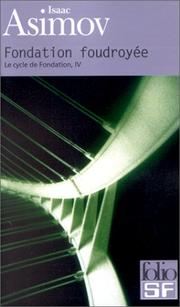
Foundation's Edge (1982) is a science fiction novel by American writer Isaac Asimov, the fourth book in the Foundation Series. It was written more than thirty years after the stories of the original Foundation trilogy, due to years of pressure by fans and editors on Asimov to write another, and, according to Asimov himself, the amount of the payment offered by the publisher. It was his first novel to ever land on The New York Times best-seller list, after 262 books and 44 years of writing. Foundation's Edge won both the Hugo Award for Best Novel in 1983 and the Locus Award for Best Science Fiction Novel in 1983, and was nominated for the Nebula Award for Best Novel in 1982.
Foundation's Edge (1982) is a science fiction novel by American writer Isaac Asimov, the fourth book in the Foundation Series. It was written more than thirty years after the stories of the original Foundation trilogy, due to years of pressure by fans and editors on Asimov to write another, and, according to Asimov himself, the amount of the payment offered by the publisher. It was his first novel to ever land on The New York Times best-seller list, after 262 books and 44 years of writing. Foundation's Edge won both the Hugo Award for Best Novel in 1983 and the Locus Award for Best Science Fiction Novel in 1983, and was nominated for the Nebula Award for Best Novel in 1982.
This started out slowly and I was convinced my rating would be lower than the previous ones in the Foundation series, but it took on a whole new twist to the series unlike the previous ones and in the end I enjoyed it very much.
One of the most fun aspects of re-reading the original Foundation trilogy was seeing the retro view of the future of techonology and society. It's fun in this one to see Asimov working within that universe of the 50s to update things for the 70s: computers are much more powerful, and women can be in leadership positions. The story is a nice conundrum of a vision of the future of the universe.
One of the most fun aspects of re-reading the original Foundation trilogy was seeing the retro view of the future of techonology and society. It's fun in this one to see Asimov working within that universe of the 50s to update things for the 70s: computers are much more powerful, and women can be in leadership positions. The story is a nice conundrum of a vision of the future of the universe.