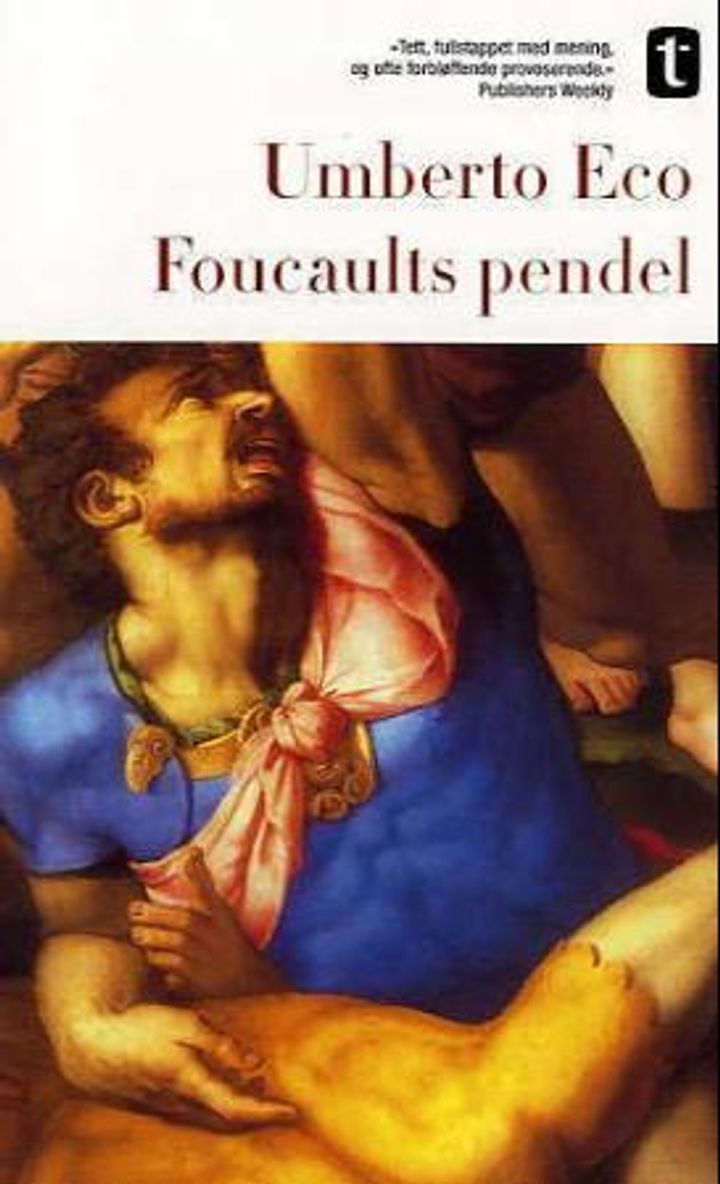

lambdion@bookwyrm.social reviewed Foucault's Pendulum by Umberto Eco
A few unstructured thoughts
5 stars
It goes without saying that this book is incredible and impossible to concisely describe. The fact that it begins with a diagram of the Tree of Life then an epigraph in untranslated Hebrew should go some way to illustrate its eccentricities, but there are many more subtle things that make me love it so much. As enjoyable as the nerdy occult name-dropping and fun playing-with-ideas history lessons are, the characters and descriptive style make even the strangest things engaging and sensical. This multiplicity is I think my favorite part, it is at once a history lesson, a moral about conspiratorial thinking, an insight into publishing culture, and a psychological autopsy of a troubled man. While I may say something like “The real story is the similarities and differences of the psychologies of the three main characters and their descents into madness”, you have to also enjoy the madness in and …
It goes without saying that this book is incredible and impossible to concisely describe. The fact that it begins with a diagram of the Tree of Life then an epigraph in untranslated Hebrew should go some way to illustrate its eccentricities, but there are many more subtle things that make me love it so much. As enjoyable as the nerdy occult name-dropping and fun playing-with-ideas history lessons are, the characters and descriptive style make even the strangest things engaging and sensical. This multiplicity is I think my favorite part, it is at once a history lesson, a moral about conspiratorial thinking, an insight into publishing culture, and a psychological autopsy of a troubled man. While I may say something like “The real story is the similarities and differences of the psychologies of the three main characters and their descents into madness”, you have to also enjoy the madness in and of itself, because that makes up the majority of the text, just as you can’t enjoy all the many things The Name of the Rose has to offer if you can’t first of all enjoy page after page of fascinating 14th-century Catholic politics. In a way, this is the most immersive treatment of conspiracy theories and those who believe in them, not just because of how full of real information it is but because it turns you into one. Every time you hear the word "Temple", "Plan", or see a pendulum swinging, you are going to think of the elaborate historical narrative you were immersed in during this book, and even though you know its not true, just like Belbo, Diotallevi, and Casaubon, you are too deep to let go completely.